a composer’s journal
CONTENTS
PART 1
PART 2
- 11 Moravská Hudba
- 12 Zweite Wiener Schule
- 13 Millennium
- 14 Pi, Primes, Palindromes
- 15 Seven Angels
- 16 Thermal Energy
- 17 First Light
- 18 Autumn Rain
- 19 Hudba pro Lidice
- 20 Effulgence
PART 3
___________
The journal retrospectively logs places, events, ideas, and sounds of a life of composing. Each chapter remembers a time and place in my career, and explores a particular compositional design approach derived from my study of 20th-century masterworks. Audio clips offer listening to all pieces cited, both the masterworks and my later compositions inspired by them. Take some time to listen as well as read!

1. Forest Paths
Howell, 1967
Shiawassee
In 1967 I was already earnestly composing for piano, trombone (my own instrument), even for orchestra. Living beside the Shiawassee River’s glacial-moraine beginnings in rural Livingston County Michigan, my best pastime was hiking along the creek’s forested banks. I was already going to Ann Arbor for trombone lessons and Youth Symphony rehearsals.

In fall 1967, after my 18th birthday, I moved to Ann Arbor and enrolled at the University of Michigan. Though not yet a music major, I began playing bass trombone in the university orchestras. For 8 years, Ann Arbor with beautiful Huron River running through it was my forested Michigan home.
The year before I was born, John Cage wrote a gentle, beautiful piece for piano, one simple enough that my 1967 piano skill could have handled. It also expressed my own urge to amble along freely improvised paths of musical exploration.
Damian Alejandro, piano
LISTEN › YouTube
At age 17, I never dreamed that I would meet John 24 years later (in Denton Texas of all places), a gentle soul who loved mushrooms. And I had yet to discover this piece or any John Cage music. But I was also writing simple and (I thought) beautiful piano music.
Two pieces for piano that expressed my attitude of wonder while wandering in the woods were updated fifty years later with my 2023 editing skills. “Mystic Breeze” and “Light” were my 12th and 18th completed TC compositions. “Riverbank” is from a 1967 sketch of an “interlude” for trombone and piano.
They make a nice set of three, revealing that before formal study my compositional explorations were already discovering more exotic harmonies and rhapsodic forms resembling Debussy’s Impressionism and even the post-tonal possibilities of 12-tone rows.
ARBOR SKETCHES
Clark 1967 (TC-12/18)
1. Breeze
2. Riverbank
3. Light

Brno
Twenty-four years later in 1991, I was invited to perform at the 26th Brno International Music Festival. It would lead me on a path of musical and cultural exploration that has filled my life since with beauty. (I had also married a beautiful Czech-American woman in 1976.)
Brno is the capital of the Moravian province of what was then Czechoslovakia. Brno was the home city of the great 20th-century Moravian composer, Leoš Janáček. After visiting his home and school in Brno and his summer home in Hukvaldy, I began to study his music.
Two things captured my interest. Like Bartok, he embraced and collected the folk music of his homeland. He also exalted in nature, walking around the wooded hills of Hukvaldy’s castle ruins, and collected his own transcriptions of bird calls.
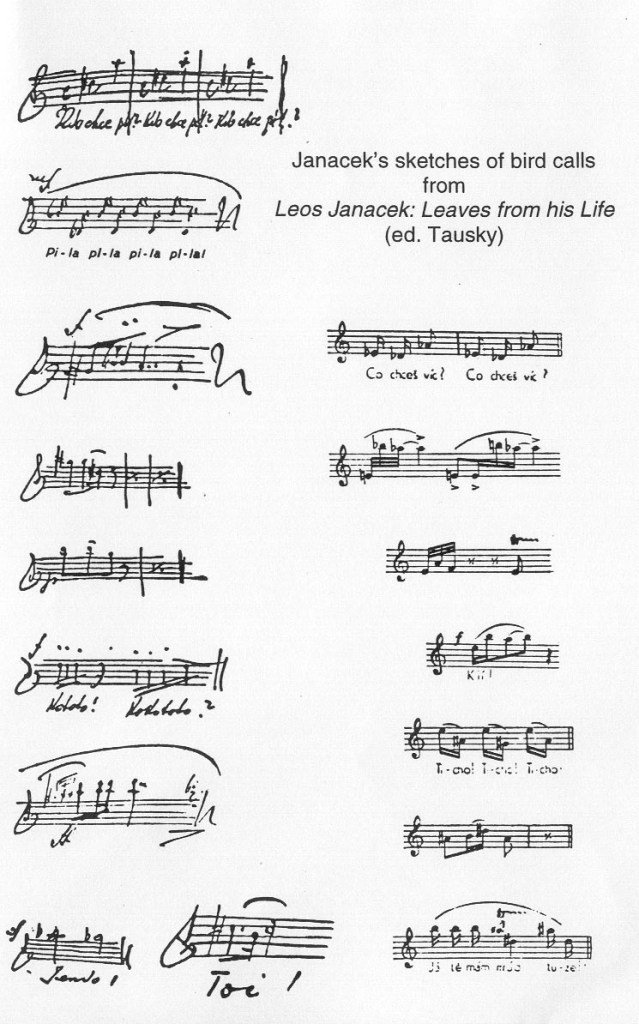
While there on the first visit, I was commissioned to compose a ballet for the local dance theatre company. Inspired by Janáček’s birds, I began to write my own music for what would become the ballet, PTACí (“Birds”).

Lesní cesty
In a music store in Brno, I also discovered his marvelous 1911 set of piano pieces, the title of which translates “On the Overgrown Path.” On a return trip, I was able to visit the Moravian Music Archives in Brno to examine his original hand-written manuscript of the pieces.
Excerpted from Series I:
- No. 5, They Chattered Like Swallows
- No. 6, Words Fail!
- No. 7, Good Night!
- No. 8, Unutterable Anguish
- No. 9, In Tears
- No. 10, The Barn Owl Has Not Flown Away!
Josef Páleníček, piano
LISTEN › YouTube
___________

2. Musique Française
Ann Arbor, 1968
Having begun composing in 1963, I started formal composition study in 1968 at the University of Michigan in Ann Arbor. American composer Eugene Kurtz, based in Paris but filling in that semester at Michigan, was assigned to teach the new freshman. A proponent of modern French music, his compositional models included Debussy and Ravel.
Sonatine
Kurtz assigned me to immerse myself in deep study of their music, in particular Ravel’s Sonatine (1905).
LISTEN › YouTube
Fifty years later in my career as a more experimental composer, my compositional style began to mellow toward a gentler Impressionistic approach and a lush, bright harmonic language reminiscent of Debussy and Ravel.
Homage to Ravel, my new Sonatine is spun from a single harmonic progression, seven chords each stacking a Perfect Fifth interval high above another.

This material (what Schoenberg would call a Grundgestalt) generates melodic lines and many arpeggiation patterns, in successive variations of changing register, intensity, and rhythmic pace.
Clark 2025 (TC-155)
Nocturnes
In 1907, French composer Claude Debussy wrote, “I am more and more convinced that music, by its very nature, is something that cannot be cast into a traditional and fixed form. It is made up of colors and rhythms”. Color, light, and texture were also the hallmarks of a new style of painting developed by French artists — Impressionism.
At the threshhold of the 20th century on 15 December 1899, Debussy completed the first of his Impressionist masterpieces for orchestra, Trois Nocturnes. He avoided labeling it “symphony” or “tone poem” by calling the movements “three symphonic sketches”. The first sketch of Nocturnes is subtitled “Nuages,” premiered on 9 December 1900 in Paris.
Debussy’s biography describes the genesis of the piece while crossing the Pont de la Concorde in Paris in stormy weather. The composer’s notes say, “‘Nuages’ renders the immutable aspect of the sky and the slow, solemn motion of the clouds, fading away in grey tones lightly tinged with white.”
Vienna Philharmonic on Youtube
LISTEN › YouTube
Adopting the French language and musical style recognizes the early French explorers of the Great Lakes region of North America. The first decades of my life began there in Michigan’s Lower Peninsula (the “mitten”). It has its own smaller Leelanau Peninsula in the northwest corner (the mitten’s “little finger”) near Interlochen’s National Music Camp, where I spent many summers. Nearby Grand Traverse Bay has its own even smaller Old Mission peninsula, where I loved to visit its lighthouse. The Leelanau has a grand lighthouse at its northern tip and a scenic drive, state highway M21, winding for 64 miles all the way around the peninsula’s shoreline, through forests and past the Great Sleeping Bear Sand Dunes.
In 1984 my piece titled PENINSULA for piano and sound synthesis was a more experimental work that traced a map of the Leelanau and its landmarks to determine by their spatial coordinates the timing and pitches of sound constellations.
Moving forward from that mapping phase of my compositions, my Impressionistic phase produced the sound sculpture Leelanau Sketches in 2022. Some of its musical material reappears now in five symphonic sketches, Belle Péninsule. Here is the fourth movement, which quotes Debussy’s “Nuages.”
La Mer
Debussy’s completed his second composition of three symphonic sketches for orchestra, La Mer, in 1905. It is a monumental work of Impressionist sound-painted textures and a textbook model of lush, beautiful orchestration. The three sketches are titled:
“De l’aube à midi sur la mer”
“From dawn to midday on the sea”
Jeux de vagues”
“Play of the Waves”
“Dialogue du vent et de la mer”
“Dialogue of the wind and the sea”
LISTEN > YouTube
My homage to La Mer, Sea Sketches, sound-paints waves, deep currents, wind, and sun-sparkling surfaces, employing swelling sound colors and post-modern cyclic techniques in a pan-diatonic tonal setting. The end briefly quotes the opening arpeggio of Debussy’s “La fille aux cheveux de lin” (“The Girl with the Flaxen Hair”) from Book I of his Préludes for piano (1909-1910).
Clark 2023 (TC-132)
___________
3. Sketching Places
Ann Arbor, 1969
From the beginning of my study of trombone, I was an avid player. In high school, I took lessons with top U.Mich. trombone students in Ann Arbor. Playing in high school band and the Michigan Youth Symphony, I also started my own little brass group, the Streetcorner Brass, to play on the snowy sidewalks of downtown Howell at Christmas. Adding drums, we began to play my arrangements of Tijuana Brass tunes and rock ‘n roll at youth dances.
Brass
At college in Ann Arbor, I played bass trombone in the University Philharmonia and Symphony orchestras, and the trombone choir.
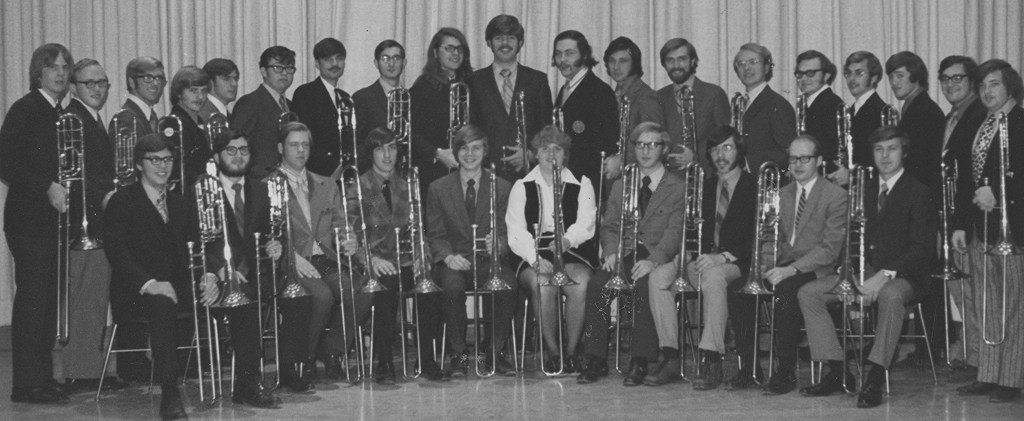

I also joined the Plymouth Symphony and a part-time professional sextet, the Goliard Brass. We played for weddings, in churches, and Ann Arbor coffee shops. A sample of our repertoire:
Giovanni Gabrieli – Canzona XIII
LISTEN › YouTube
Morley Calvert – Suite from the Monteregian Hills
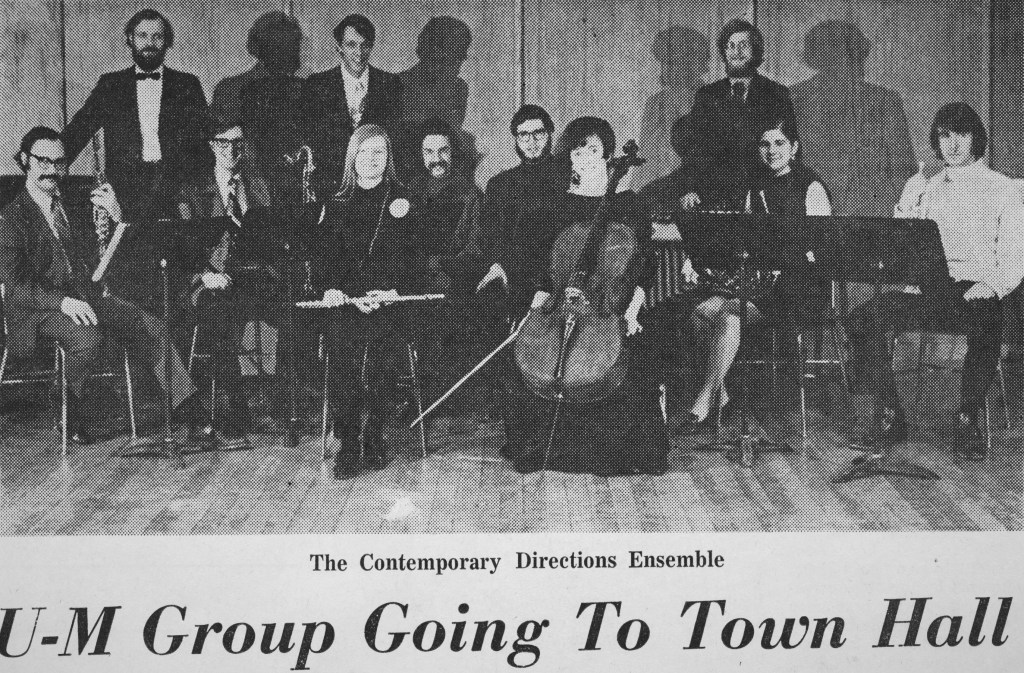
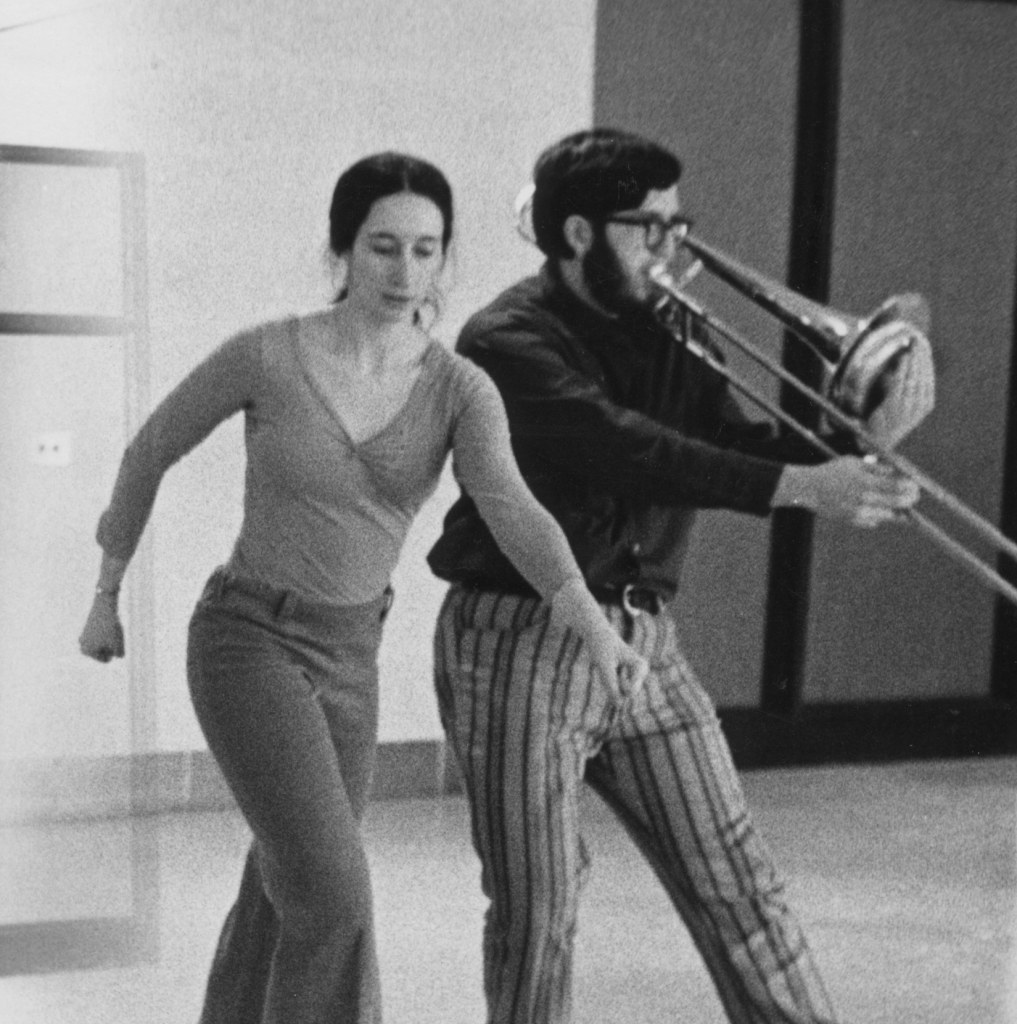
As trombonist for the U. Mich. Contemporary Directions ensemble, I performed more avant garde works, such as this challenging brass piece:
Gunther Schuller – Music for Brass Quintet
LISTEN › YouTube
My youthful composing had been mostly for piano and trombone. Brass chamber music compositions naturally followed in my student and early professor times.
- NIGHT SONGS — trombone. TC-21 (1969) Borik Press
- TRILOGY — brass quintet. TC-23 (1970)
- ISOSTRATA — 2 trp., 2 tbn., tuba, perc. TC-35 (1977) Seesaw Music
- ICESCAPE — brass quintet. TC-39 (1980)
- MUCHA’S LIGHT — Brass quintet. TC-73 (1996)
- KLADNO SKETCHES — Brass septet. TC-100 (2019)
Kladno
Kladno is a Czech city in the Central Bohemian Region 25 kilometers northwest of Prague. In the middle of the 19th century, the discovery of coal there led to the establishment of one of the great ironworks and then steel mills in all of Europe.
Kladno is near Lidice, the village destroyed by the Gestapo in 1942. Of the Lidice men who were all shot in the atrocity, many had walked to Kladno each day to work in the coal mine or the Poldi steel works.
Kladno Sketches
Clark 2019 (TC-100)
Zámek – peaceful gardens

The city remains a thriving place with a population of 70,000, a large church, municipal building, state library and archives, monuments, theaters, museums, and beautiful parks. The Czech people have always been hard working, they love gardens, especially roses, and they love beer in the fine pilsner style they created.
Poldi – ironworks

Poldi has thrived and survived for more than 100 years, through two world wars and occupations of the country, but the factory finally closed and most of the buildings are now abandoned.
Svobody – Freedom plaza

Suffering under so much occupation and oppression throughout their history in the center of Europe, Czechs especially value “svobody” – freedom.
___________
Chicago
Beyond brass, more chamber music scores inspired by places . . .
Chicago Sketches
Clark 2019 (TC-96)
Fermi Lab
December 1942
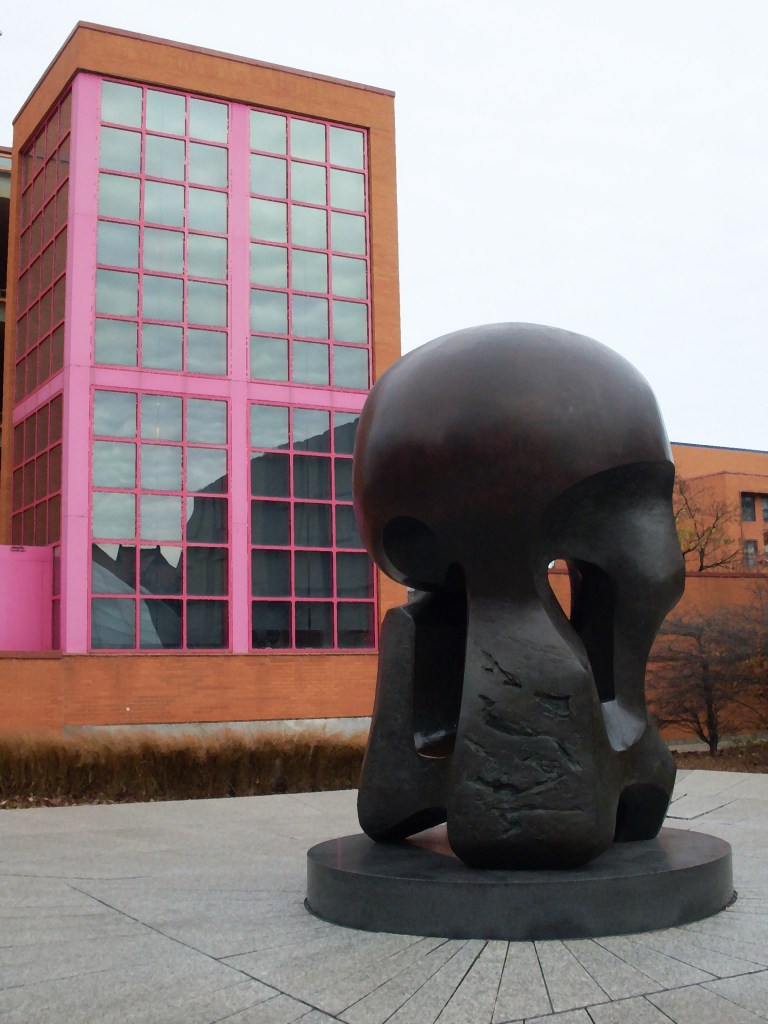
Henry Moore sculpture on the University of Chicago campus, commemerating the site of the experimental pile that launched the atomic age
Navy Pier
March 2014

A winter visit to the Lake Michigan shore
Buckingham Fountain
August 1976
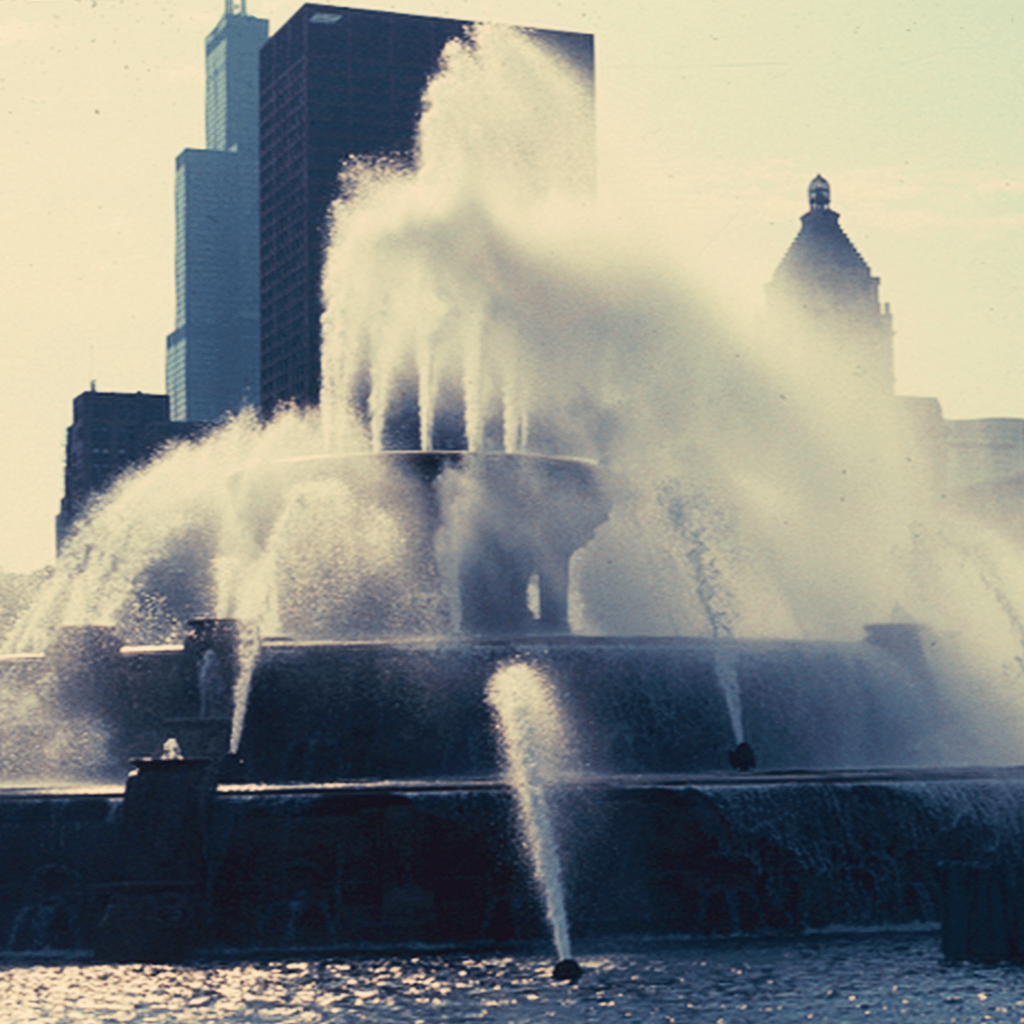
A pilgrimage to Grant Park with new family four months before the wedding
Leelanau
The “Great Lake State,” Michigan is two enormous peninsulas surrounded by Lakes Michigan, Superior, and Huron. Actually, there are many smaller peninsulas extending out into the lakes. The Leelanau Peninsula (north of the venerable Interlochen music camp where I spent many summers) extends about 30 miles from the northwestern corner of the mitten-shaped Lower Peninsula into Lake Michigan.
Algonquian-speaking tribes occupied this area prior to European colonization. The land is now home to lighthouses, wineries, ski slopes, inland lakes, and coastal dunes and beaches.
Leelanau Sketches
Clark 2022 (TC-117)
Shining Water

The changing patterns of sunlight sparkling on water always fascinates me, particularly on Lake Michigan looking west from the Leelanau Peninsula.
Ice Caves

On the Leelanau Peninsula’s western shore, the Lake Michigan surf sometimes whips up and freezes in mid-air, forming weird ice caverns and ice dunes.
Ojibwe legend tells of a fierce forest fire on the western shore of Lake Michigan, forcing a mother bear and her two cubs into the water to swim to the opposite shore. After many miles of swimming, the exhausted cubs drowned. When the mother bear reached the eastern shore, she waited on top of a high bluff in hopes that her cubs would finally appear. Moved by the mother bear’s determination and faith, the Great Spirit created two islands to commemorate the cubs, and the winds buried the sleeping bear under the sands of the dunes, where she still waits.
Sleeping Bear Dunes
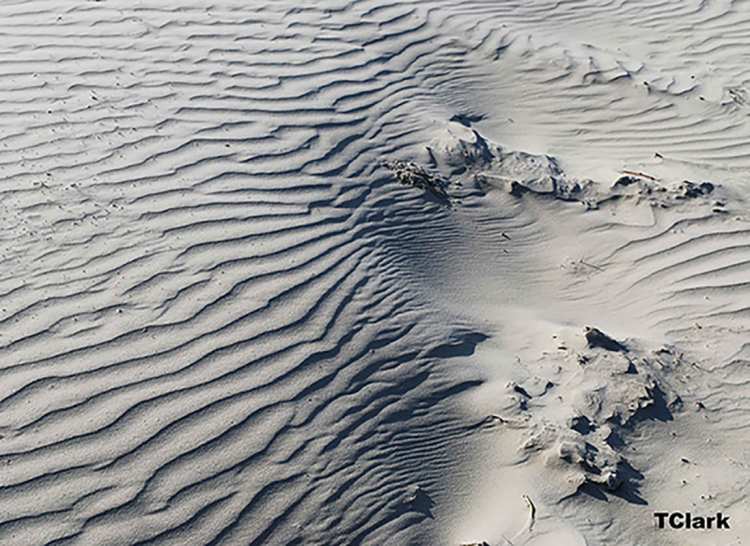
The main dune is enormous, a mountain of sand rising dramatically above the shore of Lake Michigan. The bear’s bluff atop this majestic mass of earth is a serene vista of radiant sun, windblown sand and waves.
Autumn on M22

A scenic autumn drive around the peninsula on Highway M22 is a glory of light sifting down through a canopy of colored leaves. The 75-mile drive from Empire on M22 winds northeast to Northport then south around the east side of the peninsula along Grand Traverse Bay to Traverse City.
Compared to brass, my list of chamber music pieces for strings is more recent but longer.
- STRING TRIO — violin, viola, cello. TC-22 (1970)
- AD TE SUSPIRAMUS — consort of viols. TC-71 (1994)
- LIDICE REMEMBERED — cello trio or cello choir. TC-86 (2017)
- DARK MATTER — string quartet. TC-95 (2019)
- LOOKING FOR THE RAINBOW — cello quartet or choir. TC-111 (2021)
- SYMPHONY DANCES — string quartet. TC-122 (2022)
- HIGHLANDS SKETCHES — string quartet. TC-137 (2023)
Highlands
There are many Highlands in my life. I am part Scottish, though my great grandparents are from Glasgow, not the Highlands. I do enjoy its single-malt whiskeys, though, and I went to Howell High School, the “Highlanders.” And I now live in the Texas Hill Country.
Then there is Českomoravská vrchovina . . .

I first visited what was then still Czechoslovakia in 1991. The Bohemian-Moravian Highlands are between the two main regions of what is now the Czech Republic. The ancient town of Tabor and the legendary Blaník mountains are two points of scenic and historical interest. Highlands Sketches sound paints climbing the mountain’s rugged slope, a thunderstorm of dissonant accents, and the quiet harmonic progression of an autumn dusk.
Highlands Sketches
Clark 2023 (TC-137)
Massif
“Velký Blaník”

Storm
“bouřka”

Dusk
“soumrak”

___________
4. Sound Painting
Interlochen, 1973
Gunther Schuller composed Seven Studies on Themes of Paul Klee in 1959 after leaving the Metropolitan Opera Orchestra horn section. Commissioned for the Minneapolis Symphony, it portrays musical analogs for seven works by Swiss painter Paul Klee (1879-1940). Schuller wrote, “Each of the seven pieces bears a slightly different relationship to the original Klee picture from which it stems. Some relate to the actual design, shape, or color scheme of the painting, while others take the general mode of the picture or its title as a point of departure.”
- “Antique Harmonies”
- “Abstract Trio”
- “Little Blue Devil”
- “The Twittering Machine”
- “Arab Village”
- “An Eerie Moment”
- “Pastorale”
Seven Studies on Themes of Paul Klee
Radio Philharmonic of Hannover
LISTEN › YouTube
Landscapes
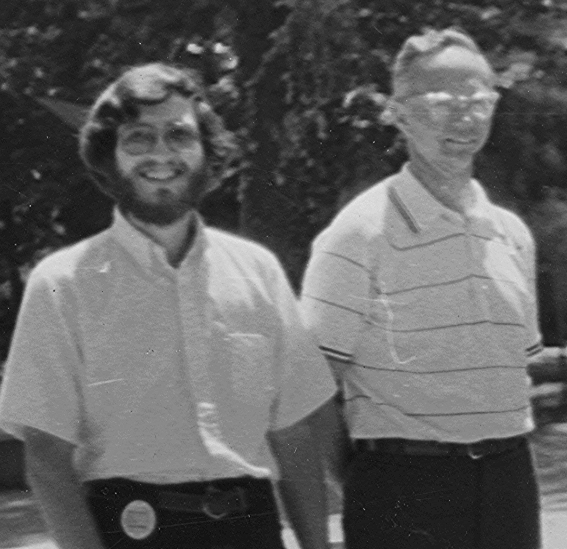
As a graduate student at the University of Michigan in 1973, I composed my second orchestra piece. The title, Animated Landscapes, was inspired by John Cage’s famous Imaginary Landscapes No. 4, which we performed as I was an ensemble member of Contemporary Directions.
The idea of animating an otherwise static sound mass, devoid of progressive harmony, was a quintessential feature of what I came to think of as the Midwestern Style of 1960s and 1970s large ensemble music. Successful models included prize winning pieces such as (my teacher) Leslie Bassett’s Variations for Orchestra (1966), Donald Erb’s The Seventh Trumpet (1969), and Joseph Schwantner’s …and the mountains rising nowhere (1977) and Aftertones of Infinity (1979).
Animated Landscapes
Clark 1971 (TC-25)

U.Mich. Symphony Orchestra
So many great American landscape artists of the 19th century painted fascinating panoramic scenes. One of my favorites, who captured the grandeur of Western, mountainous landscapes, was Albert Bierstadt:
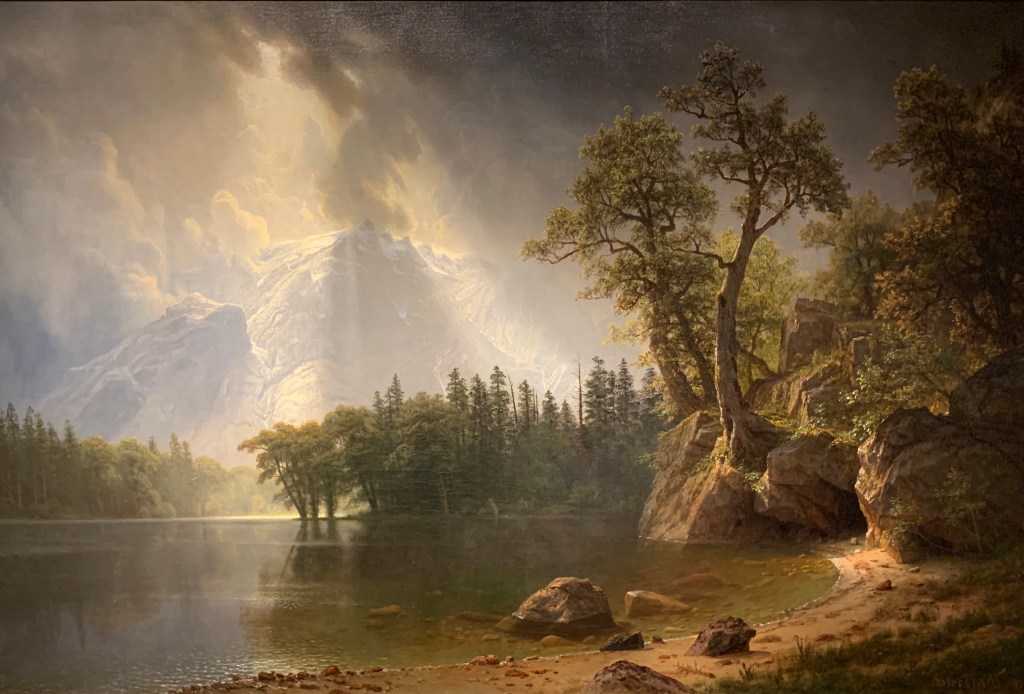
Albert Bierstadt: Passing Storm over the Sierra Nevadas (1870) – San Antonio Museum of Art
You can see stark contrasts in brightness and in sense of motion between the mirror-smooth water and roiling clouds. Even the word “passing” in the title suggests change, a necessary ingredient of an analog musical landscape.
While not trying to actually map the physical composition of any painting, my musical inspiration came from considering this painting’s features of background, foreground, and highlights of strong visual focus. Musical gestures started with distant swelling sonorities, which as they crescendo feel like they are emerging forward toward us. After deciding to name the piece Passing Storm after the Bierstadt, however, I realized I had no storm in the music, just gentle sprinkles. Thus was created a stronger sonic rendering of the sprinkles to provide a more aggressive introduction. The following four minutes overlaps sound masses animated in time, contrasting dark vs. bright sounds, loud vs. soft, and timeless sustained sound vs. busy points of “light.”
Animated Landscape No. 4
Passing Storm
Clark 2022 (TC-129)

Mucha’s Light
I first traveled to the Moravian region of Czechoslovakia in 1991 to conduct my own music at the 26th International Music Festival in Brno. While there, I visited the South Moravian town of Moravský Krumlov. Its castle served as a museum gallery for the epic paintings, Slovanská Epopej, of Alfons Mucha. Better known as the father of art nouveau through his many famous Paris posters, Mucha was deeply interested in Slavic culture and history. The 20 paintings, each a monumental canvas hung as a tapestry, vividly depict both historical and mythical scenes.
Mucha’s Light: Ancient Images is dedicated to Miroslav Marada, the Moravian gentleman who first showed the paintings to the composer in 1991. A teacher, history buff, and lover of the local wines of south Moravia, Marada fascinated me with elaborate tales, explaining the symbolism of each painting. The five works I selected to sketch musically have a common element, masterfully painted images of exotic light. Composing musical analogs for these ancient images, I incorporated medieval music from the Bohemian/Moravian region of central Europe. The music weaves authentic medieval chant tunes into an intensely contrapuntal fabric, interspersed with modern sparks, streaks, and splashes of sound color. Originally composed for brass quintet, the musical images called for a richer, more varied sound-color palette:
Instrumentation: piccolo, 2 flutes, 2 oboes, 3 Bb clarinets, bass clarinet, 2 alto saxes, tenor sax, baritone sax, bassoon; 2 F horns, 2 Bb trumpets, 2 trombones, euphonium, tuba; timpani, 3 percussion (misc. unpitched – triangle, sus.cym., etc.; bells, chimes, vibraphone, xylophone)
Ancient Images
Clark 2005 (TC-76)
Five sound sketches on the historical paintings of Alfons Mucha
I. Star Light
detail of 1. Slavs in their Original Homeland

II. Green Light of Mysticism
detail of 17. Holy Mount Athos

III. White Light of Learning
detail of 4. The Bulgarian tsar Simeon

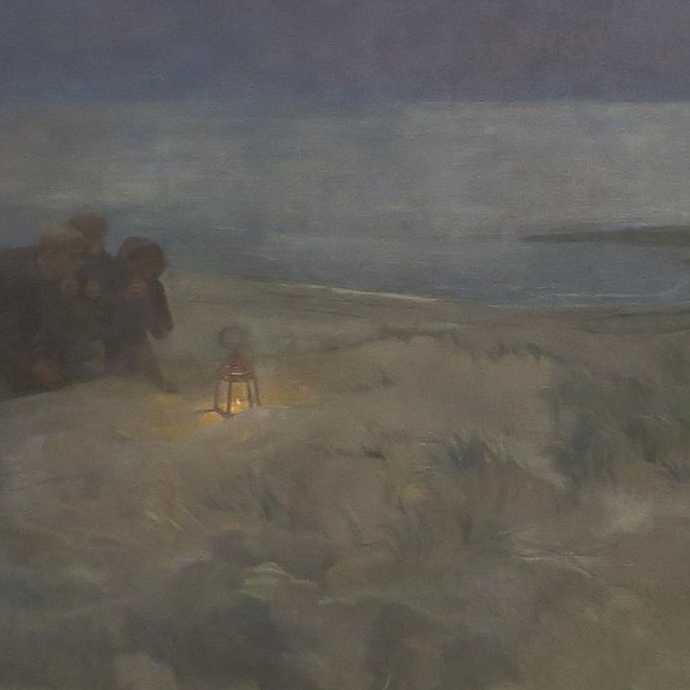
IV. Lantern Light of Hope
detail of 16. The Last Days of Jan Amos Komenský in Naarden
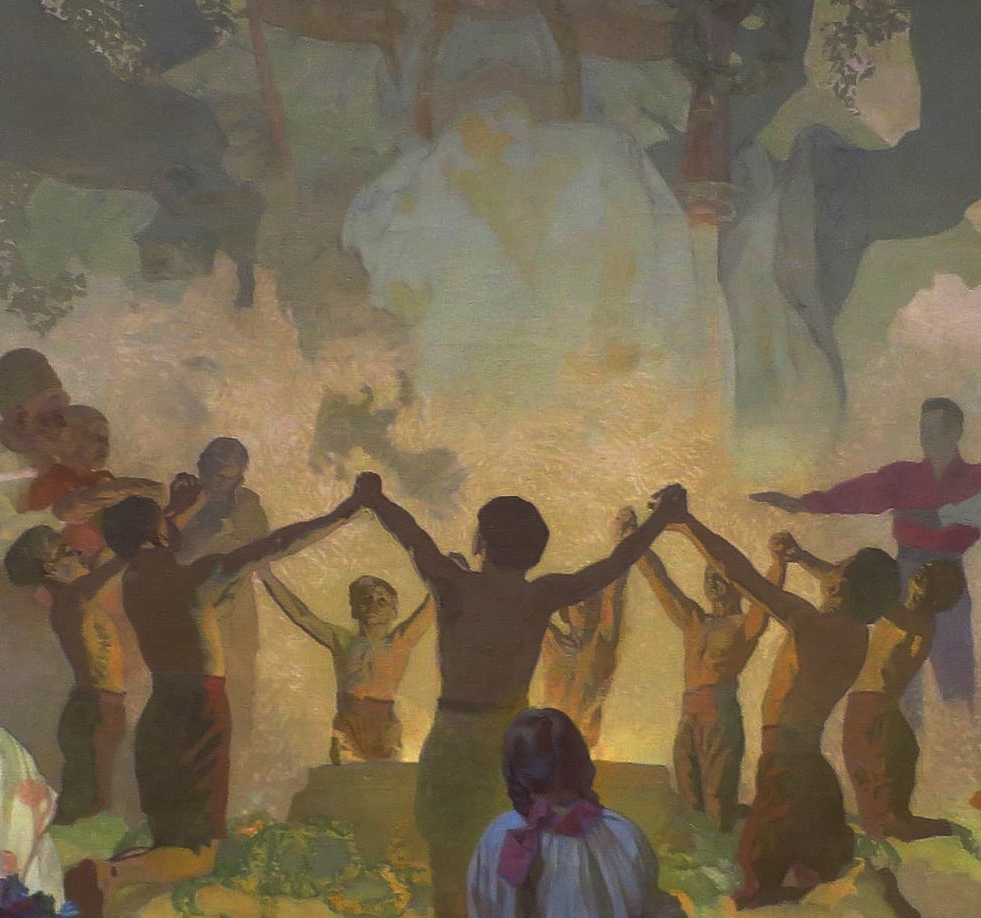
V. Fire Light
detail of 18. The Oath of Omladina Under the Slavic Linden Tree
Quilting
Now to photo images instead of paintings — both music and visual images can be assembled in a manner inspired by quilts, layers of fabric in small swatches pieced together. The Amish of Lancaster County Pennsylvania were known especially for quilts of contrasting colors of repeating geometric shapes.
Here is a more-than 100-years-old quilt I found exhibited in the Quilting Museum in LaGrange, Texas.
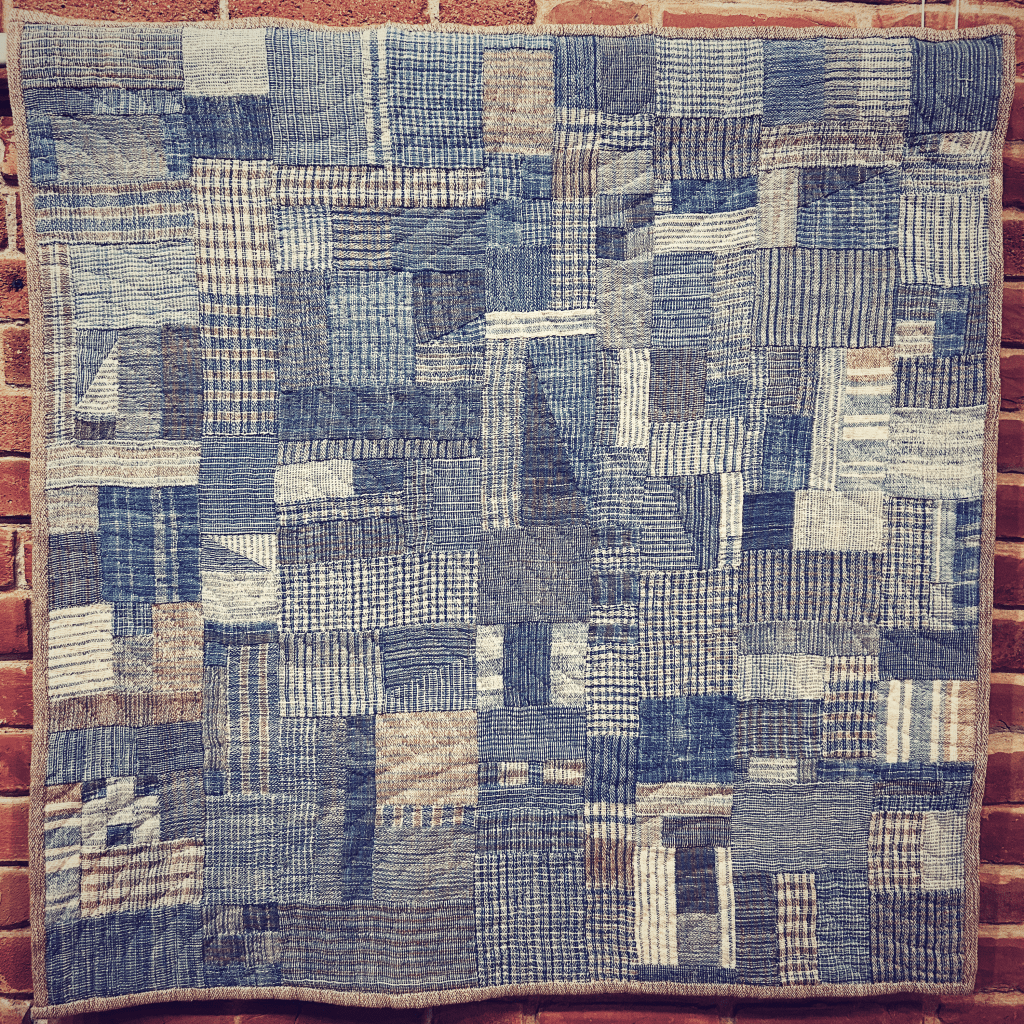
For a fresh approach to my 2025 multimedia work, this kind of layered patching was applied to both synthesized sound blocks and to digitally enhanced images from my Nikon Z50 (NIKKOR 16-50 lens). Three musical textures — flutters, swelling chords, and an ancient-style canon — are quilted onto an unchanging broad harmonic background. They overlay each other in four different combinations.
Video here – YouTube podcast
______________
5. Dusty Dusk
Tacoma, 1974
As a teenager, I was into all kinds of art — sketching, painting, reading plays, and writing poetry. Lots of poems, my way of a kind of diary writing, expressing to myself the places, relationships, and feelings. (I won’t reveal any of this naive creative work here.)
Later, two poems in particular were written at major turning points in my professional and personal life. That’s when I started setting poems as art song lyrics. Some of the musical material for what became Landscapes in Motion was first set in the 1970s, and some in the 1990s, now reworked with a more mature 21st-century craft, while preserving the original dark suppleness of tonality and time.
Upon completing my master’s degree at Michigan in 1972, I taught music theory as a one-year lecturer at Indiana University in Bloomington. Another one-year fill-in position took me to Pacific Lutheran University in Tacoma, Washington, where I got great experience teaching music theory, composition, new music performance ensemble, and even trombone!
Without a doctorate, however, there was no real prospect of winning a permanent professor position anywhere. And continuing a succession of one-year gigs moving all over the country was not sustainable. What to do?
I had taken my sailboat with me all the way out to Tacoma from Interlochen. After a beautiful sunset sail on Lake Spanaway in my little 15-foot “Butterfly” dinghy, I wrote a poem.
“Sailing at sunset” (1974)
Dusty dusk settling silk on dying silver of wave-modulated water,
the sail still silently searching for a departing breeze,
swinging gently its boom and softly rattling its blocks
in confounded cross-rhythms to the lapping shore.
Streams of crimson flowing dust streak the sky
above looming shadowed firs.
Deepening shadows settle dark dust on the deck
while still the mast peak rages red and soars into a deepening sky.
Scorched face soothed by the oncoming night breeze,
eyes searching the sunset sky for sign of tomorrow’s wind.
Where will we sail then? Wherever wind wills . . .
and a new dusk consume our shadows.
A New Dusk
Clark 1974 (TC-28)
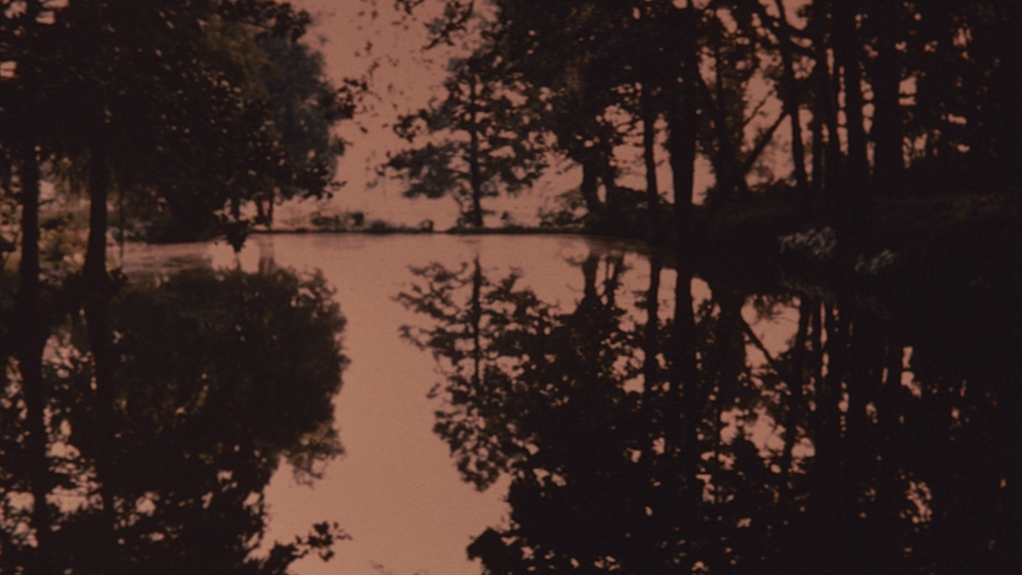
Afterglow
Turns out, I went back to Michigan for doctoral studies, and went back to working at Interlochen as assistant to the director of Michigan’s university-level program there. In that 1975 summer, I met Beth, a journalist working a temp gig on the camp’s publicity staff.
We fell in love, and I spent many weekends of the following academic year riding the Amtrak Turboliner from Ann Arbor to Chicago to be with her. I wrote a poem on one of those train rides, again uncertain about my (our) future.
“Riding backwards on a train” (1976)
The cider mill beside the river,
cows grazing by a dead tree,
a red barn stuffed with hay.
An old square house alone on a hilltop,
a church’s silent steeple above the trees,
a country cemetery, old stone crosses guarding against oblivion.
Then the sun is gone,
storm clouds ripple across meadow skies,
the river turns away.
Riding backwards on a train, frozen fields float by.
Glossy sheets of white ice glow with winter sun.
Dead brown stubble breaks the mirror, patchy footprints of autumn’s retreat.
Pale late light of afternoon flickering
through leafless trees that line the lifeless fields in rows,
through fields of withered cornstalks.
Leap into brown dry woods, plunge past barren trees,
spray a wake of fallen leaves, lunge into holy autumn stillness,
riding backwards on a train, headed east into a frozen future.
Shortly before his death, Charles Ives published a collection of 114 Songs in 1922. Many have become exemplars of his iconic 20th-century American style. Here are two that fit our tender twilight theme.
Paul Sperry, Irma Vallecillo
LISTEN > YouTube
Paul Sperry, Irma Vallecillo
LISTEN > YouTube
Ice
In 1983, teaching grad courses and still directing the New Music Performance Lab. Musicology master’s student Robert Nasow played cello in the ensemble, but he was also an avid and talented poet.
When his fellow grad music student David Lynn Kennedy was killed, Robert wrote a heartfelt elegy for him.
“Ice Floe“
by Robert Nasow
Yes, I am cold . . .
my hands are cold to the touch.
Something must fill this hollow at the center of my body.
Untouched, no one will long remember your face . . .
She withdraws to contemplate the child,
her voice breaks into emerald light, effulgent pure water,
sings unknown distances of sleep.
Brittle, come break off my hand,
this glazed stem of Queen Anne’s lace.
There are ways of living we have never dreamed of.
His poem became a lovely vehicle for a memorial song, which was premiered by UNT grad students who were also involved in new music with me.
Ice Floe
R. Nasow / Clark 1983 (TC-46)

Jing Ling Tam, soprano
Paul LeBlanc, guitar
Before night
So far, I haven’t mentioned an important influence on my ’60s and ’70s immersion into the mid-century Avant Garde. In the 1960s, Luciano Berio wrote an influential, frequently performed series of unaccompanied solos for varied instruments. All are tour-de-force virtuosic technical displays with a theatrical impact. I performed Sequenza V for trombone on a Contemporary Directions concert in Rackham Lecture Hall (Ann Arbor). It was commissioned by and written for virtuoso trombonist Stuart Dempster, with whom I later briefly studied.
I said instruments, but Sequenza III (1965) is for unaccompanied voice, drastically different than a typical “song.” Berio explains:
“In Sequenza III the emphasis is given to the sound symbolism of vocal and sometimes visual gestures, with their accompanying ‘shadows of meaning,’ and the associations and conflicts suggested by them. For this reason, Sequenza III can also be considered as a dramatic essay whose story is the relationship between the soloist and her own voice.”
Sequenza III was written in 1965 for Cathy Berberian. The “modular” text is by Markus Kutter:
Give me a few words for a woman
to sing a truth allowing us
to build a house without worrying before night comes
Laura Catrani, soprano
LISTEN > YouTube
______________
6. Canticum Terra
Ann Arbor, 1970
“In the beginning God created the heavens and the earth. 2 Now the earth was formless and empty, darkness was over the surface of the deep, and the Spirit of God was hovering over the waters. 3 And God said, “Let there be light,” and there was light. 4 God saw that the light was good, and he separated the light from the darkness. 5 God called the light “day,” and the darkness he called “night.” And there was evening, and there was morning—the first day. 6 And God said, “Let there be a vault between the waters to separate water from water.” 7 So God made the vault and separated the water under the vault from the water above it. And it was so. 8 God called the vault “sky.” And there was evening, and there was morning—the second day. 9 And God said, “Let the water under the sky be gathered to one place, and let dry ground appear.” And it was so. 10 God called the dry ground “land,” and the gathered waters he called “seas.”
Genesis (The Holy Bible, NIV translation)
Stravinsky’s 1955 masterpiece in three movements, Symphony of Psalms, ends with Psalm 150 “laudate Dominum” in reverent praise of this awesome creation.
Berlin Philharmonic
LISTEN › YouTube
Earth Day
The first Earth Day was April 22, 1970. In the buildup to it, a group of University of Michigan students organized an environmental teach-in on March 11–14, presenting a series of speeches dealing with various environmental problems. Following its lead, 2,000 other universities and colleges ultimately put on events.
My doctoral composition studies at Michigan began in 1974. Two seminars were mandatory requirements, on the works of the great 20th-century icons, Stravinsky and Bartok. I also took seminars in medieval and Renaissance music. Fifty years later, listening to a stunning recording of ancient choral music, I became re-interested in the rhythmic subtleties of voices executing the unspecified time flow of Gregorian chant.
Using a variety of similar but slightly different note values, including the ancient semi-minim, minim, dotted-minim, breve, dotted-breve, and lunga, I composed a new plain chant. Beginning with pitches of a dorian mode, my wordless chant takes chromatic turns, providing tonal color without chords above a motionless deep drone. A high, windblown echo of the chant’s shape appears as prelude and coda to its “singing” deepness.
In this era facing global crises on our blue planet, Canticum Terra is a musical homage to and prayer for Mother Earth.
Canticum Terra
Clark 2023 (TC-136)

Mycology
I read a fascinating book, Entangled Life by Merlin Sheldrake (Random House, 2021) about the mostly unseen bizarre world of fungi. Mycelium is the root-like mass of a fungus branching out in soil, forming a colony too small to see or grown to span thousands of acres as in Armillaria. Lichens are complex fungal communities of different organisms, like the black rocky shoreline stripes of Hydropunctaria.
Mycology
Clark 2022 (TC-118)
Branching is a recursive process, with a pitch splitting into two mirroring lines of pitches, then each of those lines mirror splitting again. By powers of 2, the branches eventually build a tone-mass of 8 lines then even massive 16-pitch sonorities.
Mycelium
branching, thread-like hyphae
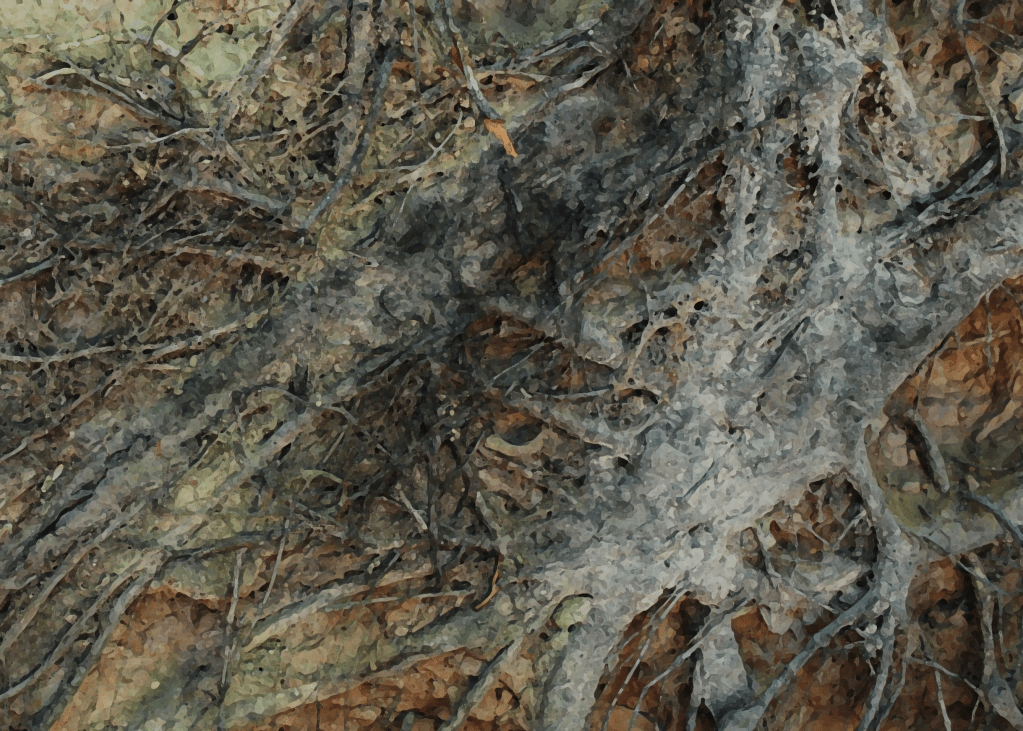
Pointillistic speckles are set in the dark tonal colors of a Viennese 12-tone pitch series, never random but kaleidoscopically sparkling in a restless texture of overlapping rhythms.
Hydropunctaria maura
“water speckled midnight”
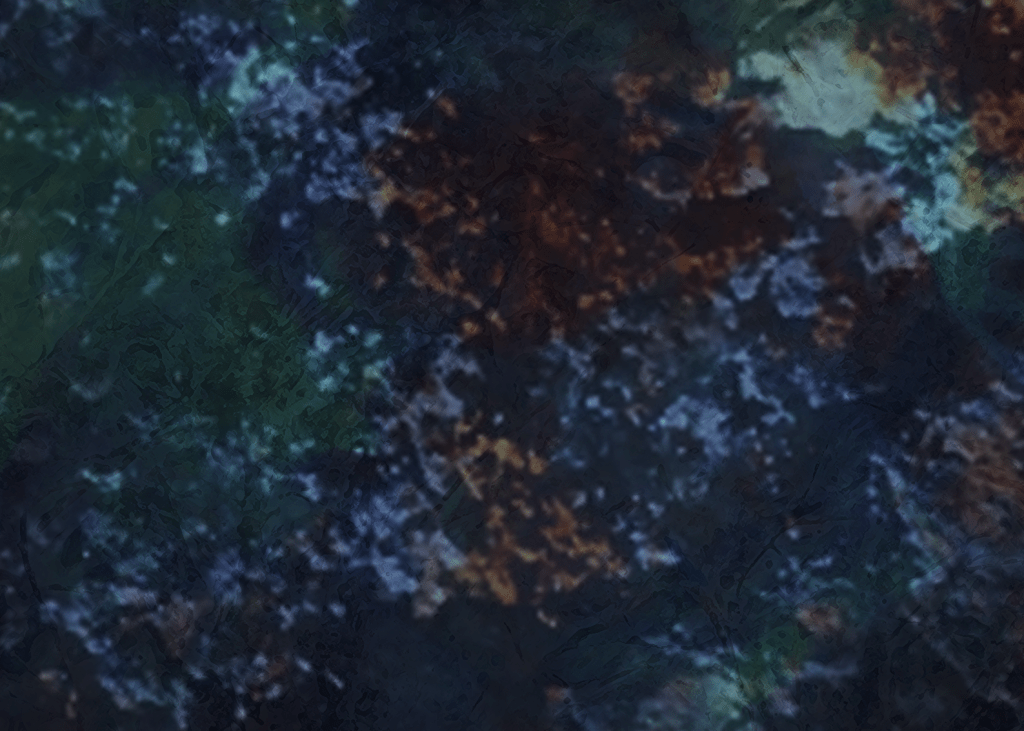
Crystallography
From the stars and cosmos, we have come down to Earth, the third planet from the sun, to delve into its inner mysteries.
Very different from the lyric adoration of the Alleluia of Symphony of Psalms, Stravinsky’s later work (1966) explores serial atonality with a dark, dissonant edge. The percussive brilliance of its postlude is evocative of the prodigious granite masses created in Genesis verse 9.
Requiem Canticles – Postlude
London Sinfonietta
LISTEN › YouTube
In the midst of my recent Impressionistic “Sketches” series, the 2024 piece Folio (TC143) was a throwback to the more abstract sound mass style of the 1960s and ’70s. Its percussive attacks and inert masses of sound were all synthesized, also throwbacks to my early days of electronic tape music. (One of the earliest electronic compositions, Stockhausen’s 1960 Nr. 12 Kontakte, was full of sounds like giant steel beams hitting a concrete floor!) The other retro feature of Folio is suggested in its title: homage to Earle Brown’s 1952 FOLIO, a collection of abstract art scores in stark, proportional graphic notation.
A wind and percussion transformation of Folio was challenging. It was composed in the abstract avant-garde style of the ’60s, carving sound sculptures of solid, hard-edged sonorities in expansive pitch/time space. Now colored with cool woodwind sounds, radiating brass, and sparkling percussion, GEODES animates Folio‘s solid sound masses in surging and fading rhythmic textures.
The chaotic boldness of rocks . . . my own collection of many found on beaches and hikes, but also splendid displays at three places: Dick’s Rock Shoppe in Estes Park, Colorado; Lizzadro Museum of Lapidary Art in Elmhurst (now in Oak Brook), Illinois; and a wonderful gallery of geodes at the Permian Basin Petroleum Museum in Midland, Texas. A geode is Nature’s sculpture, an inscrutable gray rock sphere that, when sawed open, reveals a magical world of dazzling-colored crystals. Different minerals make crystals of varied hues of pink, purple, umber, or cream, reflecting new light.
GEODES
Clark 2025 (TC-143)
Pyrite

Calcite

Amethyst

Quartz

Geology
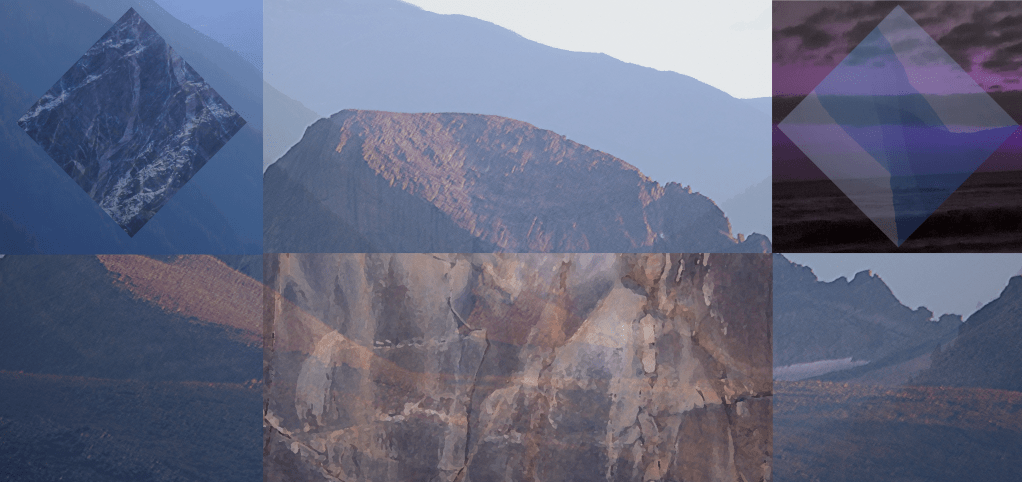
In CANYON SKETCHES (Clark 2024 TC-141), three sound sketches explore the timeless qualities of three magnificent canyons: Black Canyon of the Gunnison (Colorado); Glacier Gorge in Rocky Mountain National Park; and Palo Duro Canyon (Texas).
Actually, each sketch began fundamentally based not so much on the canyons as on musical techniques. For example, in “Black Canyon,” a complex three-part canon of meandering 12-tone lines musically sketches the colorful streaks of pegmatite dikes in the Black Canyon’s cliff walls of Precambrian gneiss.
Black Canyon

___________
7. Carte du Ciel
U.Mich. Electronic Music Studio, 1975
Mapping the stars
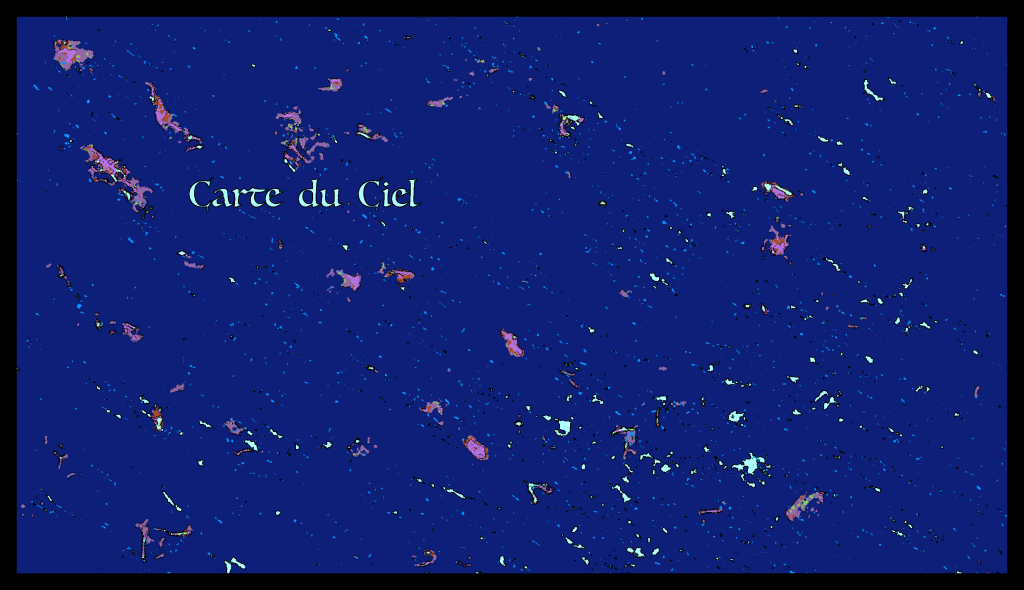
My 2024 book, Mapping the Music Universe, begins with recognition of historic, world-changing pioneers in science and the arts. It includes Carte du Ciel (“Map of the Heavens”), an ambitious second phase of an international star-mapping project initiated in 1887 by Paris Observatory director Amédée Mouchez. A new photographic process revolutionizing the gathering of telescope images inspired the first phase, the Astrographic Catalogue of a dense, whole-sky array of star positions. Carte du Ciel, never completed after 70 years, used the Catalogue as a reference system for a complex survey of the vast field of even fainter images.
In my 2019 computer music of that title, ghostly wisps of sound are punctuated by brighter bursts, clustered in a natural, not-quite randomly dispersed texture.
CARTE DU CIEL
Clark 2019 (TC-98)
Space sounds
A pioneering work of early electronic music made a huge impact on my imagination when I first heard it on FM radio in the 1960s. Karlheinz Stockhausen made Kontakte (Nr. 12 in the composer’s catalogue of works) in 1958–60 at the Westdeutscher Rundfunk electronic-music studio in Cologne with assistance from Gottfried Michael Koenig. It originated as a tape piece for four-channel loudspeaker reproduction. The title refers to “contacts between various forms of spatial movement” of the sounds coming from four different directions.
Deutsche Grammophon
LISTEN › YouTube
American composer Morton Subotnick’s Silver Apples of the Moon was released by Nonesuch Records in 1967. The title comes from a Yeats poem, “The Song of Wandering Aengus”. It was made with a Buchla 100 analog synthesizer, which Subotnick helped develop, a common practice of early electronic music pioneers to build their own tools.
Part I is a calm exploration of tone quality. Part II generates rapid machine sequences of sounds.
Nonesuch Records
LISTEN › YouTube
Exigencies
My works of analog electronic music were composed at the University of Michigan Electronic Music Studio in Ann Arbor starting in 1975. The studio, on an upper floor behind the stage and organ pipes of historic Hill Auditorium, was assembled by Michigan composition professor George Balch Wilson in 1962.


Patterned after the Columbia-Princeton Electronic Music Center, the studio included reel-to-reel half-inch tape decks running at 15 or 30 inches per second, a mixing board and patch bay, an early model of the famous Moog Synthesizer, other tone generators, and a large wooden coffin containing a heavy metal plate to create electronic reverberation.
Wilson’s first tape piece is an excellent sample of the analog studio’s sound and capability in expert hands.
Equilibrium records
LISTEN › YouTube
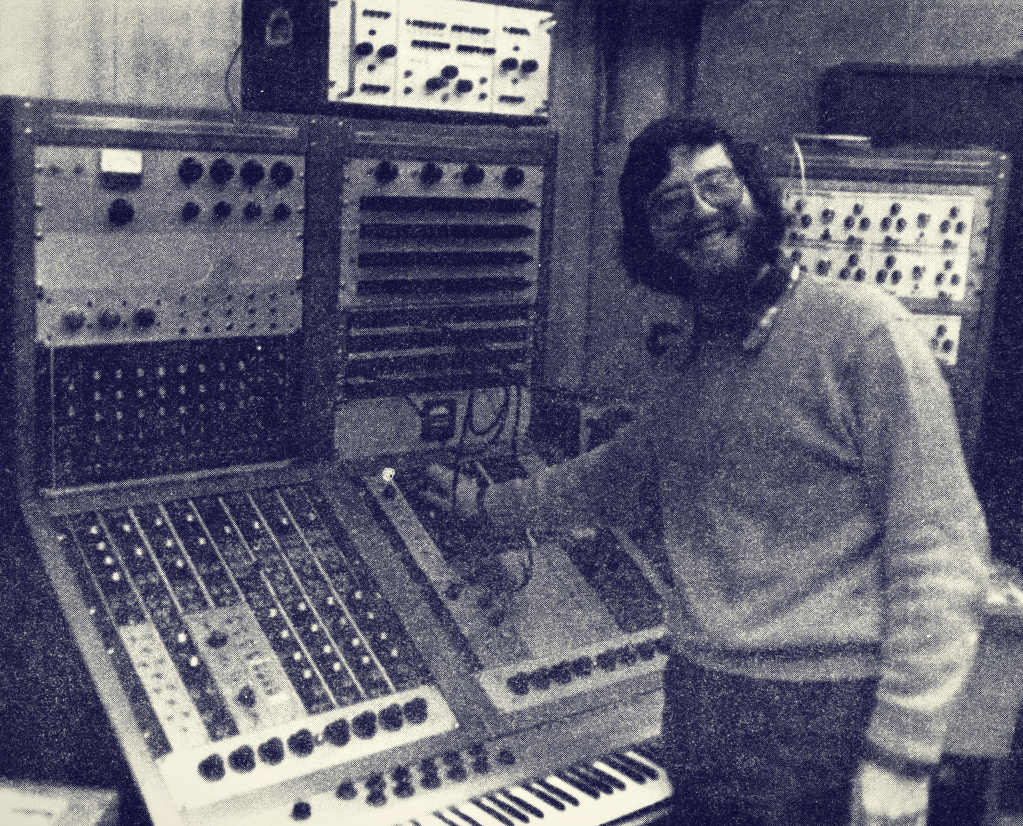
My first large work of analog electronic music, Celestial Ceremonies combines otherworldly sounds made with this now antiquated equipment at Wilson’s U.Mich. Electronic Music Studio. (You may hear a resemblance to the sounds of EXIGENCIES.) Updating my work in 2017 with digital enhancements, I also separated out a suite of four sound sketches with subtitles.
Celestial Ceremonies
Clark 1976 (TC-33)



Kraken
For a sample of my current use of digital synthesis technology, we go back to La Mer. Diving into what has been described as our other unexplored frontier, here is a fantasy sketch of the deep sea on the blue planet.
Mar Profundo
Clark 2025 (TC-156)

______________
8. Zeitmasse
Interlochen, 1976
The German word Zeit means “time.” While masse sounds like “masses,” it actually tranlates “measures.” The two together make the musical term “tempos” — or in the Italian plural, tempi.
German composer Karlheinz Stockhausen composed his “Time Measures” for five woodwinds (flute, oboe, cor anglais, clarinet, and bassoon) in 1955–1956, Number 5 in the composer’s catalog. Time is unmetered, rapidly and unpredictably ebbing and flowing in a dense texture of highly stretchy, elastic rhythms. Instead of predictably placed bricks, musical notes are dancing sparkles or sustained starlight.
London Sinfonietta
LISTEN › YouTube
Compare that time sense with a work of mine composed 67 years later.
DARK MATTER
Clark 2023 (TC-133)

Lucas Foss was among many composing works that were all about time. The opening song of his 1960 work,Time Cycle, for soprano, piano, clarinet, cello, and percussion, sets a poem by W. H. Auden, “We’re Late.” It begins:
“Clocks cannot tell our time of day
For what event to pray
Because we have no time, because
We have no time until
We know what time we fill,
Why time is other than time was.”
Judith Kelloch, soprano
LISTEN › YouTube
Refracting time
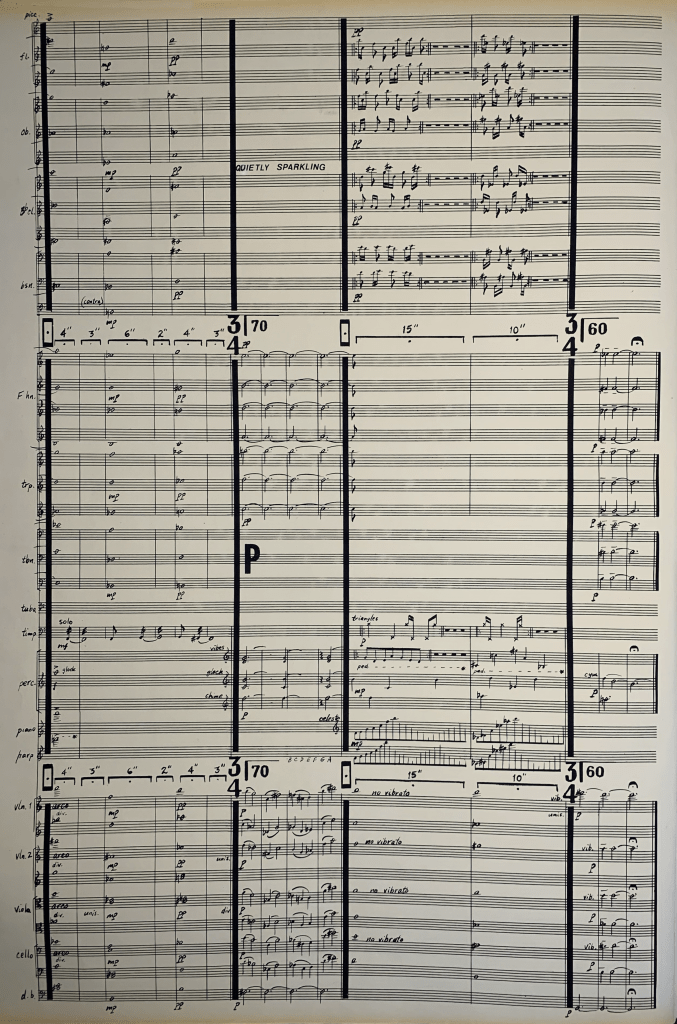
I met Foss in 1973 or ’75 when he guest conducted at the National Music Camp in Interlochen, Michigan, where I worked as assistant to the director of the university-level program (my first adminstrative gig). Back in Ann Arbor in the fall of 1975, I began writing my doctoral dissertation, a large three-movement score for symphony orchestra. Following the direction of my previous orchestral work, Animated Landscapes: Nocturne (1971), ILLUMINATIONS built sound masses animated in widely varying tempi, meters, and even unmetered free sprays of notes.
ILLUMINATIONS – Three Refractions of Time
Clark 1976 (TC-33)
1. PROJECTION (future)
2. REFLECTION (past)
3. EMANATION (present)
Receiving a Bicentennial commission from the Federation of Women’s Clubs, it was premiered in 1976 by the World Youth Symphony at Interlochen.
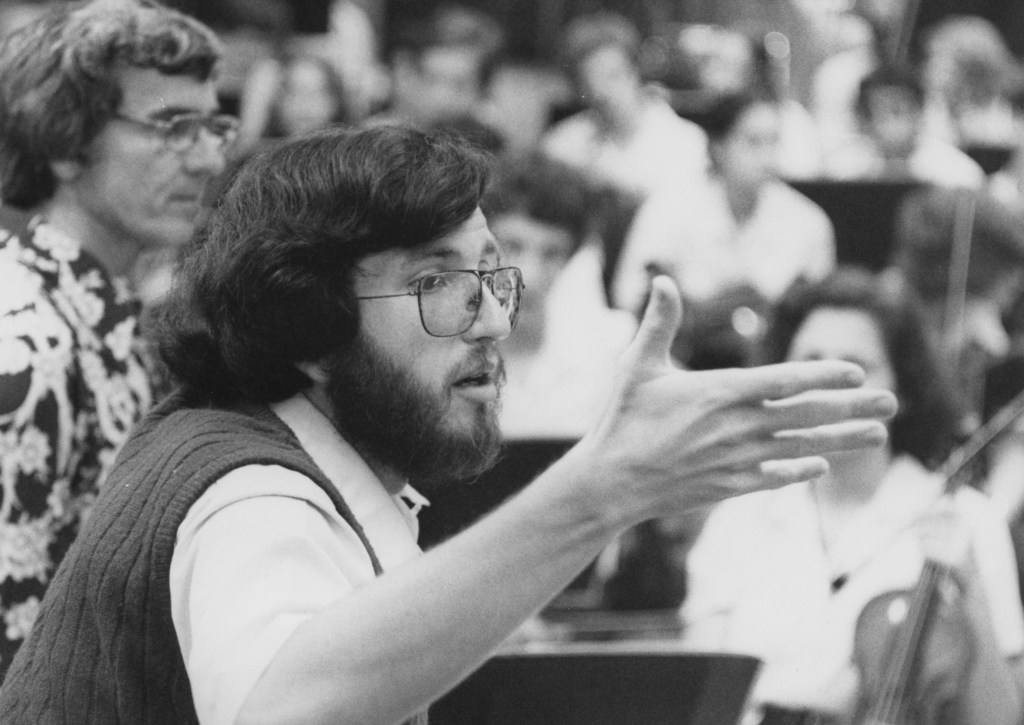

Chronos
Avant garde music in the middle of the 20th century was exploring an exploding range of new tonal possibilities — from by-tonaility to all-chromatic scales, from massive unresolved dissonance to pitchless noise. At the same time, composers were intensely interested in stretching rhythmic possibilities to the extremes of aperiodic time perception.
The term trope in medieval music was an elaboration inserted into a liturgical passage. In the 20th century, Hauer used it to name an unordered collection of six different pitches (called an unordered hexachord), half of an equal-tempered twelve-tone set. Italian Niccolo Castiglioni’s TROPI (1959) uses this pitch organizing technique, but is more about blocks of contrasting rhythmic texture separated by extended silences. Moment by moment, these blocks succeed each other, recur, combine, and dissapate — a kaleidoscope of sound in time.
Gruppo “Musica Insieme” di Cremona
LISTEN › YouTube
American George Crumb composed ground-breaking works for piano, beginning with Five Pieces for Piano in 1962. With imaginative, free-wheeling non-metric notation, he conjured a menagerie of sound sprites dancing through an ever-changing timescape.
Thomas Little, piano
LISTEN › YouTube
In 1973, he went deeper with the first of four volumes of innovative piano music, Makrokosmos I – Twelve Fantasy Pieces after the Zodiac. Here is Nr. 12:
Scott Sherman, piano
LISTEN › YouTube
In 1975 at Rackham Auditorium on the University of Michigan campus, I heard a live performance of this monumental work by David Burge, for whom the piece was composed. It had a profound impact. My own dive into this sound-in-time cosmos had only four character studies:
- precession of the equinoxes
- Stonehenge at dawn
- Heraclitean vortex
- lunar litany
Geography of the Chronosphere
Clark 1975 (TC-32)
Max Lifchitz, piano

Before Time
Stephen Hawking, the great theoretical physicist and cosmologist, is famous for solving in 1974 the mind-boggling mathematics of black holes and what became known as their Hawking Radiation. He also wrote a fascinating book, A Brief History of Time. Now, after Hawking’s death, his last collaborator, Thomas Hertog, has published On the Origins of Time explaining Hawking’s theory of how Time itself began at the Hot Big Bang birth of the universe. The idea, in grossly simplified geometry, is that Space and Time were united as one primordial sphere that dramatically split apart at the Big Bang’s initial hyperinflation into expanding Space and progressing Time. Before that moment, there was no time, no before.
The musical challenge: how to express utter timelessness before the explosion; and how to build a sound space that sits still then explodes. You’ll hear an initial sound space of just one pitch, G, which at first quivers in color but without perceivable rhythm. While standing still, the sound space expands by octaves and eventually explodes with a fuller spectrum of chromatic pitch color.
Clark 2023 (TC-133)

______________
9. Mapping
Leelanau, 1983
Shores
My last summer working at what was then called the National Music Camp in Interlochen, Michigan was 1983. We spent as much time off as possible on the nearby shore of Lake Michigan. Three spots on the western edge of the Leelanau peninsula were favorite magical places. Otter Creek played out into a sandy delta at the beach, perfect for a picnic. Good Harbor Bay was an excellent shore for finding gray Petoskey stones, revealing fascinating hexagonal-shaped fossils when wet. Farther north, the Great Sleeping Bear Sand Dunes rise majestically hundreds of feet above the water’s edge.
Béla Viktor János Bartók’s monumental 1937 work, Music for Strings, Percussion and Celeste, begins with a mysterious, meandering line played by subdued violas. It sounds to me like walking at the water’s curving edge on a fog-shrouded beach. The line becomes the subject of a gigantic fugue, building to a powerful climax. In my imagination, we reach the sheer cliff of a massive bluff at the end of a Lake Michigan bay.
Music for Strings, Percussion and Celeste
Chicago Symphony
LISTEN > YouTube
Of course, Bartók never saw Lake Michigan. But shorelines are a fascinating kind of fractal patterns in nature.
In 1980, Larry Austin received a commission from the Canadian Broadcasting System and KPFA for an experimental radiophonic work. For the premiere broadcast, the performers were in three different Canadian cities, synchronized by electronic signals! The mind-boggling result was a piece consisting of
“a massively contrapuntal texture, with many instruments playing continuous, independent lines, all in different, independent tempos. The contours of each contrapuntal part were determined using maps of Canadian coastlines.”
[Clark — Larry Austin: Life and Works of an Experimental composer. Borik Press, 2012, p. 40]
I.C.M.C. 1981, Denton Texas
LISTEN › YouTube
Glacially-etched shorelines also inspired sonic imagery for a series of my pieces culminating in PENINSULA. Mappings of the natural contours of the Leelanau Peninsula provided richly varied patterns as basic coordinate numbers for sculpting sound patterns. The piano explores some of the endless possibilities for articulating a spectrum of sonorities. A surrounding environment of synthetic sounds was made by digitally analyzing timbral qualities of acoustic instruments, mostly with percussive articulations (metaphorically the rocky shore). The timbres were modified and resynthesized into a pointillistic sound texture. The density of the sound events rises and falls in waves according to changing values derived from the basic mappings. Larger confluences of waves are located in time by map points of special significance on the graph.
The coexistence of piano sonorities and synthetic sounds is a metaphorical meeting of seascape and landscape, both animated in time.
PENINSULA
Clark 1984 (TC-50) Borik Press

Clifton Matthews, piano, Winston-Salem NC, Feb. 2007
There were many other groundbreaking pieces by my late friend and collaborator, Larry Austin. The first, Improvisations for Orchestra and Jazz Soloists, brought him to national prominence in 1964 with highly publicized broadcast performances by Bernstein and the New York Philharmonic.
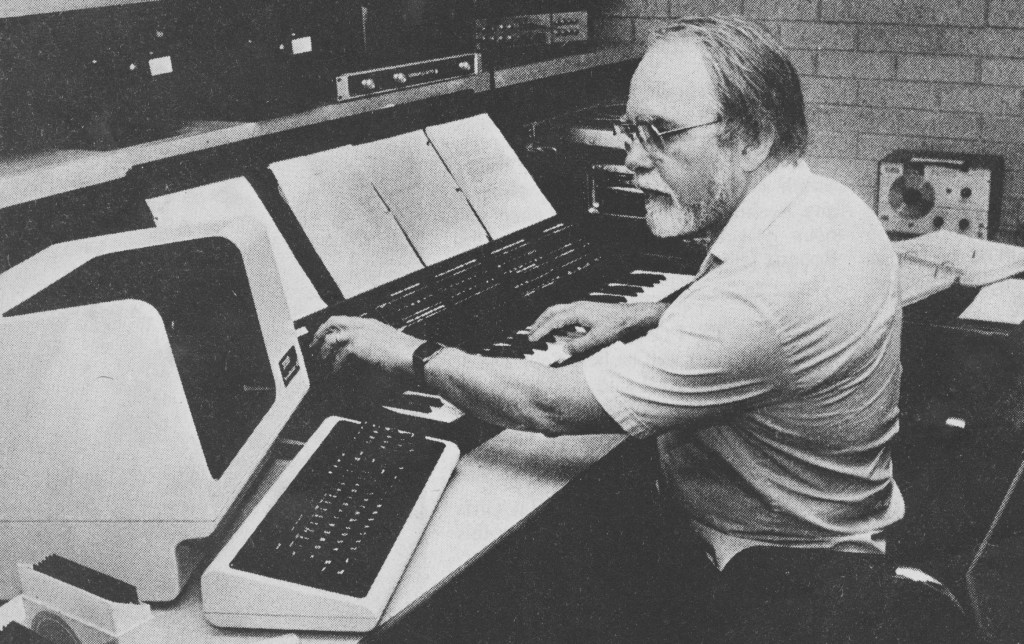
As Austin moved into computer music, he began exploring compositional algorithms using mathematical models such as fractals.
Some of Charles Ives’ sketches for his monumental, never completed Universe Symphony were tracings of the outlines of rock formations. Austin studied deeply this Ives work starting in 1974 and eventually completed a version of Universe Symphony for expanded orchestras in 1993. In Austin’s own work beginning in 1976, mapping contours of mountain ridges and star constellations yielded musical patterns for First Fantasy on Ives’ Universe Symphony, Maroon Bells, and *Stars.
Constellations
Always interested in astronomy, I tried plotting star constellations on two-dimensional matrix graphs. The coordinates of each star in a constellation could be interpreted as time-point and pitch information, resulting in a complex arpeggiated group of notes. More intriguing was the capability to rotate the map, resulting in many possible variants that stretch or compress the rhythm and chord structure.

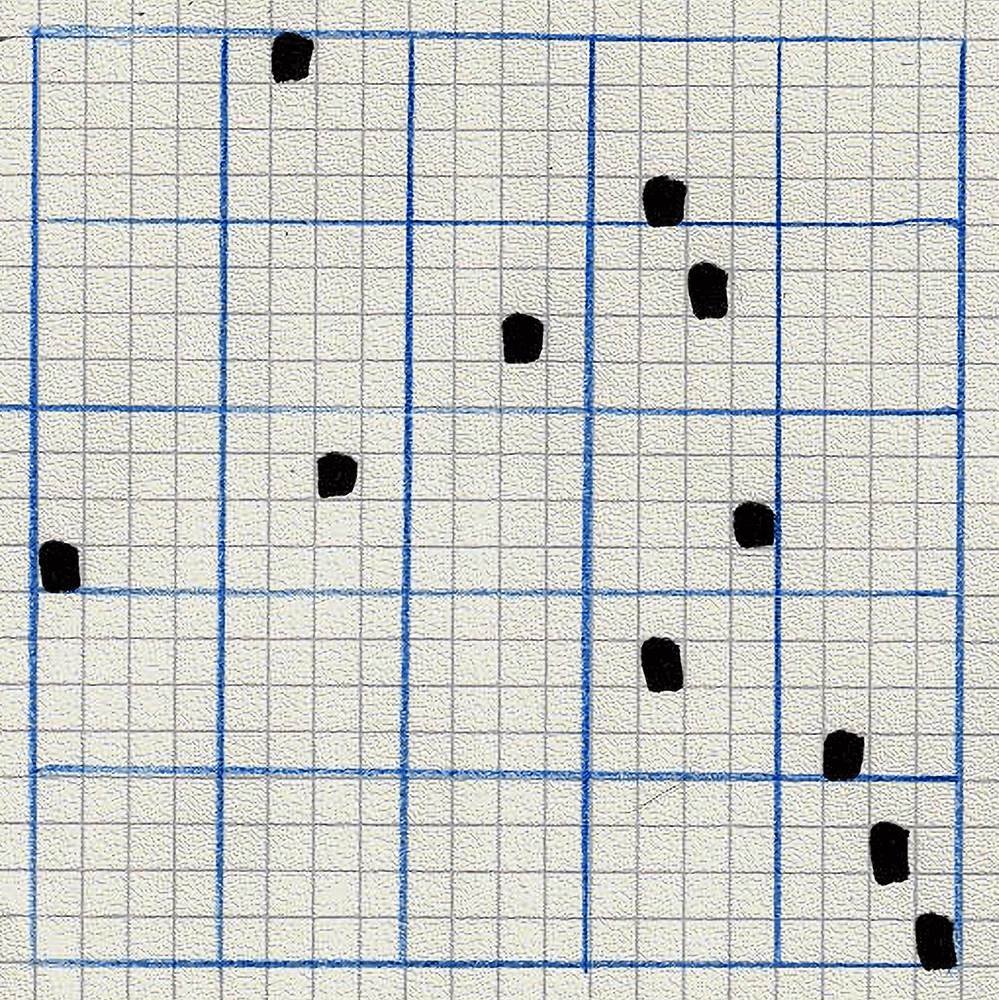
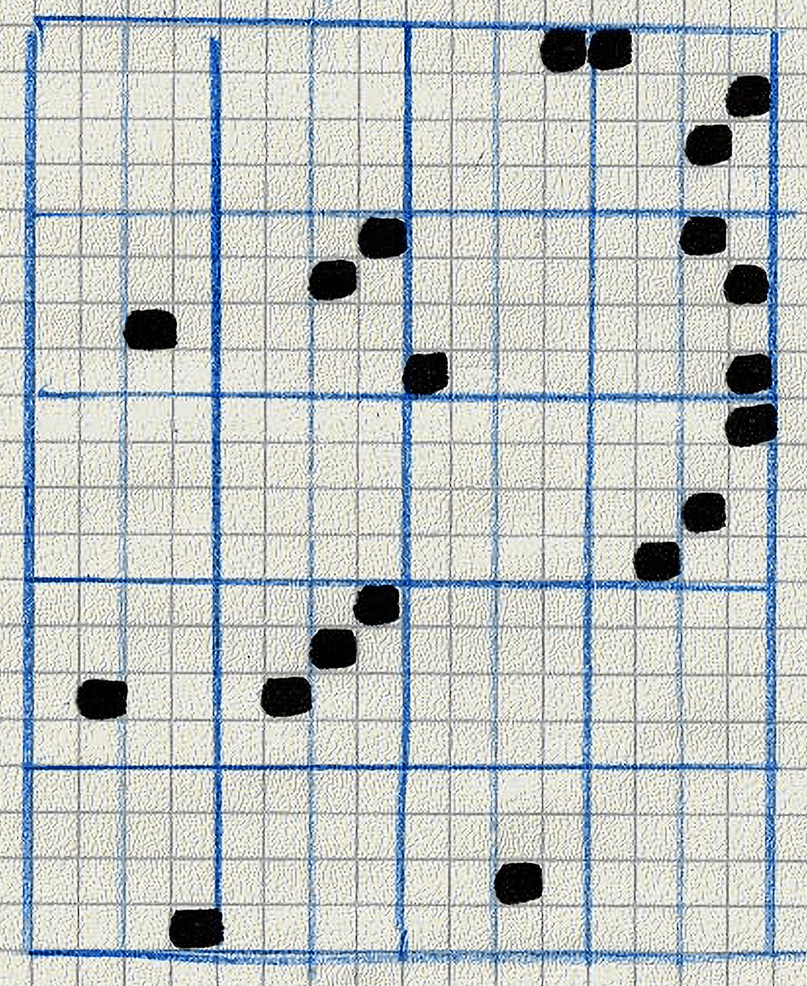

The first compositional product of this design work, LIGHTFORMS 1 – Constellations (TC-65), scored for piano, was published by Borik Press in 1992. Naming these patterns, pitch-time chord arpeggios, as constellations became a breakthrough concept
In my book, Mapping the Music Universe, I cite a remarkable pioneer of cartography. “William Smith, a rural surveyor, in 1799 drew a colorful map of the subterranean rock strata of his county in English coal country, launching the modern science of geology.” The map was extraordinary not only as a scientific breakthrough, but also visually by his hand coloring each huge copy.
As digital synthesizers came along, sound making with computers offered more calculated control of the timbral (tone color) spectrum. My astronomical metaphor continued with a 1993 piece, using the then state-of-the-art Synclavier II digital synthesizer to “color” the constellation patterns of LIGHTFORMS 1. Reflecting the varied colors of stars, I built color families of sound, distinguishing unique frequency-modulation ratios for each group.
LIGHTFORMS 2: StarSpectra
Clark 1993 (TC-68)
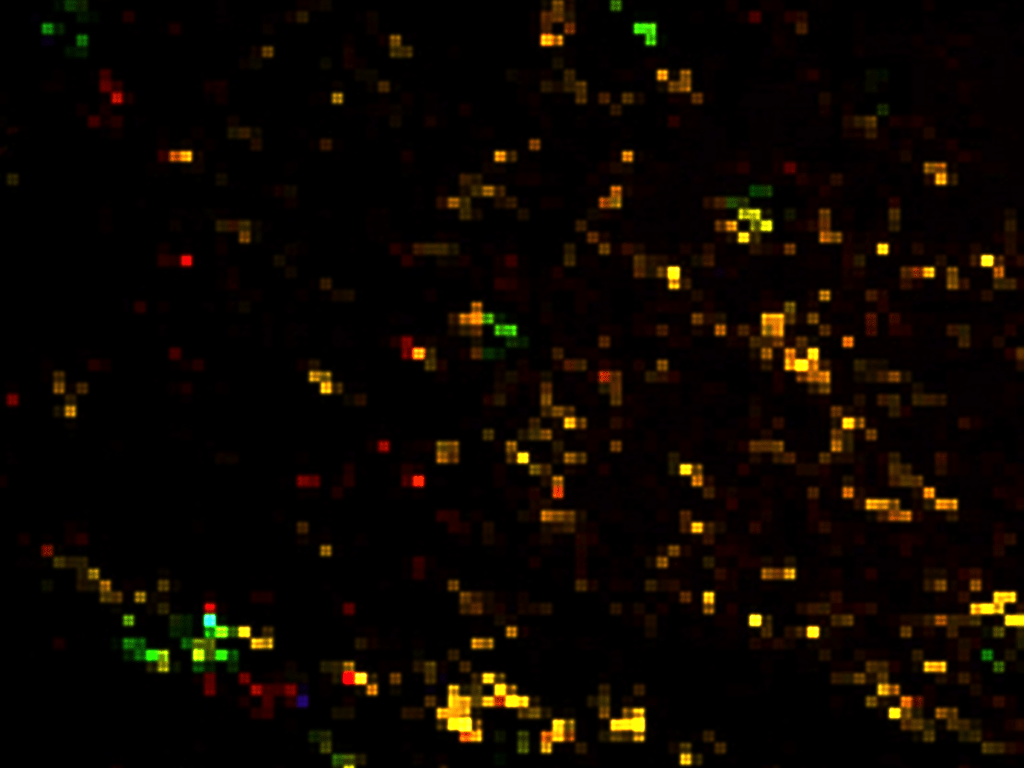
In 1887, French astronomer Amédée Mouchez launched an ambitious international star-mapping project (Carte du Ciel) at the Paris Observatory. It was never finished, until now the challenge has been taken up by the new Vera C. Rubin Observatory (formerly the Large Synoptic Survey Telescope) in Chile. It is conducting the Legacy Survey of Space and Time, repeated astronomical surveys of the entire southern sky.
From wandering forest paths to trekking scenic shorelines, my life has always been full of ambient exploration. Mapping has become my grand metaphor for exploring musical territory, culminating in the book, Mapping the Music Universe. It begins:
“The heavenly motions are nothing
but a continuous song for several voices,
perceived not by the ear but by the intellect,
a figured music that sets landmarks
in the immeasurable flow of time.”
— Galileo Galilei
“When we gaze at stars and planets, they appear as stationary points of light, fixed in place in what seems a random pattern across the entire night sky visible to our hemisphere. Time stands still.
“Throughout human time, humans have imagined that stars make picture patterns we name as constellations: fish, warriors, goddesses, animals. Only the persistent observers, such as astronomers, identify their nightly march across the sky, rising in the east and disappearing below the western horizon.”
In Mapping the Music Universe, a studied journey through musical time, pitch, and structure, many composed examples took on characters of named constellations, galaxies, and galaxy clusters. They coalesced into 12 etudes, collected here as “a continuous song.”
Clark 2021 (TC-114)
Listen, imagining a 24-hour 360º rotation of our earthbound telescope, viewing the entire cosmos in 24 minutes.
______________
10. Lightforms
Denton, 1985
In the Vienna journal log 11, we will explore the third of Schoenberg’s Five Pieces for Orchestra , Op. 16, subtitled “Summer morning by a lake.” It evokes the color (farben) of light in that scene. Another work, by Schoenberg’s Vienna colleague, Webern, to me is metaphorically also about light and color, though its title is abstract. In his Variations, Op. 30 (1940), brief flashes of light come out of silence, isolated fragments of singular orchestral instruments’ sound colors.
Berliner Philharmoniker
LISTEN › YouTube
Light follows form
In 1985 I first saw the work of photographer Carlotta Corpron in Denton, where she was on the faculty at Texas Woman’s University. Her stark black-and-white images were all about how light embraced the contours of physical objects.
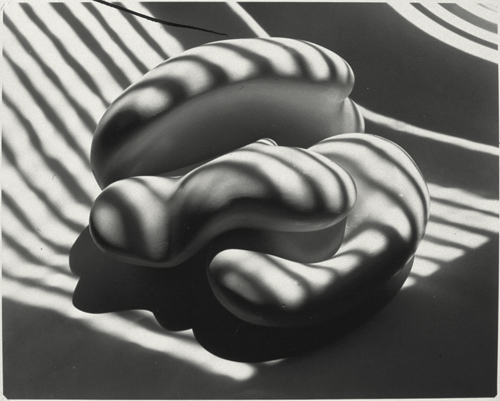
This inspired what became a continuing fascination for me in exploring musical metaphors for the magic of light, beginning with:
- LIGHT FOLLOWS FORM — digital sound sculpture. TC-51 (1985) Borik Press
- PATHS OF LIGHT (Homage to Webern) — mobiles for instruments, tape. TC-52 (1985)
- OF LIGHT AND SHADOW: Two Canonic Sketches — wind ensemble. TC-54 (1985)
The first in the LIGHTFORMS series, Constellations (1992, TC-65) for piano and visual projections, combined spacious, floating piano sonorities with photographed light emanating through stained glass windows in the sanctuary of Denton’s First United Methodist Church. Pitch and rhythmic patterns were derived from tracings of star maps of several constellations. (We’ll explore this and its synthesized sequel, LIGHTFORMS 2: Star Spectra (1993, TC-68) in a journal entry, “about mapping”Maps.”)
LIGHTFORMS 3: Ancient Images (2005, TC-76) is a wind ensemble scoring of a 1996 piece, Mucha’s Light, based on five of Alfons Mucha’s 20 epic paintings, Slovanská Epopej (“Slavic Epic”). We’ll explore this one in another journal post, “Sound painting.”
Spectrum
More recently, the LIGHTFORMS series continues, with three multimedia videos (viewable on YouTube) combining new computer music with my more experimental and sometimes abstract photo images.
Sonic exploration of cosmic harmony in a quiet, almost timeless star-gazing mood . . .
Clark 2025 (TC-150)

Timbres emerge, echo, and fade in a floating, slow-moving distant landscape of color . . .
Clark 2025 (TC-152)
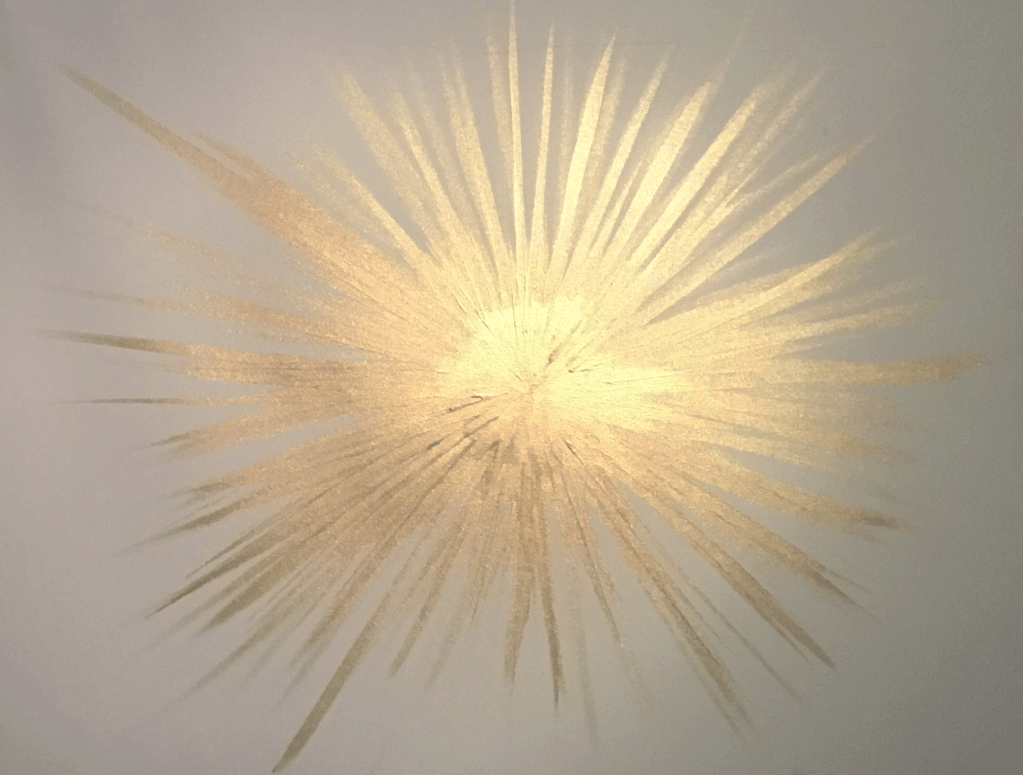
Musical impressions of dusk, with a Haiku-like text quoting one mellifluous phrase from Robert Frost’s “Waiting Afield at Dusk” . . .
Clark 2025 (TC-153)

Streams of crimson streak the sky
above tree silhouettes.
Dusk settles
“in the antiphony of afterglow”.
A new night consumes the shadows.
______________
 MAPPING MUSIC