a composer’s journal
part 2
CONTENTS
PART 3
The journal retrospectively logs places, events, ideas, and sounds of a life of composing. Each chapter remembers a time and place in my career, and explores a particular compositional design approach derived from my study of 20th-century masterworks. Audio clips offer listening to all pieces cited, both the masterworks and my later compositions inspired by them. Take some time to listen as well as read!

11. Moravská Hudba
Brno, 1991
I first visited Czechoslovakia in 1991 to perform at the Brno International Music Festival. How this opportunity came about is a story in itself. My colleague Tom Sovik at the University of North Texas joined a group promoting the City of Dallas as a sister city with Brno, the second largest Czech city and capital of the Moravian province, where he had done his doctoral musicology research. At his suggestion, I wrote a short piece as a gift to Brno. Its mayor turned over the gift score to the secretariat of Brno’s International Music Festival, a distinguished Moravian composer Arnošt Parsch. He invited me to come to the festival and conduct my music. The result was an October 1991 performance in Brno’s New Town Hall of two of my works, ANTIPHONS (1989) and CANZONA, for combined woodwind and brass quintets, which I conducted.
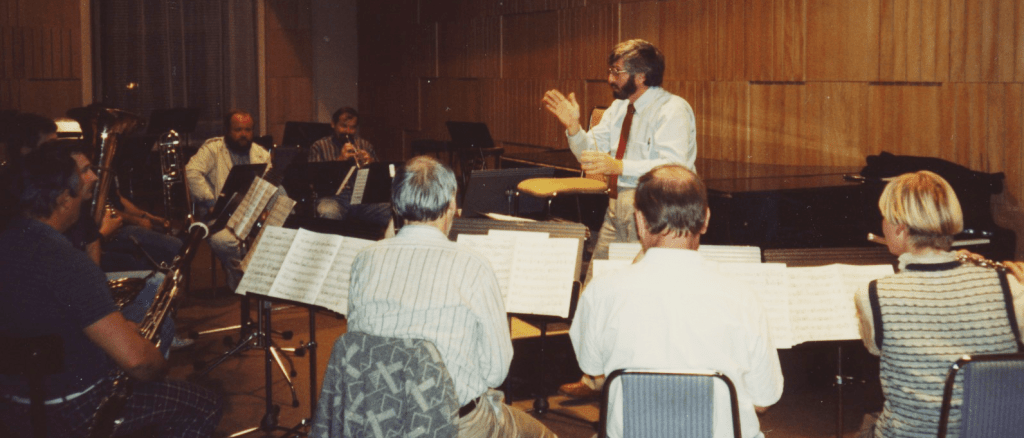
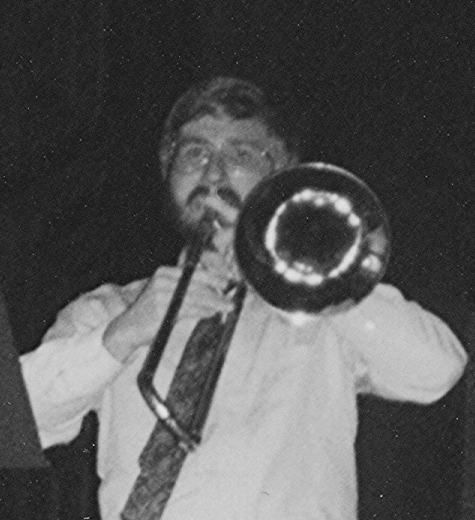
Parsch invited me back in 1992 for the 27th Brno International Festival’s Experimental Music Exposition V. I presented my LIGHTFORMS 2: StarSpectra multimedia computer music and played trombone in an experimental multimedia piece by my friend, Rodney Waschka. I had performed the same program early that fall at the Festival Internacional Alfonso Reyes in Monterrey, Mexico.

PTACí
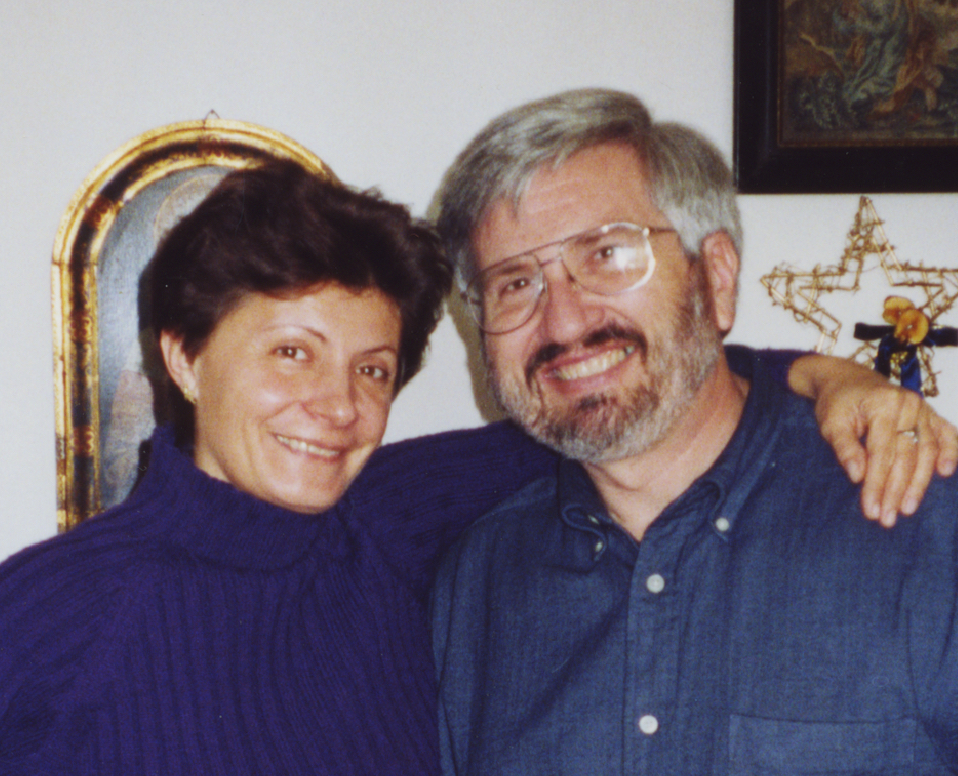
While in Brno for the 1991 festival, I met choreographer Hana Smičkova, who invited me to compose a work for her Mimi Fortunae Dance Theater, which rehearsed in the ancient Spilberk Castle. I began studying the great 20th-century Moravian composer Leoš Janáček’s music as background for the ballet’s composition.
PTACí (“Birds”) was premiered in Brno in 1993 by the Moravian Chamber Orchestra, which I conducted. The ballet, choreographed by Smičkova, was performed by Mimi Fortunae in historic Mahunovo Divadlo, the first building in Europe to be equipped by Thomas Edison with electric lights.
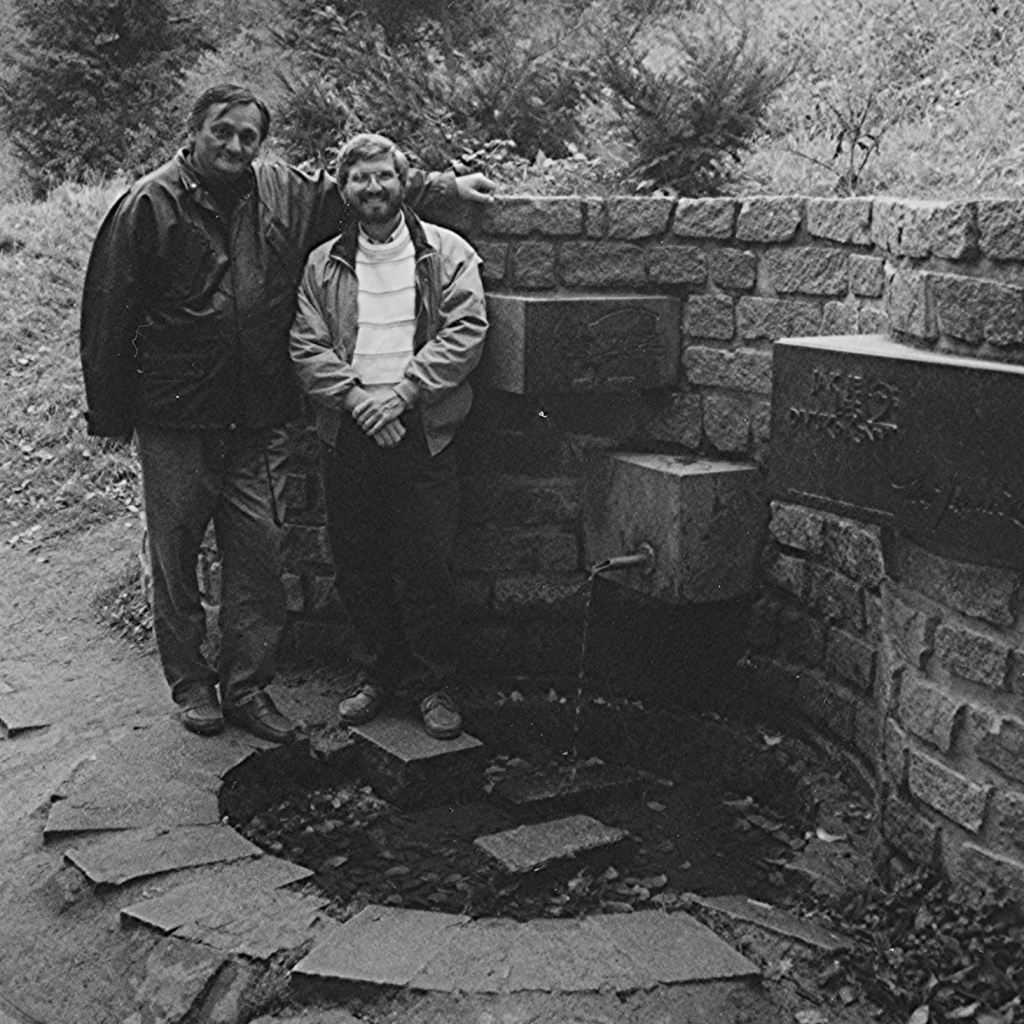
During these years, Parsch and I became composer friends. Our visits to each other always included long walks in nature and deep discussions of music, art, and culture. In 1991 I had visited the northern Moravian mountain village of Hukvaldy, the summer home of Janáček. He loved nature walks and studied bird songs.
Hukvaldy Sketches was first a concert suite of PTACI, my set of modern musical impressions of old Moravia, in the ancient heart of Eastern Europe. Scored for a chamber quartet, it was premiered February 6, 2018, at Texas State University Performing Arts Center, by Ian Davidson (oboe), Vanguel Tangarov (clarinet), Ames Asbell (viola), and Kari Klier (marimba).
The final transformation of this work was a re-scoring of Hukvaldy Sketches for the original PTACI orchestration. Its five scenes:
Hrad – morning climb to the castle ruins
Ptáci – watching Leoš’s birds
Vody – forest streams and shadows
Bystroušky – mouflons and other mountain wildlife
Podzim – autumn sunset
PTACí / Hukvaldy Sketches
Clark 1993/2016 (TC-69/80)
Morava
In my intense study of Janácek, I reveled in the expressive depth of his uniquely modern Moravian music. His powerful String Quartet No. 2 and his collection of gentle piano music, Po zarostlém chodníčku, affected me deeply.
In one of my Brno performances, Parsch’s Czech colleagues commented on my music’s affinity to modern Moravian musical style. I was informally dubbed an honorary Moravian Composer, a distinction I proudly took as a high honor of their acceptance. Since then, I have written many pieces with Czech imagery:
- PTACí – Hukvaldy Sketches
- MUCHA’S LIGHT – Ancient Images
- MORAVIAN MOUNTAIN SONGS
- LIDICE REMEMBERED
- KARLůV MOST (Charles Bridge)
- CLIMBING BLANíK
- A NEW LIDICE
- KLADNO SKETCHES
- ŠPILBERK CASTLE
- BRNO VARIATIONS
Two of these are vocal music that include some Czech lyrics. The treble choir piece A NEW LIDICE begins with “We build a new village, while a just world watches. Stavíme novou vesnici. Spravedlivý svêt bude sledovat.” Children (including my daughter Alison) sang a short phrase in Czech in MORAVIAN MOUNTAIN SONGS, written for the Woodrow Wilson Elementary School Choir in Denton, Texas.
Sinfonietta
Leos Janácek composed his great concert work, Sinfonietta, in 1926 for the Sokol Gymnastic Festival in Prague. Janáček said it was intended to express “contemporary free man, his spiritual beauty and joy, his strength, courage and determination to fight for victory.” It is what I call musical sketches of his home city, Brno, the largest city in the Moravian east of what was then Czechoslovakia.
I visited Brno several times starting in 1991 to perform my music at its International Music Festival.
LISTEN ›
UNT Symphony Orch. on YouTube
The festival traditionally ends with a performance of Sinfonietta by the Brno Philharmonic in Janácek Divadlo (theatre). In 1993 my ballet, PTACI, was premiered at historic Mahunovo Divadlo, across a plaza from Janácek Divadlo.
Though I could have continued my “Sketches” series with a “Brno Sketches,” instead a 2024 work is a set of more abstract variations partly based on and quoting themes from Sinfonietta (in the tradition of Brahms’ Variations on a Theme of Haydn).
- Variation 1 “Canon” engages that ancient musical technique, evoking Brno’s medieval history.
- Variation 2 “Overtones” explores two harmonic series, C and Bb, painted over each other in layers of color, with hints of fanfare emerging through the clouds.
- Variation 3 “Constellations” is a kaleidoscopic succession of large sonorities built on stone-sturdy Perfect Fifth intervals brightened by jazz-like added tones.
- Variation 4 “Fanfare” is an ostinato pattern-music fantasia on Sinfonietta‘s grand fanfare themes.
Brno Variations
Clark 2024 (TC-138)
___________

12. Zweite Wiener Schule
Vienna, 1992
The so-called “Second Viennese School” consisted of influential master composer Arnold Schoenberg and his protegés, Alban Berg and Anton Webern in early 20th-century Vienna. They pioneered a compositional approach described succinctly by Wikipedia as “totally chromatic expressionism without a firm tonal centre, often referred to as atonality; and later, Schoenberg’s serial twelve-tone technique.”
When I began studying composition at Michigan in 1968, I quickly became immersed in exploration of pitch structure and broader tonality freed from the long-traditional restrictive limits of tonality: diatonic major and minor keys and their chromatic extensions, triadic sonorities and tonal centers. The complexity of this new musical realm is not truly “atonal” but rather an opening to a universe of fascinating, colorful possibility.
Three pieces of the early 20th century, which I studied deeply in the 1970s and later used extensively in my teaching of modern music, were each masterful explorations of musical sound color.
- Claude Debussy’s La Mer (1905), an iconic tone poem of Impressionistic musical painting, was discussed in Journal 1. Musique Française.
- Anton Webern’s Symphony, Op. 21 (1928) is maybe the briefest piece ever titled as a symphony, a succinct, two-movement work whose first movement is a delicate gem of pointillistic color and complex 12-tone harmony.
- Arnold Schoenberg’s Five Pieces for Orchestra, Op. 16 (1909); the third piece is a gentle study of orchestral sound color titled “Sommermorgen an einem See (Farben)” — (Summer Morning by a Lake: Colors”.
After fifty years, these works are embedded more deeply than ever in my musical consciousness.
It was only in 1992, on a side trip by bus from Brno, that I visited Vienna, the great musical city of Haydn, Beethoven, and Mozart in his last years. Mozart’s grave, not in the main cemetery but on the edge of the city, was hard to find but emotionally powerful to visit.
Farben
“Farben” is an early Schoenberg piece that is all about instrumental sound color and exotic harmonic color. The chords are not triads but rather atonally “dissonant” sonorities that place the instrumental colors in close, glowing pitch-interval proximity.
LISTEN ›
Chicago Symphony on YouTube
My recent piece, Farben, pays special homage to Schoenberg’s masterpiece, layering kaleidoscopic wind-instrument colors to build massive, morphing constellations, echoing Webern’s hidden chord-color symmetry.
Clark 2025 (TC-149)
I have long admired and been influenced by the music of Anton Webern. Known historically as a member of the Second Viennese School with Alban Berg and mentor Arnold Schoenberg, the three were pioneers of so-called atonal music and 12-tone-row serial harmonic organization. I find the term “atonal” misleading and negative, as their 12-tone processes achieved new “12-tone tonalities” — not simply a rejection of traditional tonal harmony but also striving to create new and more complex tonalities.
What I admire about Webern’s mostly-quiet instrumental miniatures (his Symphonie Op. 21 has only two sparsely-scored movements) is the delicate, crystalline quality of his pitch constellations; and their gently lyric, precious setting into transparent, pointillistic textures, pearl-strings of separate, delicate instrumental colors (called Klangfarbenmelodie). The first movement is built on one enormous, static, 13-pitch chord containing all 12 pitch classes of the chromatic universe in a symmetrical interval pattern, a palindrome interval pattern, the same top to bottom as bottom to top.
Todesfall in Mittersill
Webern’s mentor, Schoenberg, as a Jew was compelled to emigrate to the U.S. in 1933 before it was too late. Webern, not Jewish, stayed in Vienna, where he was born, suffered through and survived World War II, only to be fatally shot by a U.S. Army soldier during the Allied occupation of Austria in 1945. My homage to this beautiful musical mind tries to capture his music’s “lyrical, poetic concision” (Wikipedia).
Clark 2024 (TC-115)
Neue Tonalität
My compositional excursions in 12-tone tonality traverse many of my compositions. One that sums it up well, if not succinctly, is VIENNESE SKETCHES. A set of “Twelve Miniatures in Twelve Tones,” parts I through IV are adapted from Webern Elegy , and V through XII from MapLab7 – For Little Arnold from my book, Mapping the Music Universe.
Not intended to portray the historical European city, VIENNESE SKETCHES instead explores various textures and tonalities using the musical techniques of the Second Viennese School. My goal was to create a complex counterpoint of sound constellations that is less dissonant and more sonorous — my sense of a new tonality.
Clark 2023 (TC-131)
___________
13. Millennium
Taiwan, 2001
Perhaps the apex of my administrative career might have been the 2000-2001 year I was interim dean of then the largest music school in the nation, the UNT College of Music. Though I hired several professors, launched a college magazine and a “Dean’s Camerata” donor recognition group, and headed up our part of a university capital campaign, I didn’t do any composing.

There was international travel, though. My Chinese-American colleague Gene Cho had established an exchange relationship with the National Taiwan University of the Arts, and he guided me to Taipei for the grand ceremony to sign the formal agreement.
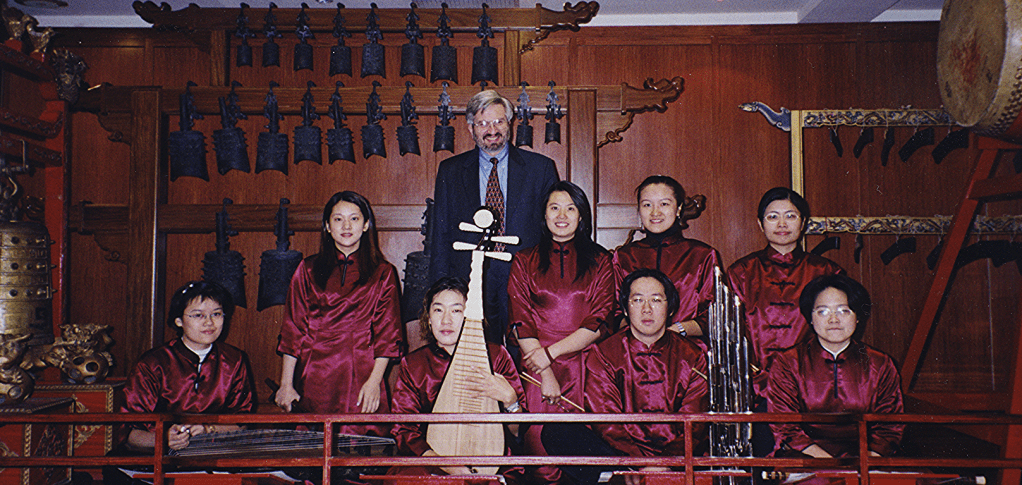
While there, we saw a traveling exhibit of the Qin Shi Huang Terracotta Army, took a train to visit Hsiuping University of Science and Technology in Changhua City, and went by car to the northern tip of the island of Formosa. In a cold mist on the rocky shore, we gazed out at the infinite expanse of the Pacific Ocean.
California composer Robert Erickson wrote that the stimulus for his music “is usually some noise or some non-music sound composing the environment in which I live, its sounds, its ambience.” In 1968 he composed Pacific Sirens (ocean sounds) involving taped sounds gathered from the environment with acoustic instruments.
LISTEN ›
GreyWing Ensemble
Global warming
I was commissioned by North Carolina State University’s Arts Now Series, directed by Dr. Rodney Waschka II, for an artistic contribution to The Ericka Fairchild Symposium on Climate Change. “The Fourth Angel” refers to one of the “seven last plagues” as they were called in the King James Version of the Bible. In the NRSV translation, Revelation 16:8 reads:
“The fourth angel poured his bowl on the sun, and it was allowed to scorch people with fire; they were scorched by the fierce heat.”
The other six angels and their bowls wrought plagues of painful sores, bloody seas, bloody rivers, darkness, a dried up Euphrates, and finally the seventh angel’s loud voice pronounced, “It is done!”
Standing in the middle of the sequence, the prophecy of the fourth angel is a dramatic metaphor for global warming.
The Fourth Angel
Clark 2006 (TC-77)
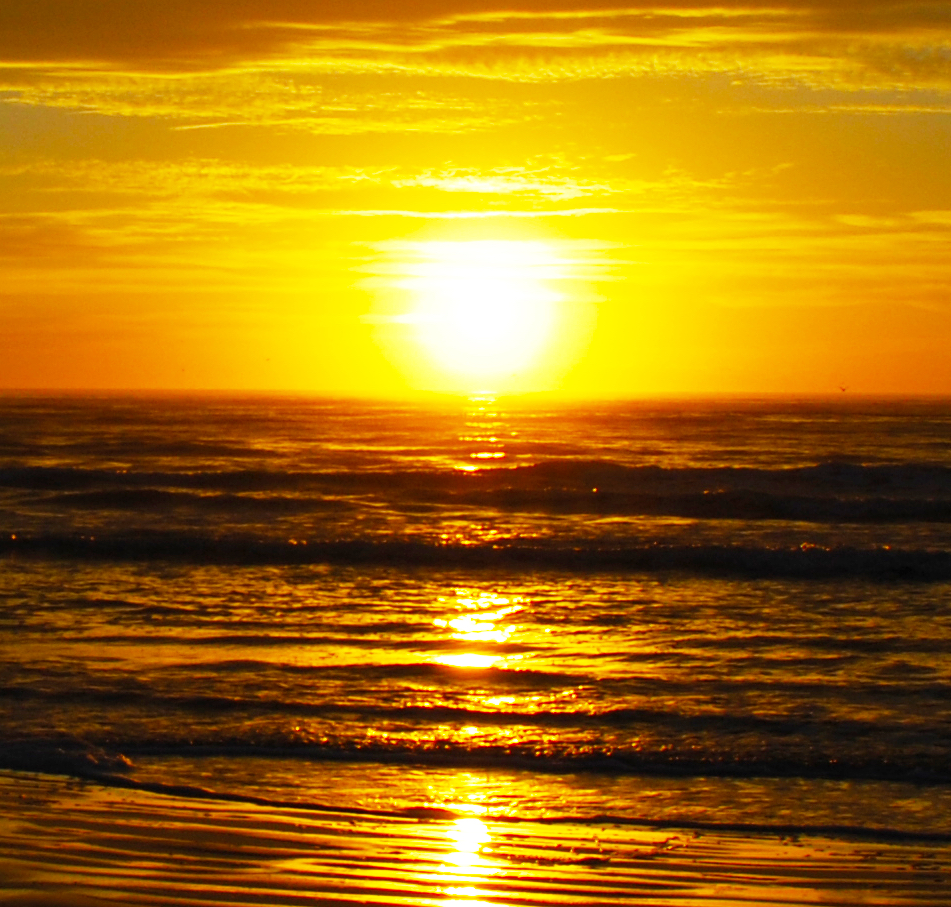
Though there are some literal sound references, the angel is portrayed more broadly as a metaphor for the forces of nature. Rather than capturing actual samples of nature sounds, the computer-generated sounds are all synthesized, musical objects constructed employing a now-common computing technique called grain-table synthesis. (The choice of machine synthesis over nature sampling suggests a particular belief about the causes of global warming.) These synthetic sound images form a broad range of simple and complex musical rhythms and textures evocative of the natural world:
- sunlight reflected off water and ice
- glaciers calving and cascading into the ocean
- solar radiation
- night sounds.
Extending the metaphor, sounds echo and swirl in sound space, just as do the dynamic, powerful weather systems that shape our global climate.
Other angels
Thus pieces about angels began with The Fourth Angel. Portraying imagery from Revelation, the seven angels in chapter 16 inflict suffering upon humanity. Angels of Bright Splendor evokes an equally awesome but more hopeful experience of our life-giving sun.
In Zuni origin mythology, thunder sounded, and The People climbed from darkness, emerging into the daylight world. Seeing the Sun (Awonawilona, they cried, not used to such intense light. Where their tears fell, sunflowers sprang from the earth.
Angels of Bright Splendor

Spirits
Heavenly light, voiced musically with metamorphic chord clusters, became an iconic sound in a famous 1968 movie. György Ligeti describes the technique for his 1966 piece for 16-part mixed choir, Lux Aeterna (“eternal light”):
“The complex polyphony of the individual parts, embodied in a harmonic-musical flow in which the harmonies do not change suddenly, but merge into one another; one clearly discernible interval combination is gradually blurred, and from this cloudiness it is possible to discern a new interval combination taking shape.”
LISTEN ›
A Cappella Amsterdam
Angels in most world religions and mythologies seem to serve one of two functions: wielding controlling power over the physical world or over human affairs; or making spiritual announcements to humans. The next piece in the angels series, scored for antiphonal double SATB choirs, brass, and strings, gives voice to the unseen voices of angels and other spirits. The choir pronounces the names of Native American and Hebrew spirits representing the power and beauty of nature – wind, moonlight, rainbows.
- Gǎoh – chief wind spirit (Iroquois)
- Yaogah – bear spirit of the north wind (Iroquois)
- Neoga – fawn spirit of the south wind (Iroquois)
- Oyandone – moose spirit of the East Wind (Iroquois)
- Amitolane – rainbow spirit (Zuni)
- Nokomis – daughter of the moon (Algonquin)
- Gabriel – archangel of justice, annunciation (Hebrew)
- Maris stella – star of the sea (Latin)
Unseen Voices
Clark 2018 (TC-94)
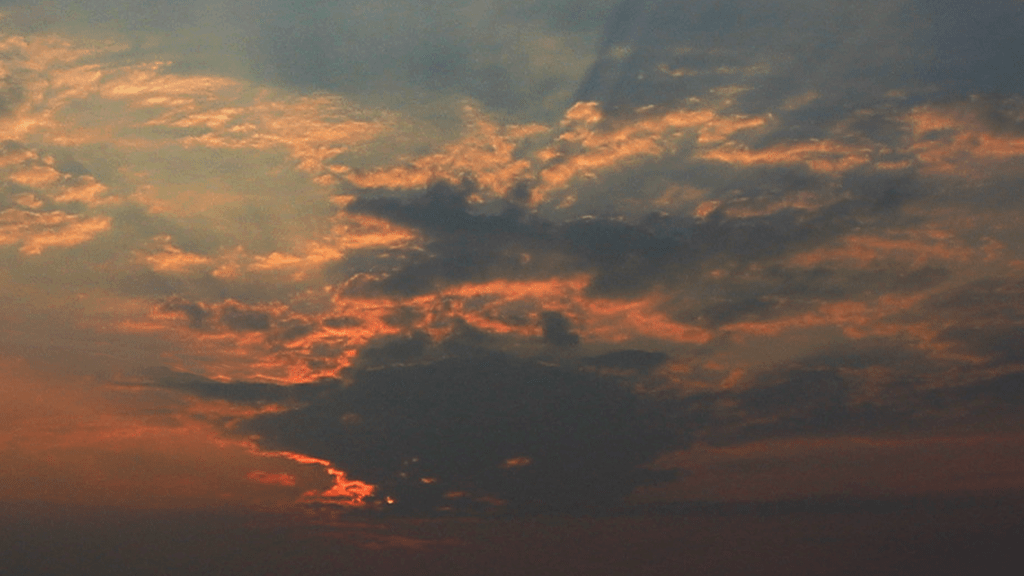
Messengers of peace and assurance . . . and hope for the future of this millenium?
___________
14. Pi, Primes, Palindromes
Blue Ridge Mountains, 2005
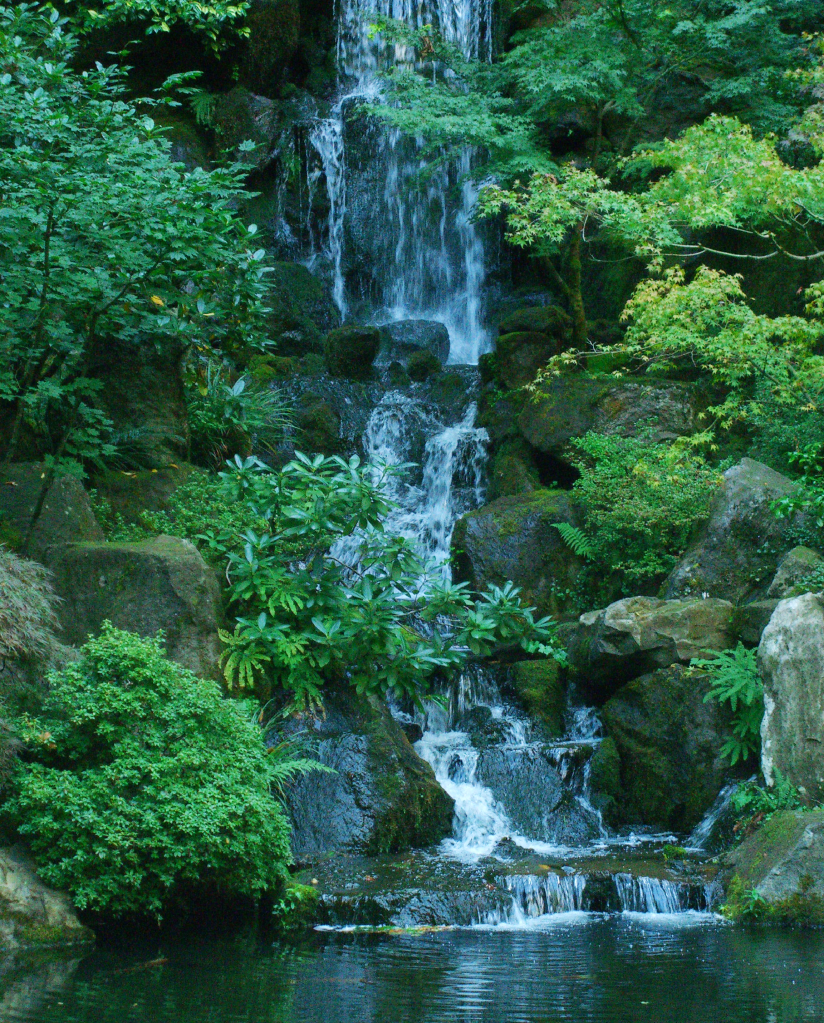
In 2005 through 2008, I lived in North Carolina only an hour away from the Parkway. October Saturdays always involved a scenic drive up to and on the Parkway to absorb the glorious fall colors and trickling of secret waterfalls. So many wonderful waterfalls, I recorded many videos, mostly for the sound.
Falling Water
Clark 2016 (TC-82)
Concrète
Some of the earliest electronic music compositions in the 1950s were called “Musique concrète” because they used recorded “real” sounds instead of electronically produced ones.
LISTEN ›
Pierre Schaeffer (1959)
Back to planets, spheres . . .
Ever since it was viewed and photographed from space by Apollo 17 in 1972, Planet Earth has become known as the Blue Planet.

Such a distant perspective reveals the pervasive blue water of oceans, brilliant white of cloud layers, and some brown/green shapes of land masses beneath.
Magic of Pi
It also reveals the spherical shape of our globe. (Euclid said a sphere is a hollow 3-dimensional rotation of a circle, and scientists have measured that Earth is not a perfectly round ball but a solid ellipsoid.) Nonetheless, the eternal, perfect rotating sphere is our iconic notion of Earth’s shape.
Spheres and the Euclidean circle that generates them in three dimensions are governed by the mathematical constant π, defined in Euclidean geometry as the ratio of a circle’s circumference to its diameter.
Pi is magic, an irrational number that cannot be expressed as a common fraction. Its decimal calculation never ends, never settling into a repeating pattern of digits, which appear to be random . . . and infinite. It starts 3.1415926535897932384626433 . . .
The beginning of its decimal expression — 3 1 4 1 5 9 — was used in composing Blue Sphere as both a rhythmic timing pattern and a corresponding dance of the lowest 9 pitches of a Pythagorean overtone series.

This is one way to literally hear π, expressing musically the eternal restlessness of our rotating blue sphere, its tides, weather, techtonic plates, etc.
Blue Sphere
Clark 2022 (TC-119)
Prime numbers
Back to the “real” sounds of musical instruments . . .
Included in my “Animated Landscapes” Sketchbook for small orchestra, Appalachian Autumn (2024, TC-142) by its title pays homage to Copland’s 1944 masterpiece, Appalachian Spring. My currently developed harmonic sensibilities resemble Copland’s open, bold sonorities. In my composition studies in the 1970s, I was fascinated by Appalachian Spring the ballet as originally scored for only 12 orchestral instruments. This original scoring was a masterpiece of orchestral painting blended with the clear contrapuntal lines of chamber music, highlighting each instrument’s colorful voice.
LISTEN ›
Perspectives Ensemble
The number 12 is interesting in that it is readily divisible in four different ways with just whole numbers (integers). A set of 12 items can be divided neatly into two groups of 6 items each, three groups of 4 each, four groups of 3, or six pairs. That relates to common musical meter signatures of 2, 3, 4, or 6 beats per measure that break down into equal subdivisions.
A prime number is interesting in that it cannot be divided without fraction by any whole number. There are theoretically an infinite number of prime numbers, but the smallest that are useful for our pattern purposes are 1, 2, 3, 5, 7, 11, 13, 17, 19, etc. The only even prime number is 2; taken out, it leaves an interesting set of odd primes, 1 3 5 7 11, that as time chunks make rhythms that do not break down into subgroups, seeming to float rather than march.
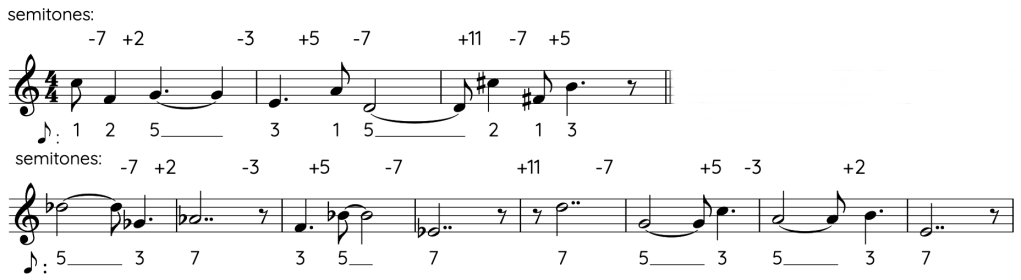
In this illustration, the durational note values are measured below in number of eighth-notes of time. Melodic intervals are measured above in number of semitones (“half steps”). Both the intervals and the duration values measure in only prime numbers. That means though the passage is written in 4 4 time, no measure breaks down into half-measure subunits; and no duration note value is immediately repeated. The rhythm cannot be felt as marching quarter notes in half-note pairs, and even some of the downbeats avoid being moments marked by a new note. The rhythm floats, like the curving Blue Ridge Mountains skyline.
Palindromes
The basis for pitch organization in Appalachian Autumn is the following 12-tone row:

Identified above the line, the serial intervals from one pitch to the next measured in semitones, form a symmetrical pattern. The sequence is identical backwards as forwards — a palindrome!
By this calculated means, melodic lines and sonorities float through different pitch-set collections suggestive of different scales and tonalities. This continually morphing tonal feel is an Impressionistic reflection of the many shapes and hues of that famous blue skyline on the Blue Ridge Parkway.

Appalachian Autumn
Clark 2024 (TC-142)

______________
15. Seven angels
Raleigh, NC 2007
In Zuni origin mythology, according to Wikipedia, thunder sounded, and all The People climbed from darkness, emerging into the daylight world. Seeing the Sun (Awonawilona) and not used to such intense light, they cried. Where their tears fell, sunflowers sprang from the earth.
Angels of Bright Splendor
Clark 2013 (TC-78)

Angels of Bright Splendor was actually the second in a series of pieces about angels that began seven years earlier with The Fourth Angel, computer music with optional instruments.
The Fourth Angel portrays an image from the Biblical book, Revelation. The seven angels in chapter 16 inflict suffering upon humanity. It was commissioned and premiered in 2007 by the Arts Now Series at North Carolina State University in Raleigh, directed by Dr. Rodney Waschka II. The commission was for an artistic contribution to The Ericka Fairchild Symposium on Climate Change.
The title refers to one of the “seven last plagues” as they were called in the King James Version of the Bible. In the NRSV translation, Revelation16:8 reads:
“The fourth angel poured his bowl on the sun,
and it was allowed to scorch people with fire;
they were scorched by the fierce heat.”
The Fourth Angel
Clark 2006 (TC-77)
The other six angels and their bowls wrought plagues of painful sores, bloody seas, bloody rivers, darkness, a dried up Euphrates, and finally the seventh angel’s loud voice pronouncing, “It is done!” Standing in the middle of the sequence, the prophecy of the fourth angel is a dramatic metaphor for global warming.
Animus
Though there are some literal sound references, the fourth angel is portrayed more broadly as a metaphor for the forces of nature. Rather than capturing actual samples of nature sounds, however, the computer-generated sounds are all synthesized, musical objects constructed employing a now-common computing technique called grain-table synthesis.
The choice of machine synthesis over nature sampling suggests a particular belief about the causes of global warming. These synthetic sound images form a broad range of simple and complex musical rhythms and textures evocative of the natural world: sunlight reflected off water and ice, glaciers calving and cascading into the ocean, solar radiation, and night sounds. Extending the metaphor, sounds echo and swirl in sound space, just as do the dynamic, powerful weather systems that shape our global climate.
In the 1970s as part of Contemporary Directions at U. Mich., I specialized in performing new and experimental works for solo trombone, with and without electronic tape sounds. Animus I (1967) by Jacob Druckman was a fascinating challenge, combining advanced trombone-playing techniques with a complex, pre-recorded and graphically-notated electronic tape part. The music portrayed an increasingly antagonistic interaction between humans and machine technology.
Druckman – Animus I
Thomas Clark, trombone
The last angel
Global warming is already devastating the earth and all life on it. Going back to Revelation and its seven frightening angels, we read that the last one pours out the voice of doom.
Revelation 16: 17-20 — Then the seventh angel poured out his bowl into the air, and a loud voice came out of the temple of heaven, saying, “It is done!” And there were noises and thunderings and lightnings; and there was a great earthquake, such a mighty and great earthquake as had not occurred since men were on the earth. Then every island fled away, and the mountains were not found.
A musical statement about all this required “pulling out all the stops.” The electronic sounds of The Fourth Angel and Angels of Bright Splendor make layered counterpoint for a dark, unearthly montage. String Theory, originally imagining spinning subatomic energy, provides an ironically human voice, both frantic, engulfed in the threatening sound environment, and soaring hopefully above it.
The final Angel
Clark 2025 (TC-156)

_______
16. Thermal Energy
San Marcos, 2012
Pondering the physics of molecular heat energy applied metaphorically to music . . .
Musical masses on a scale of lower to higher energy are made by:
- tempo — standing stillness . . . to . . . frenetic pace
- individual rhythms — regular pulse . . . to . . . unpredictably varied
- textural alignment of rhythms — synchronous . . . to . . . chaotic
- loudness — hushed . . . to . . . explosive
Start with low-energy, low-temperature continuous cool sound. Listen to a favorite piece by my late colleague, co-author and friend, Larry Austin. His 1982 score for double bass quartet is“dedicated to my friend and mentor, John Cage, in his seventieth year”. I describe it in my book:
“The harmonies sounded by ambient counterpoint will all consist of only the pitch classes C, A, G, and E, created by scordatura open strings and harmonics. And the open-ended improvisational nature of the work, expressed by an artistically drawn matrix score, is an obvious and elegant homage to Cage’s deep interest in chance and open form.”
Thomas Clark —
Larry Austin: Life and Works of an Experimental Composer
(Borik Press, 2012)
In gentle sustained tones, the texture moves continuously through a matrix of sound projecting a subtly changing but almost steady-state sonority. Very low temperature music . . .
LISTEN ›
Robert Black, bass
Water sounds
The many bodies of water figuring prominantly in my life include:
- Shiawassee (rural Michigan)
- Huron (Ann Arbor)
- Lake Michigan (Leelanau)
- Puget Sound (Seattle)
- Lake Spanaway (Tacoma)
- Lake Texoma (Texas)
- Vltava (the Moldau, Prague)
- Green Lake and Duck Lake (Interlochen)
- Lake Ray Roberts (Texas)
- Albamarle Sound (Outer Banks)
- Salem Lake (Winston-Salem)
- Gulf of Mexico (Port Aransas)
- San Marcos River (San Marcos)
Inspired by the great serenades for strings of Dvořák and Tchaikovsky, my string serenade explores musical metaphors for the physics of water in interesting atmospheric and geographic settings.
Three States of Water
Clark 2021, TC-107
I. Cold front (VAPOR becomes SOLID)

In low clouds on mountain tops, water vapor can become super-cooled and become freezing fog, filling the air with small ice crystals and freezing to surfaces, similar to very light snow. In the western United States, the common name for freezing fog is “pogonip.”
II. Ice Dunes (SOLID)

In the Leelanau Peninsula of Michigan, the Lake Michigan surf sometimes whips up and freezes in mid-air, forming weird ice caverns and ice dunes.
III. Nuages (VAPOR)

French for clouds, Nuages is one of Debussy’s three beautiful Nocturnes for orchestra, quoted here as a theme for variations. Water vapor is technically invisible. The clouds we see are actually masses of minute liquid droplets and frozen crystals. Thus this movement embodies all three states of water.
IV. Vltava (LIQUID)

The great river Vltava flows majestically through Prague. Smetana’s depiction of it in his monumental Ma Vlast is usually translated as The Moldau.
Quarks
The aggressive rhythmic character of the opening part of Joseph Schwantner’s 1980 piece is an opposite to the serenity of Austin’s art is self alteration is cage is . . . Boiling heat:
LISTEN ›
U.Mich. Symphony Band
Modern physics understands that all matter is built up from just five fundamental “particles”: electrons, up quarks and down quarks with electrical charge; and gluons and photons with no electrical charge. They are not exactly particles, though, but infinitesimal points of spin in space/time.
That’s where the next sound composition experiment began. Two 4-pitch segments of the octatonic scale appear (“quarks”), then spin at their own speeds, while smaller 3-pitch sets (“electrons”) spin above and below them. At times, the sound mass explodes with a shower of electron sparks, then reforms.
More clouds! We had Nebula, clouds of gas and dust in space, then Nuages, puffy white clouds in a blue sky. Now storm clouds . . .
Meteorology
Clark 2022 (TC-121)
Nimbus

While quarks are hard to imagine and impossible to visualize, we love to watch puffy white cumulus clouds. Their kinetic energy becomes more visible when they grow into dark, precipitation-bearing cumulonimbus storm clouds, bringing rain and crackling electricity.
Squall

A tree limb branching out from a trunk, then smaller limbs branching from it, again and again to smaller and smaller branches — a classic example of a recursive process. Sometimes lightning shows this same recursive branching process. While the tree branches take years to fill out, lightning is a sudden explosion of electricity over a split second. Thunder, as sound travels much slower than light, is heard later than the lightning flash is seen — unless, of course, it is very close by!
______________
17. First Light
McDonald Observatory, 2010
When a new telescope is commissioned and opens its optics for the first time, it captures its “first light.” I got up close below the 10-meter Hobby-Eberly Telescope on Mt. Fowlkes at the McDonald Observatory in the Davis Mountains just a few years after it was commissioned.
When Texas State University opened its new Performing Arts Center, the 2015 inaugural concert in the acoustically splendid Recital Hall was a program metaphorically titled “First Light.”
Magic song
An older “First Light” reference is to native American mythology, which tells origin stories of the First People who emerge from the Dark World into the light of the rising sun (the Blackfoot sun god is called Natosi). In Navajo mythology, “Early on the morning of the fourth day, Little Dawn Boy began to sing his magic song. As he finished the song, an arch of shimmering light, all rose, violet, blue, and every color, and delicate as a veil, began to stretch from the summit of the purple mountain to the top of the white cliff. He then saw a bright rainbow bridge grow before his eyes. Singing with delight, he hastened over the Rainbow Bridge. As he ran a wind sprang up and blew a many-colored mist to the top of the cliff.” [First People: American Indian Legends]
First Light
Clark 2018 (TC-93)

Gas giants
Gustav Holst’s The Planets (1917) is revered for its masterful orchestration evoking the majesty of the solar system. The final movement portrays the dim, distant last light we can see in it — the planet Neptune’s pure, mystical light.
LISTEN ›
Royal Liverpool Philharmonic
We all enjoy the mysterious splendor of moon rise, large and deeply-hued in the eastern evening sky. My sonic metaphor for that visual phenomenon portrays instead the rising of Jupiter, the largest object in the solar system other than the sun itself. It only looks much, much smaller to us than the moon because it is so much farther away.
One of my favorite Mozart symphonies is Symphony No. 41 in C Major, K.551. His longest and last symphony, it is nicknamed “Jupiter” — fitting that his lengthiest and greatest symphony is named for the largest planet, a great gas giant. A vivid musical motive begins and generates the majestic final movement.
I relentlessly deploy that motive as the canonic subject for Jupiter Rising. My rhythmic setting of the motive is designed irregularly, so that the two lines seldom move at the same time in what I would call a contrapuntal accent. This creates a floating quality of the contrapuntal rhythm. At some moments, as many as eight contrapuntal soundings overlap each other in a cloud-like texture.
One refreshing feature of a sound sculpture is this freedom from the metric march of time. The music does not progress, but instead creates a sonic cloud to be experienced by relaxed absorption and contemplation.
Jupiter Rising
Clark 2020 (TC-103)

The largest of Saturn’s moons is also the second largest moon in the Solar System. Its dense atmosphere obscures a unique feature: it is the only place beyond Earth on which clear evidence has been found of stable bodies of surface liquid.
That may be partly why an experimental extreme-depth earth-ocean submersible vehicle was named for it. The Titan submersible famously imploded in 2023 while headed down to view the shipwreck of the Titanic in the cold North Atlantic.
Our imaginary musical exploration of the moon Titan, its atmosphere and ocean depths, is completely tranquil, experiencing only gentle waves and currents of dark and brighter sonorities.
Titan Sea
Clark 2023 (TC-135)

Nebula
Far beyond our solar system, nebulae are where other stars and planetary systems are formed from collapsing clouds of gas and dust. One of the most familiar and well studied objects in space, the Orion Nebula is enormous, 24 light-years across with a mass of about 2,000 times that of the Sun.
Debussy’s “Nuages” (Trois Nocturnes, 1892-99) depicts earthly clouds as gently undulating, colorful orchestral lines and chords. For a soundscape of cosmic nebulae, my generating concept is similar: a slow, almost timeless metamorphosis of complex 4-pitch constellations, some bright, some darker “celestial” harmonies.
NEBULA
Clark 2024 (TC-139)

______________
18. Autumn Rain
San Marcos, 2016
The style that we now hear as the sound of America in the 20th century — where did it come from? Before Henry Cowell or Aaron Copland, before Lou Harrison or John Cage, it came from the bold, eccentric music of Charles Ives.
Ives not only created the musical sound of 20th-century America, he wrote about American life, literature, and places. His Piano Sonata No. 2, Concord, Mass., 1840–60 (1915)explores the ethos of New England writers in its four movements:
- “Emerson” (after Ralph Waldo Emerson)
- “Hawthorne” (after Nathaniel Hawthorne)
- “The Alcotts” (after Bronson Alcott and Louisa May Alcott)
- “Thoreau” (after Henry David Thoreau)
LISTEN ›
Stephen Drury on YouTube
One of Ives’ most performed and well-known works is Three Places in New England (1914) for orchestra. Each “place” is a musical sketch of a place’s unique atmosphere, painting a picture of life at the dawn of 20th-century America. It epitomizes the unique style that established Ives as an icon of American music in the 20th century.
That style, which built what became the defining sound of American music, featured:
- sound masses of dissonant tone clusters
- chaotic layering of multiple simultaneous tunes
- huge, sudden contrasts of loudness and texture
The movement sketches are subtitled:
- The “St. Gaudens” in Boston Common (Col. Shaw and his Colored Regiment)
- Putnam’s Camp, Redding, Connecticut
- The Housatonic at Stockbridge
LISTEN ›
Cleveland Orchestra on YouTube
Frost
If Charles Ives is the iconic composer of 20th-century America, Robert Frost is the iconic poet. I became an ardent admirer of Frost’s writing as early as 1966, reading his complete works by the time I was in grad school. Two poems had a profound early impact on my spirit and sense of artistic possibility. “Mending Wall” (1914) and “The Road not Taken” (1916). To me, the latter is wondering about looking into the uncertain future, expressed in a woodland metaphor typical of Frost that resonated with my rural Michigan youth. (That is probably why I quoted it in my very first public speech, my valedictory address at the 1967 Howell High School commencement ceremony.)
“THE ROAD NOT TAKEN” excerpt
Two roads diverged in a wood,
And sorry I could not travel both
And be one traveler, long I stood
And looked down one as far as I could
To where it bent in the undergrowth;
Fast forward to 2016, when my colleagues Ian Davidson, Ames Asbell, and Vanguel Tangarov at Texas State asked me to write an unaccompanied solo for each of their instruments, oboe, viola, and clarinet. As the Pleasant Street Players, they recorded what was to be a whole album of my music, including a duo, two quartets, and a quintet for their trio plus guest colleagues. The recording project was exciting and bore excellent musical results. But it slammed into the COVID epidemic and could never be finished and published.
Here is what its roster of 7 tracks would have been:
- HUKVALDY SKETCHES — oboe, clar., viola, marimba (11 min.) TC-80
- BEFORE I SLEEP — viola (6:20) TC-90
- SUR LA NEIGE — oboe, clarinet (8 min.) TC-101
- KARLůV MOST (Charles Bridge) — oboe, clar., viola, cello (7:30) TC-87
- BENDING BIRCHES — clarinet (5 min.) TC-89
- AUTUMN RAIN — English horn (9 min.) TC-85
- CLIMBING BLANíK — oboe, clar., viola, cello, marimba (7:10) TC-88
Snow and rain
Two memories of walking in the snow stand out in long-term memory. In about 1965, one recreation of a restless Michigan teenager on winter nights was to put on boots and parka and hike through snow-covered fields and forest in the moonlight. In 1992, my composer friend Arnošt Parsch led me on a walk into the logging forest above his Moravian village, Bílovice nad Svitavou. Through late-fall snowflakes, we retraced the steps of Janácek, passed the natural-spring well and the Sokol tavern up to a beautiful promontory view of the snow-covered village below.
Sur la Neige is a snow fantasy on three quoted musical ideas. The work begins with an obscure quote from Stravinsky’s L’Histoire du Soldat, elaborated and then transitioning into a quote from Debussy’s Prelude No. 6 in his Préludes, Book I, subtitled “de pas sur la neige.” Eventually, a small decorative figure from Janácek’s Sinfonietta appears and quickly disappears like a scurrying bystroušky (fox).
In each poem below, I will boldface some of the imagery that particularly inspired ideas for sounds, rhythms, and mood.
Frost’s first poem that I set to instrumental music in 1973 was his 1913 “My Noember Guest,” an exquisite expression of loss and sadness.
“MY NOVEMBER GUEST” excerpt
My sorrow, when she’s here with me,
Thinks these dark days of autumn rain
Are beautiful as days can be;
She loves the bare, the withered tree;
She walks the sodden pasture lane.
She’s glad the birds are gone away,
She’s glad her simple worsted grey
Is silver now with clinging mist.
The desolate, deserted trees,
The faded earth, the heavy sky,
In 1971 in Ann Abor, I wrote Autumn Rain for oboe and piano. Much of its melodic material was incorporated into the solo English horn piece for Ian in 2016. Its four movements:
- “these dark days of autumn rain”
- “my sorrow” (remembering Lidice)
- “the bare, the withered tree”
- “the sodden pasture lane”
The second movement’s memorial to the atrocity of Lidice quotes the Czech national anthem Kde domov můj (“Where My Home Is”). Other musical material expressing darkness, death, and perseverence is a quote from the Lux aeterna of Mozart’s Requiem.
Clark 1971 / 2024 (TC-85)
The solo clarinet piece was based on this Frost poem:
“BIRCHES” excerpt
I’d like to go by climbing a birch tree,
And climb black branches up a snow-white trunk
Toward heaven, till the tree could bear no more,
But dipped its top and set me down again.
That would be good both going and coming back.
Musical material quotes the beginning of Bartok’s powerful fugue in Music for Strings, Percussion and Celeste. The fugue theme is scored for the orchestra’s viola section, but in Bending Birches I’ve placed in the beautifully dark chalumeau register of the clarinet.
Clark 2018 (TC-89)
The viola piece, Before I Sleep, began as a solo based on this 1922 poem:
“Stopping by Woods on a Snowy Evening”
Whose woods these are I think I know.
His house is in the village though;
He will not see me stopping here
To watch his woods fill up with snow.
My little horse must think it queer
To stop without a farmhouse near
Between the woods and frozen lake
The darkest evening of the year.
He gives his harness bells a shake
To ask if there is some mistake.
The only other sound’s the sweep
Of easy wind and downy flake.
The woods are lovely, dark and deep,
But I have promises to keep,
And miles to go before I sleep,
And miles to go before I sleep.
Some of the imagery (again boldfaced above) lends itself to ideas for sounds, rhythms, and mood. The solo viola piece is titled Before I Sleep.
Clark 2018 (TC-90)
Concord
If Charles Ives was unapologetically brash, his music could also be lyric and transcendent, a gentleness akin to the contemplative voice of Robert Frost. Back to Concord . . .
Jeremy Denk on YouTube
After the demise of the Pleasant Street album project, the three solo pieces began to come together, merging into a single piece for viola and strings. The result embodies the expressive and sonorous essence of the whole Frost stream of work from 1973 to now.
Clark 2024 (TC-145)
___________
19. Hudba pro Lidice
Prague, 2017
With cutting-edge contemporary idioms, Czech-American composer Karel Husa’s music expresses superbly the drama and beauty of Czech culture and history. I first became aware of his powerful music when I heard the University of Michigan Symphony Band premiere his powerful piece, Hudba pro Prahu 1968, commerorating the 1968 Soviet occupation of Czechoslovakia:
LISTEN ›
Univ. of Texas Wind Ensemble
Twenty-some years later, I met him in 1992 in Brno while performing again at the International Music Festival. He was the more celebrated guest, coming home for the first time since the Czech revolution opened the country after 40 years of Soviet oppression.
A Peaceful Place
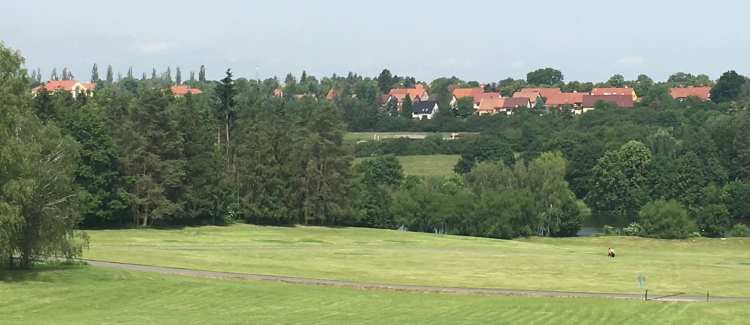
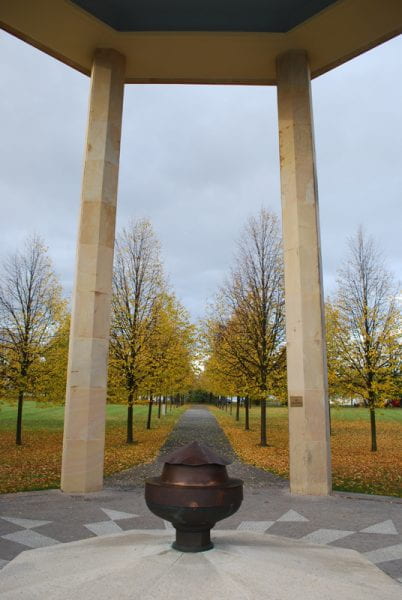
Elizabeth and I first visited the Czech village of Lidice on our visit to Prague in the fall of 2017. The phrase, “a peaceful place,” is from the poem, “The Murder of Lidice” by Edna St. Vincent Millay.
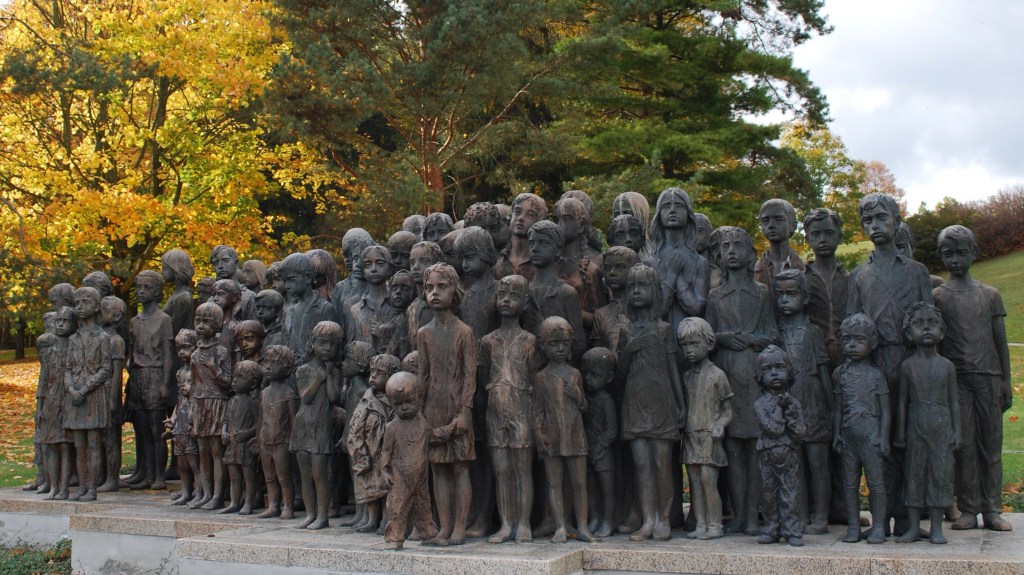
A charming Czech village, Lidice was brutally destroyed by the Gestapo in 1942. On June 10, all the village men were shot, the children taken away to orphanages or gas chambers, the women sent to concentration camps, and the entire village was razed.
For history, photos, and insights into the Lidice atrocity, go to Elizabeth Cernota Clark’s blog, Lidice Lives.
My music expresses the dark brutality of the atrocity.
Lidice Remembered
Clark 2017 (TC-86)
Live performance February 6, 2018, at Texas State Univ. Performing Arts Center
Texas State cello students Boris Chalakov, Joshua Adams, Terri Boutte, Simon Reid, Anna Trevino, Gabriel Vazquez
Rainbow
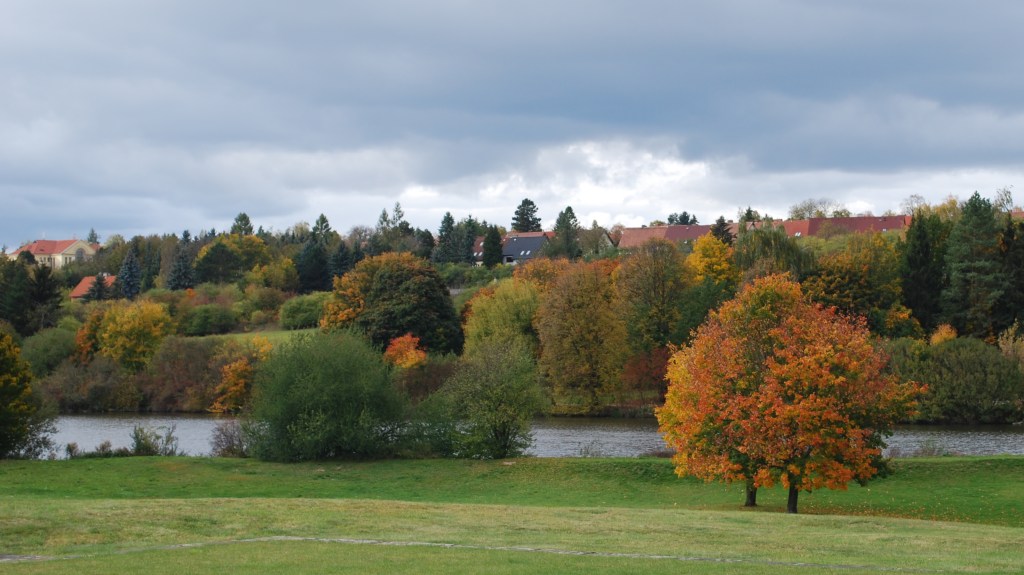
Though horrible tragedy struck this place, now the sloping lawn and babbling creek are a safe haven to peaceful spirits. Looking for the Rainbow, a sequel to Lidice Remembered, continues in complex rhythmic counterpoint of darker sonorities, evoking a restless spirit of searching, anticipating. Written during the COVID pandemic for Karla Hamelin and her Texas State cello students, Looking for the Rainbow expresses both the uncertainty and hopefulness in our collective struggle to survive the storms of disease and violence. A beautiful memorial rose garden in Lidice celebrates the transformative power of hope.
Looking for the Rainbow
Clark 20121 (TC-111)

Where My Home Is
“Kde domov můj“
national anthem of the Czech Republic
After the war, concerned British citizens led by Sir Barnett Stross convinced the world that the village should be rebuilt. The women of Lidice were able to return and were given beautiful new Czech-style homes in a planned village next to the Memorial Gardens.
Another piece celebrates this hopeful outcome of the story. A New Lidice is scored for SSAA treble choir and string trio. Lyrics are taken in part from a stirring Stross speech, but the voices are those of the women who bravely rebuilt their community.
A New Lidice
Clark 2019 (TC-97)

Texas State Aurora Voce, Lynn Brinckmeyer cond.
with string students Kailey Johnson, Kelsey Sexton, Tina Moritz
“We build a new village, while a just world watches.
“Stavíme novou vesnici. Spravedlivý svêt bude sledovat.
“Lidice belongs to the world of all who suffered.
“Mankind has one common enemy – War.
“Only a realization of our common humanity can save mankind.
“The just world will watch.”
___________
20. Effulgence
San Marcos, 2018
“Radiant, resplendant light” . . . a word more poetic than scientific.
I first wrote a simple canon in 1977 as Sunday morning background music with coffee. A line of glowing tones rises then falls back, then rises higher and back down again. The same line is echoed against itself, a canon building sloping hills and mountain ridges of blending overtones. Almost 40 years later, cellos became the climbers.
Rainbow Rising
Clark 2016 (TC-83)

Texas State cello students
Boris Chalakov, Joshua Adams,
Terri Boutte, Simon Reid,
Anna Trevino, Gabriel Vazquez
February 6, 2018 at Texas State Univ.
Back to Czech-American composer Karel Husa. In 1992 I met him in Brno while attending the International Music Festival, for which he was the celebrated guest coming home for the first time since the Czech revolution opened the country after 40 years of Soviet oppression. Later as a professor studying and teaching contemporary music, I discovered his magnificent third string quartet, winner of the 1969 Pulizer Prize. To me, its rhythmic energy, expressive intensity, and superb craftsmanship make it a work epitomizing the best of modern art music in the third quarter of the 20th century.
I have used all the possibilities hitherto available. The forms of the four movements are few, based mostly on contrasting colors and inner tension.”
LISTEN ›
Fine Arts Quartet
Streams, shores, trails
We started this journal with my story of growing up in rural Livingston County Michigan, next to a small river and surrounded by woods and farm fields. Hiking through this nature-scape in all seasons (especially fall), in all weather, in sunshine and in moonlight, became my lifelong habit for 60 years.
A forest path or a sandy shoreline are physical analogs to a musical line, a melody.
A line can weave a complex fabric with echoes of itself. My compositional fascination with musical canon began in the early 1970s with study (at the University of Michigan) of Ockeghem’s 15th-century polyphony, the 10 canons in Bach’s 18th-century The Musical Offering, and Webern’s 20th-century Symphonie Op.21. As a young professor in the 1980s teaching 16th-century counterpoint at what was then North Texas State University (now UNT), I used canon as a challenging contrapuntal writing assignment.
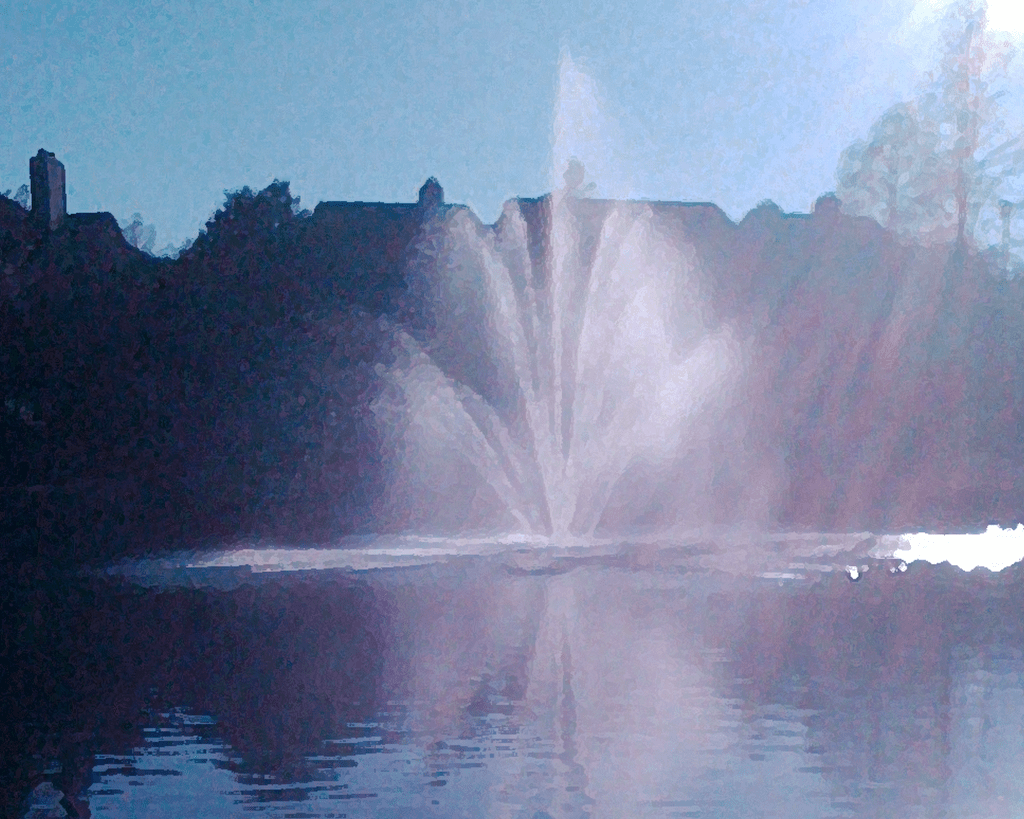
In 1984 I composed an improvisatory piece for my UNT New Music Performance Lab. EFFULGENCE (the word means “brilliant, shining radiance”) was in the style of Terry Riley’s famous In C, overlapping repetitive patterns that I call “multi-phase ostinato” music. EFFULGENCE employs a canon treatment of differing-length motives to create the constant overlapping of patterns out of phase with other lines. The result is like the rhythmic dance of a fountain.
EFFULGENCE
Clark 1994 (TC-49)
Light and shadow
In 1985, a wind ensemble piece, OF LIGHT AND SHADOW: Two Canonic Sketches, was a more formal canon construction. Other contrapuntal writing surrounds an extended canon in a 2021 string quartet, Dark Matter.
Now canon pervades much of my 21st-century writing, a challenging yet stimulating and gratifying approach to texture and continuity of material. Black Canyon (2024, TC-140) is included in both Canyon Sketches (TC-141) and in Book of Canons (2024, TC-148). The title comes from my photographic memories of the Black Canyon of the Gunnison River, named for the ever-present shadows the narrow canyon’s steep, sheer, tall rock walls cast on the river flowing far below. The sheer cliffs of the Black Canyon are metamorphic Precambrian gneiss and schist, streaked with thin, brighter-colored layers of pegmatite. These streaks sketched on the darker rock look like maps of ancient contrapuntal lines, suggesting a simple musical canon in four voices that builds the fabric of Black Canyon.

Cesty světla
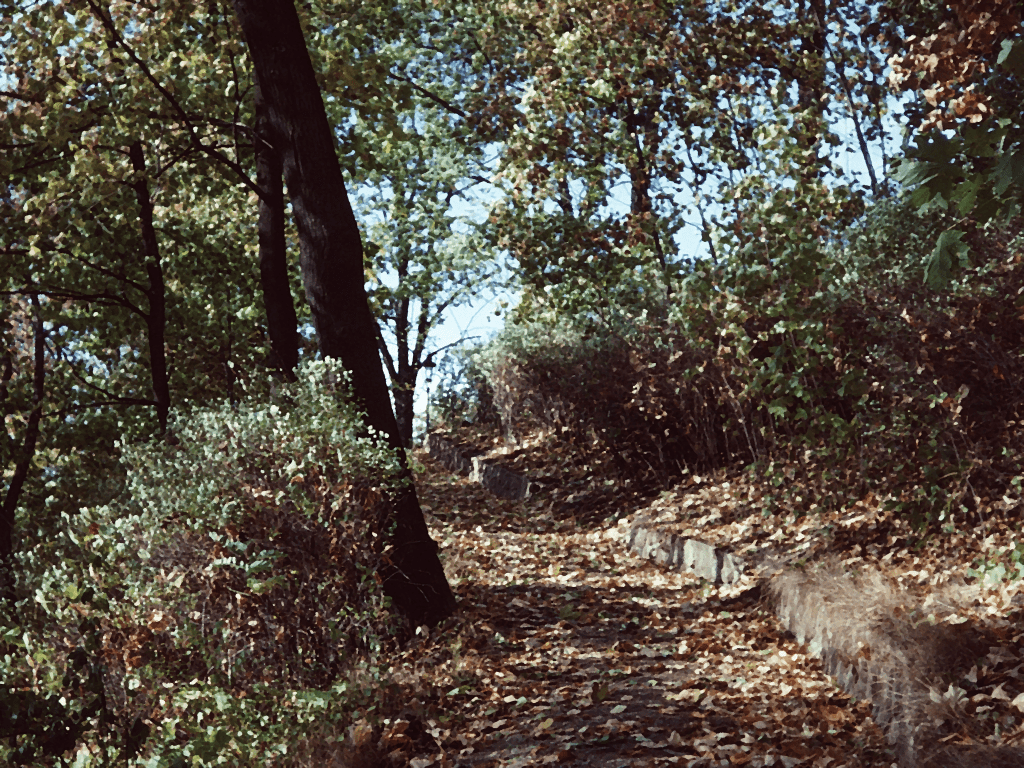
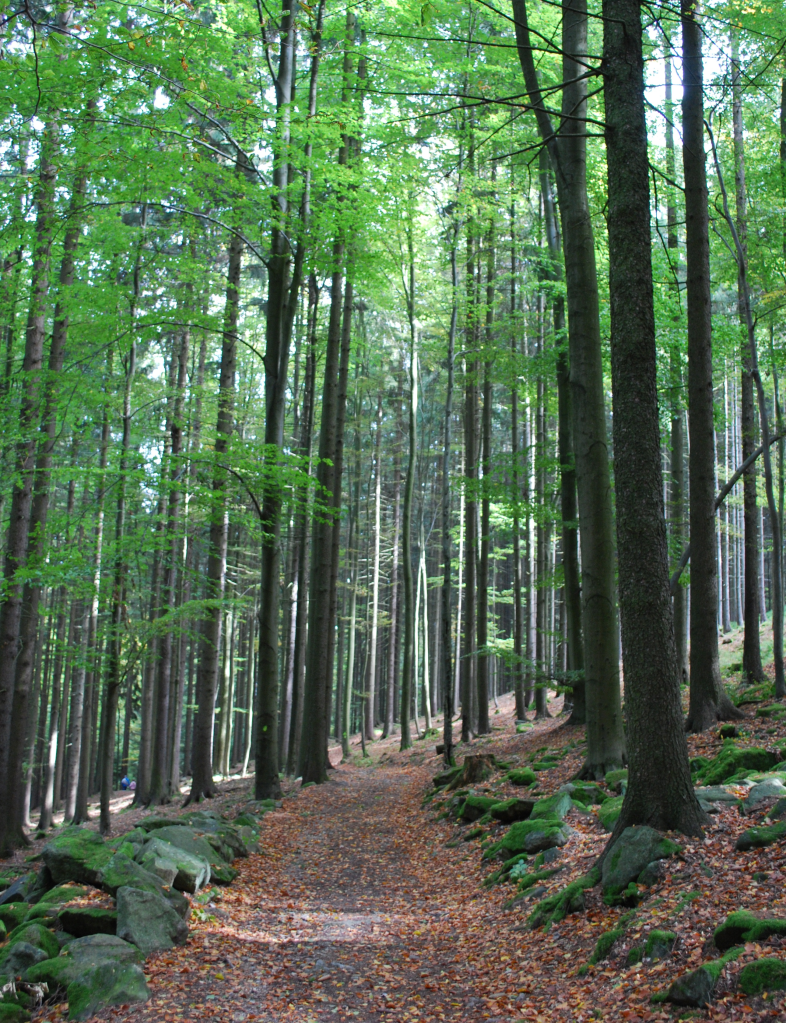
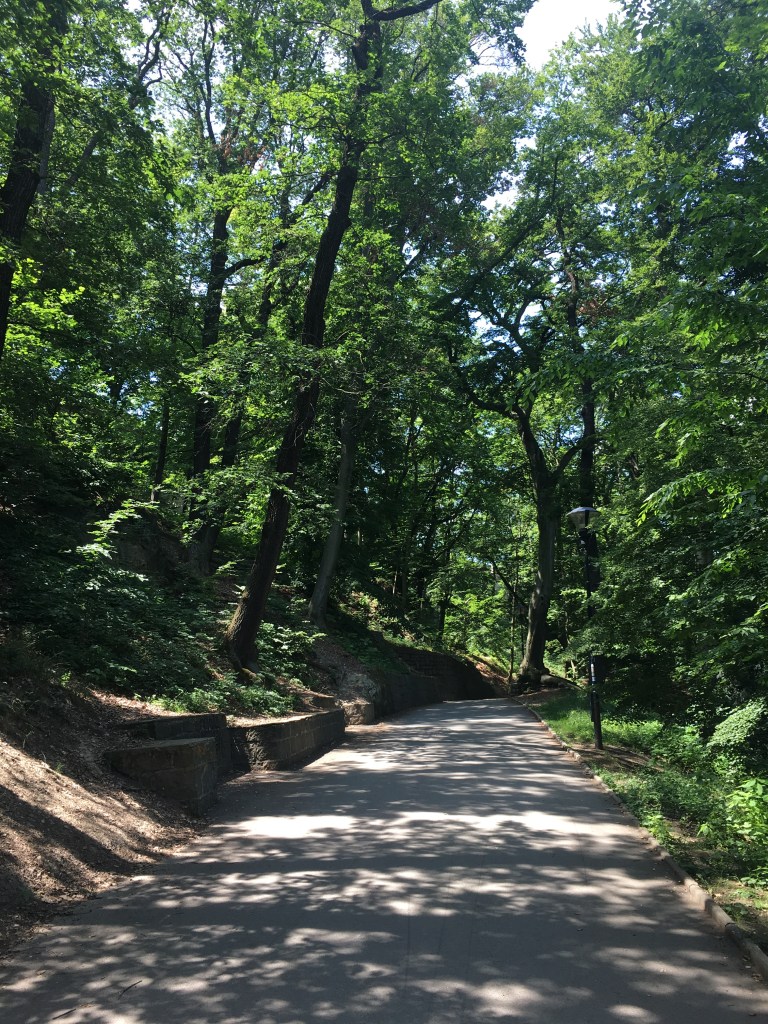
Book of Canons collects 14 excerpts from these works, showing each canon’s subject, points and pitch levels of answer, and sounding each excerpt scored as a string trio. Forest Paths stitches them together in an ambling journey along a path through a metaphorical sound environment of sunlight, shadows, and leaf-fluttering breezes.
Forest Paths
Clark 2022 (TC-123)




___________
 MAPPING MUSIC