
Ann Arbor, 1969 —
From the beginning of my study of trombone, I was an avid player. In high school, I took lessons with top U.Mich. trombone students in Ann Arbor. Playing in high school band and the Michigan Youth Symphony, I also started my own little brass group, the Streetcorner Brass, to play on the snowy sidewalks of downtown Howell at Christmas. Adding drums, we began to play my arrangements of Tijuana Brass tunes and rock ‘n roll at youth dances.
Brass
At college in Ann Arbor, I played bass trombone in the University Philharmonia and Symphony orchestras, and the trombone choir.
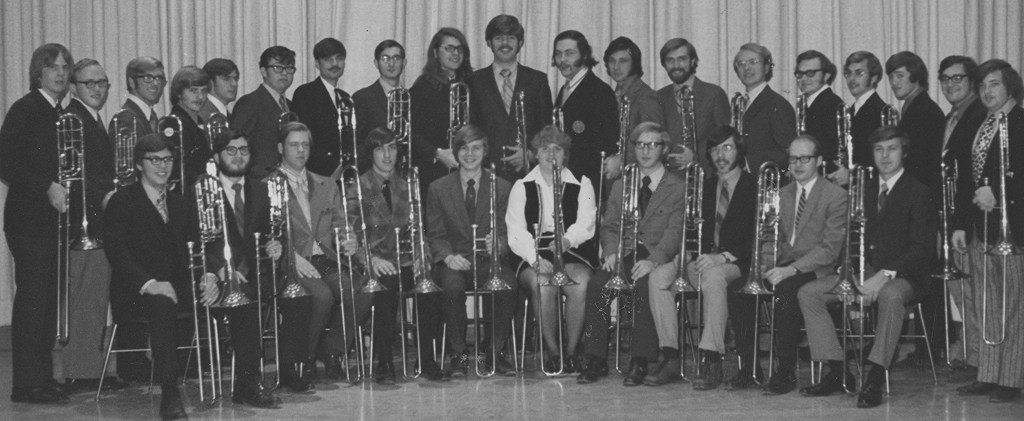

I also joined the Plymouth Symphony and a part-time professional sextet, the Goliard Brass. We played for weddings, in churches, and Ann Arbor coffee shops. A sample of our repertoire:
Giovanni Gabrieli – Canzona XIII
Morley Calvert – Suite from the Monteregian Hills
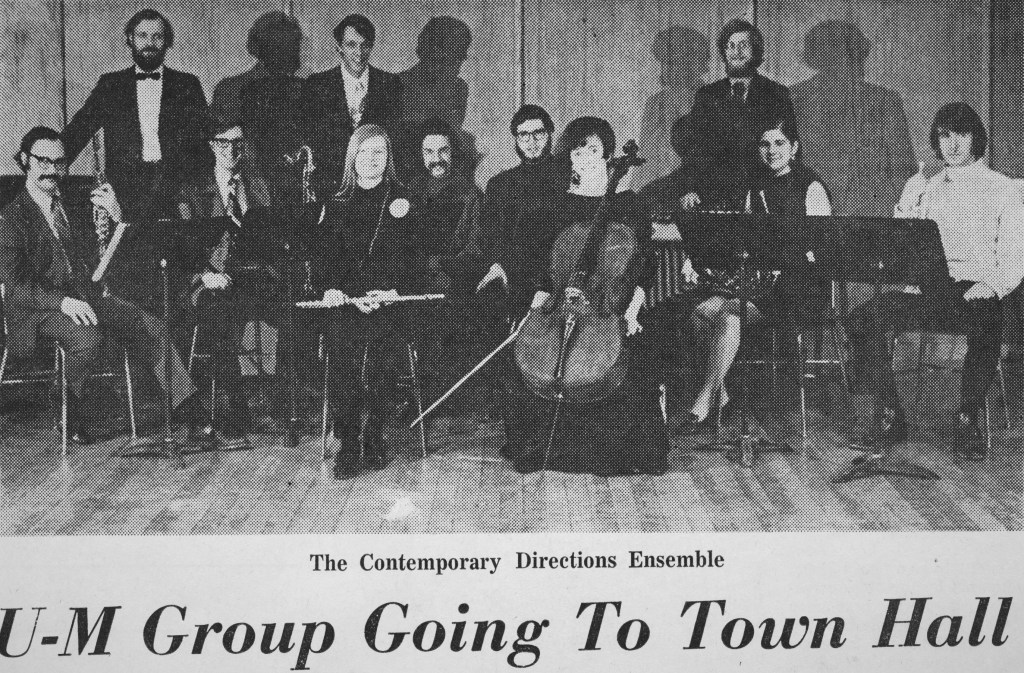
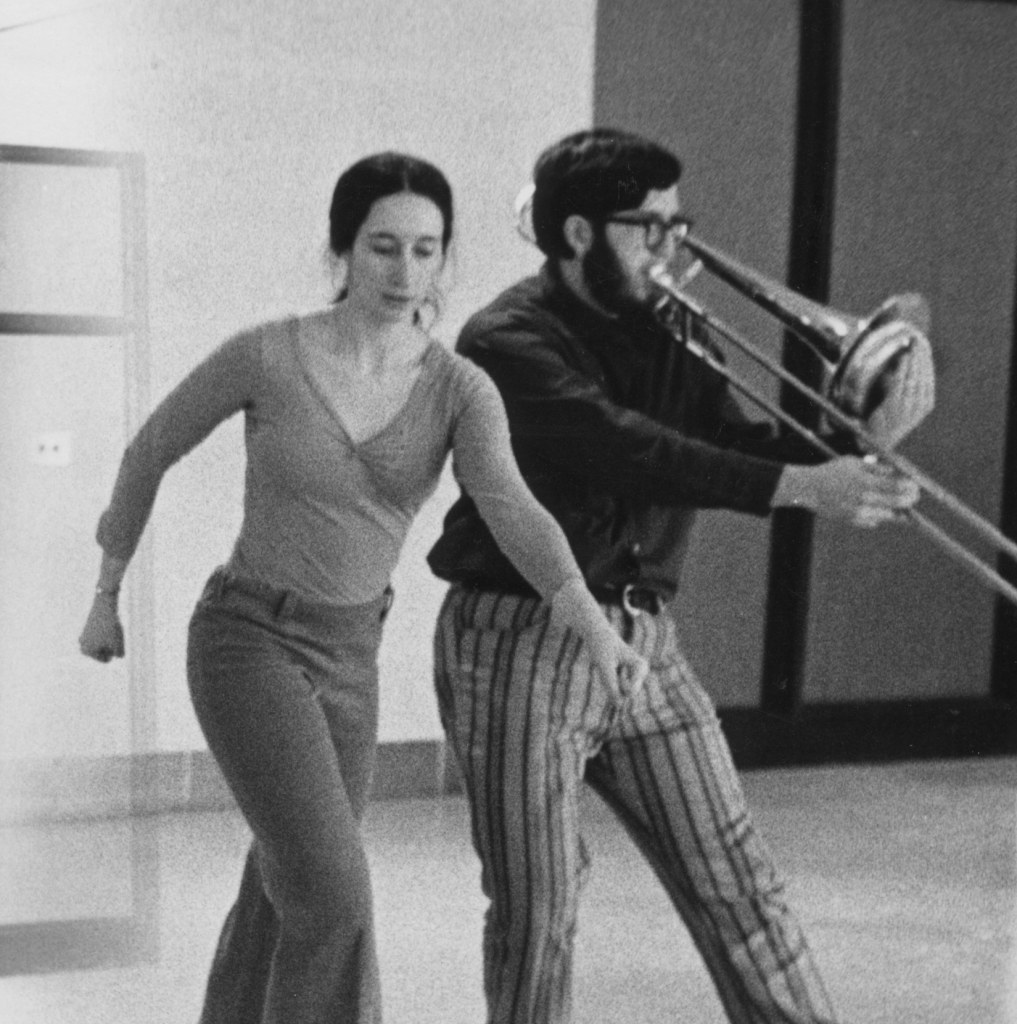
As trombonist for the U. Mich. Contemporary Directions ensemble, I performed more avant garde works, such as this challenging brass piece:
Gunther Schuller – Music for Brass Quintet
My youthful composing had been mostly for piano and trombone. Brass chamber music compositions naturally followed in my student and early professor times.
- NIGHT SONGS — trombone. TC-21 (1969) Borik Press
- TRILOGY — brass quintet. TC-23 (1970)
- ISOSTRATA — 2 trp., 2 tbn., tuba, perc. TC-35 (1977) Seesaw Music
- ICESCAPE — brass quintet. TC-39 (1980)
- MUCHA’S LIGHT — Brass quintet. TC-73 (1996)
- KLADNO SKETCHES — Brass septet. TC-100 (2019)
Kladno
Kladno is a Czech city in the Central Bohemian Region 25 kilometers northwest of Prague. In the middle of the 19th century, the discovery of coal there led to the establishment of one of the great ironworks and then steel mills in all of Europe.
Kladno is near Lidice, the village destroyed by the Gestapo in 1942. Of the Lidice men who were all shot in the atrocity, many had walked to Kladno each day to work in the coal mine or the Poldi steel works.
Kladno Sketches
Clark 2019 (TC-100)
Zámek – peaceful gardens

The city remains a thriving place with a population of 70,000, a large church, municipal building, state library and archives, monuments, theaters, museums, and beautiful parks. The Czech people have always been hard working, they love gardens, especially roses, and they love beer in the fine pilsner style they created.
Poldi – ironworks

Poldi has thrived and survived for more than 100 years, through two world wars and occupations of the country, but the factory finally closed and most of the buildings are now abandoned.
Svobody – Freedom plaza

Suffering under so much occupation and oppression throughout their history in the center of Europe, Czechs especially value “svobody” – freedom.
___________
Chicago
Beyond brass, more chamber music scores inspired by places . . .
Chicago Sketches
Clark 2019 (TC-96)
Fermi Lab
December 1942
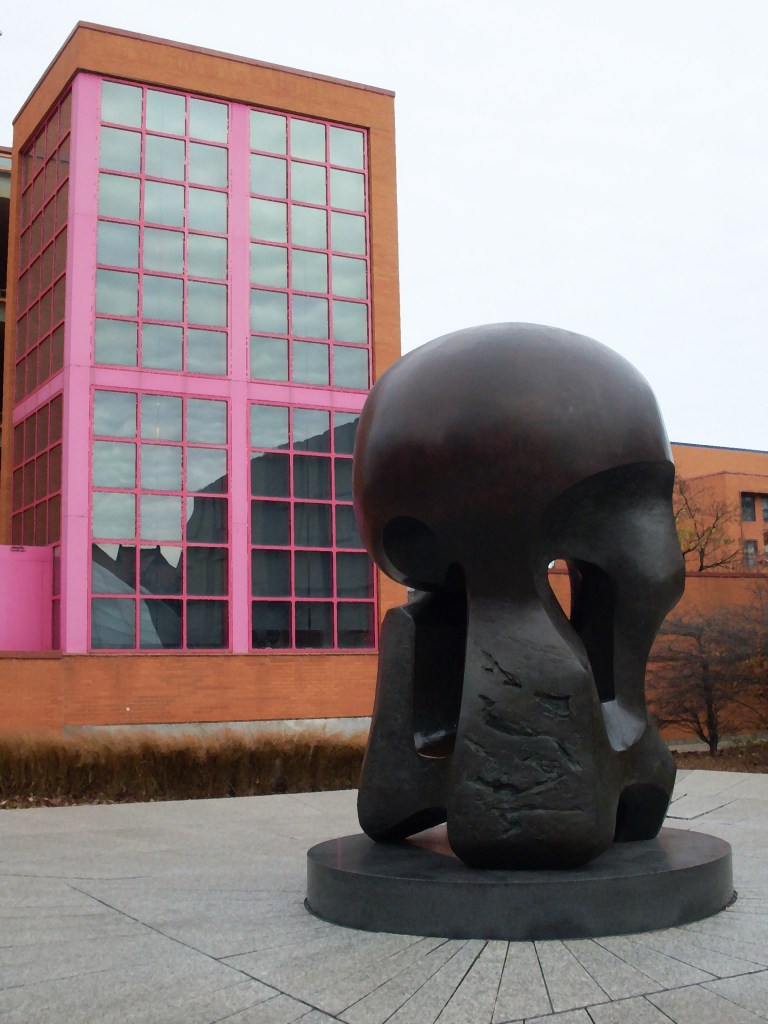
Henry Moore sculpture on the University of Chicago campus, commemorating the site of the experimental pile that launched the atomic age
Navy Pier
March 2014
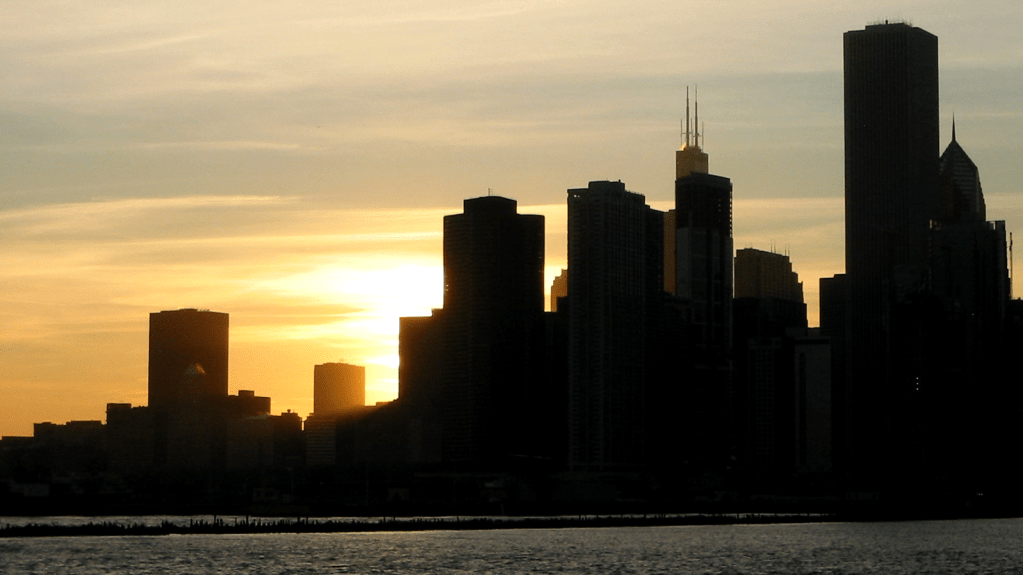
A winter visit to the Lake Michigan shore
Buckingham Fountain
August 1976
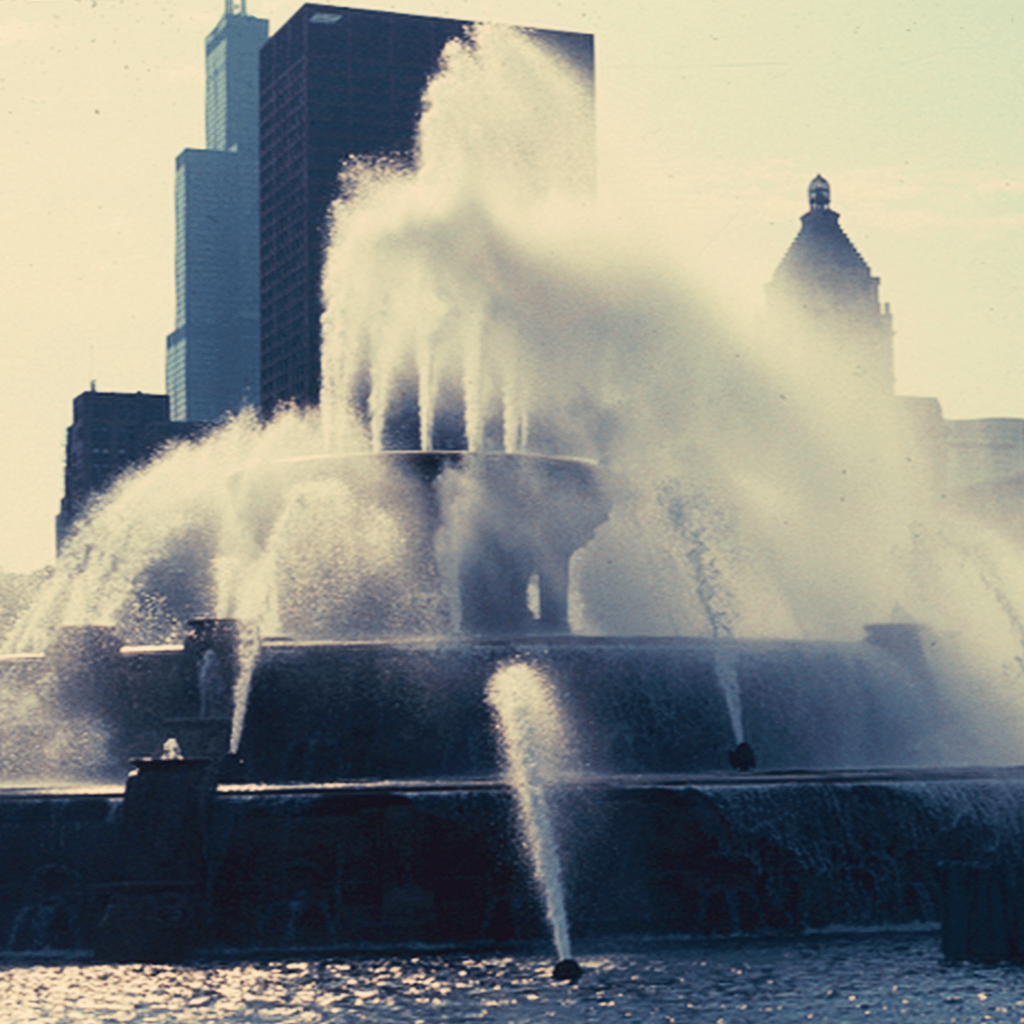
A pilgrimage to Grant Park with new family four months before the wedding
Leelanau
The “Great Lake State,” Michigan is two enormous peninsulas surrounded by Lakes Michigan, Superior, and Huron. Actually, there are many smaller peninsulas extending out into the lakes. The Leelanau Peninsula (north of the venerable Interlochen music camp where I spent many summers) extends about 30 miles from the northwestern corner of the mitten-shaped Lower Peninsula into Lake Michigan.
Algonquian-speaking tribes occupied this area prior to European colonization. The land is now home to lighthouses, wineries, ski slopes, inland lakes, and coastal dunes and beaches.
Leelanau Sketches
Clark 2022 (TC-117)
Shining Water
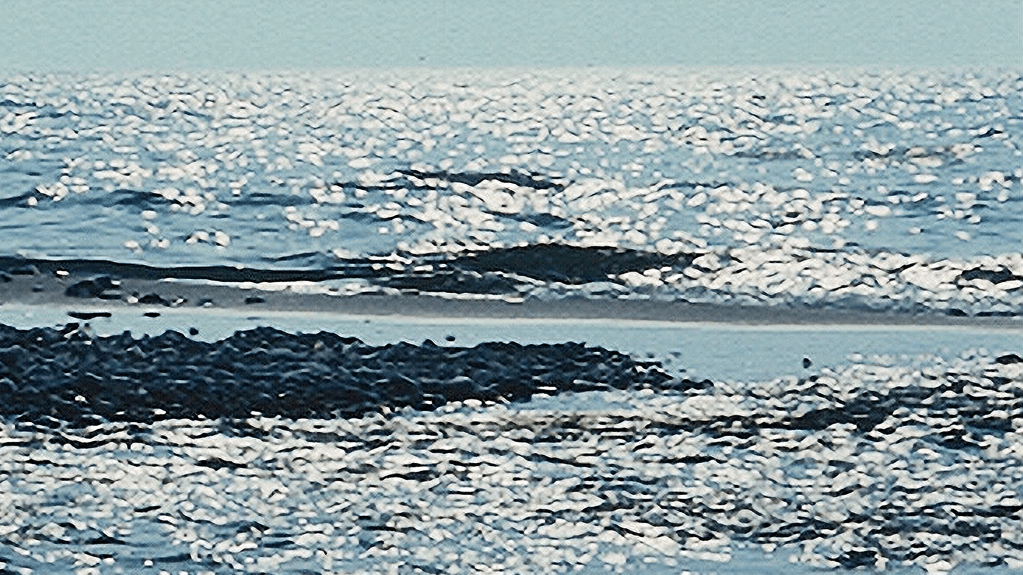
The changing patterns of sunlight sparkling on water always fascinates me, particularly on Lake Michigan looking west from the Leelanau Peninsula.
Ice Caves
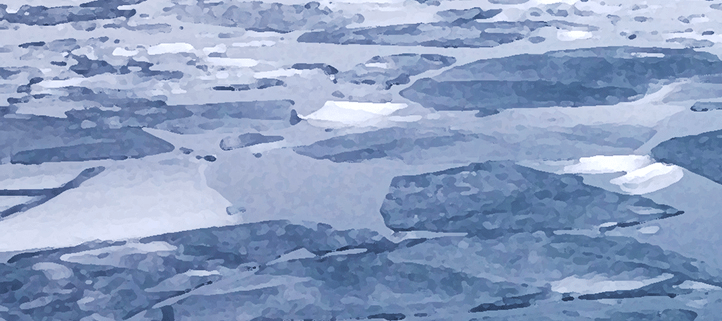
On the Leelanau Peninsula’s western shore, the Lake Michigan surf sometimes whips up and freezes in mid-air, forming weird ice caverns and ice dunes.
Ojibwe legend tells of a fierce forest fire on the western shore of Lake Michigan, forcing a mother bear and her two cubs into the water to swim to the opposite shore. After many miles of swimming, the exhausted cubs drowned. When the mother bear reached the eastern shore, she waited on top of a high bluff in hopes that her cubs would finally appear. Moved by the mother bear’s determination and faith, the Great Spirit created two islands to commemorate the cubs, and the winds buried the sleeping bear under the sands of the dunes, where she still waits.
Sleeping Bear Dunes
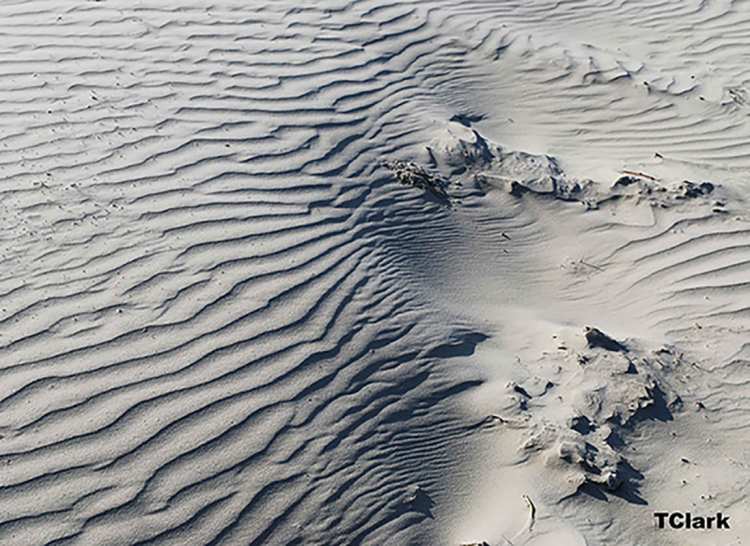
The main dune is enormous, a mountain of sand rising dramatically above the shore of Lake Michigan. The bear’s bluff atop this majestic mass of earth is a serene vista of radiant sun, windblown sand and waves.
Autumn on M22

A scenic autumn drive around the peninsula on Highway M22 is a glory of light sifting down through a canopy of colored leaves. The 75-mile drive from Empire on M22 winds northeast to Northport then south around the east side of the peninsula along Grand Traverse Bay to Traverse City.
Compared to brass, my list of chamber music pieces for strings is more recent but longer.
- STRING TRIO — violin, viola, cello. TC-22 (1970)
- AD TE SUSPIRAMUS — consort of viols. TC-71 (1994)
- LIDICE REMEMBERED — cello trio or cello choir. TC-86 (2017)
- DARK MATTER — string quartet. TC-95 (2019)
- LOOKING FOR THE RAINBOW — cello quartet or choir. TC-111 (2021)
- SYMPHONY DANCES — string quartet. TC-122 (2022)
- HIGHLANDS SKETCHES — string quartet. TC-137 (2023)
Highlands
There are many Highlands in my life. I am part Scottish, though my great grandparents are from Glasgow, not the Highlands. I do enjoy its single-malt whiskeys, though, and I went to Howell High School, the “Highlanders.” And I now live in the Texas Hill Country.
Then there is Českomoravská vrchovina . . .

I first visited what was then still Czechoslovakia in 1991. The Bohemian-Moravian Highlands are between the two main regions of what is now the Czech Republic. The ancient town of Tabor and the legendary Blaník mountains are two points of scenic and historical interest. Highlands Sketches sound paints climbing the mountain’s rugged slope, a thunderstorm of dissonant accents, and the quiet harmonic progression of an autumn dusk.
Highlands Sketches
Clark 2023 (TC-137)
Massif
“Velký Blaník”

Storm
“bouřka”

Dusk
“soumrak”


 MAPPING MUSIC