Brno, 1991 —
I first visited Czechoslovakia in 1991 to perform at the Brno International Music Festival. How this opportunity came about is a story in itself. My colleague Tom Sovik at the University of North Texas joined a group promoting the City of Dallas as a sister city with Brno, the second largest Czech city and capital of the Moravian province, where he had done his doctoral musicology research. At his suggestion, I wrote a short piece as a gift to Brno. Its mayor turned over the gift score to the secretariat of Brno’s International Music Festival, a distinguished Moravian composer Arnošt Parsch. He invited me to come to the festival and conduct my music. The result was an October 1991 performance in Brno’s New Town Hall of two of my works, ANTIPHONS (1989) and CANZONA, for combined woodwind and brass quintets, which I conducted.
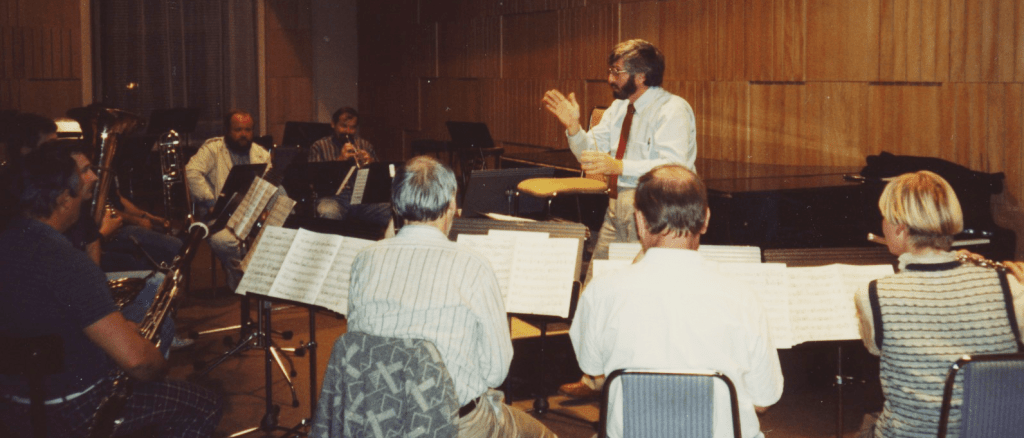
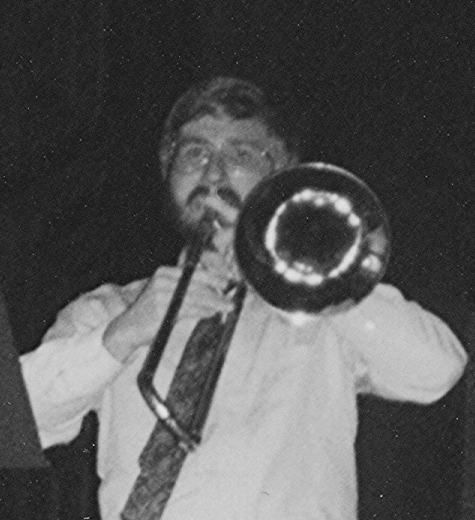
Parsch invited me back in 1992 for the 27th Brno International Festival’s Experimental Music Exposition V. I presented my LIGHTFORMS 2: StarSpectra multimedia computer music and played trombone in an experimental multimedia piece by my friend, Rodney Waschka. I had performed the same program early that fall at the Festival Internacional Alfonso Reyes in Monterrey, Mexico.

PTACí
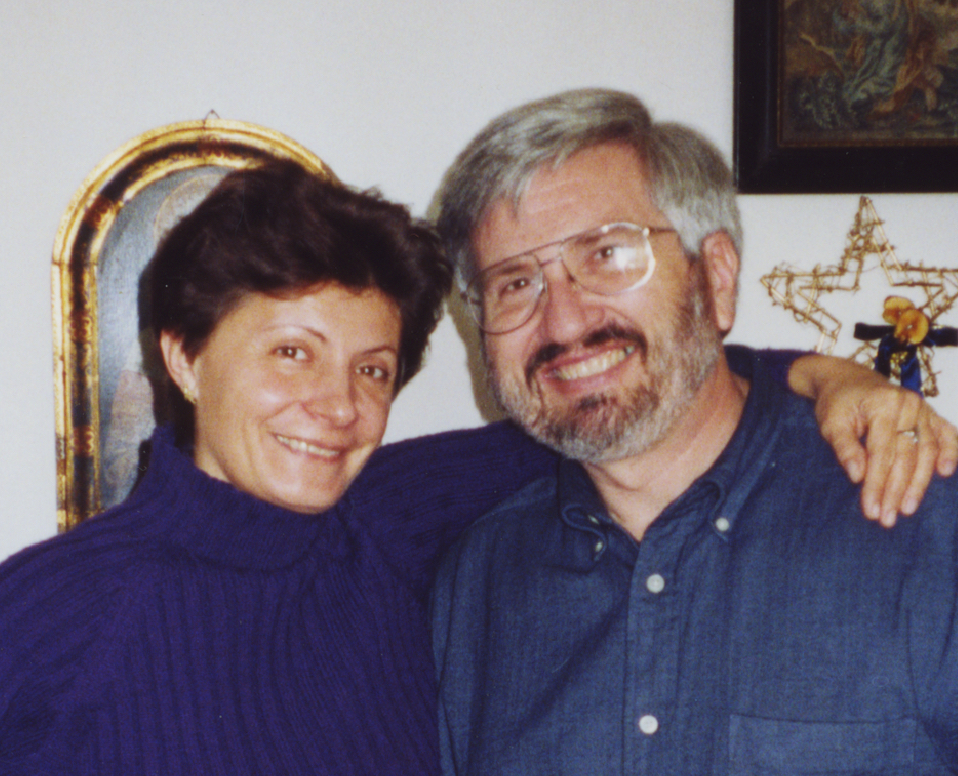
While in Brno for the 1991 festival, I met choreographer Hana Smičkova, who invited me to compose a work for her Mimi Fortunae Dance Theater, which rehearsed in the ancient Spilberk Castle. I began studying the great 20th-century Moravian composer Leoš Janáček’s music as background for the ballet’s composition.
PTACí (“Birds”) was premiered in Brno in 1993 by the Moravian Chamber Orchestra, which I conducted. The ballet, choreographed by Smičkova, was performed by Mimi Fortunae in historic Mahunovo Divadlo, the first building in Europe to be equipped by Thomas Edison with electric lights.
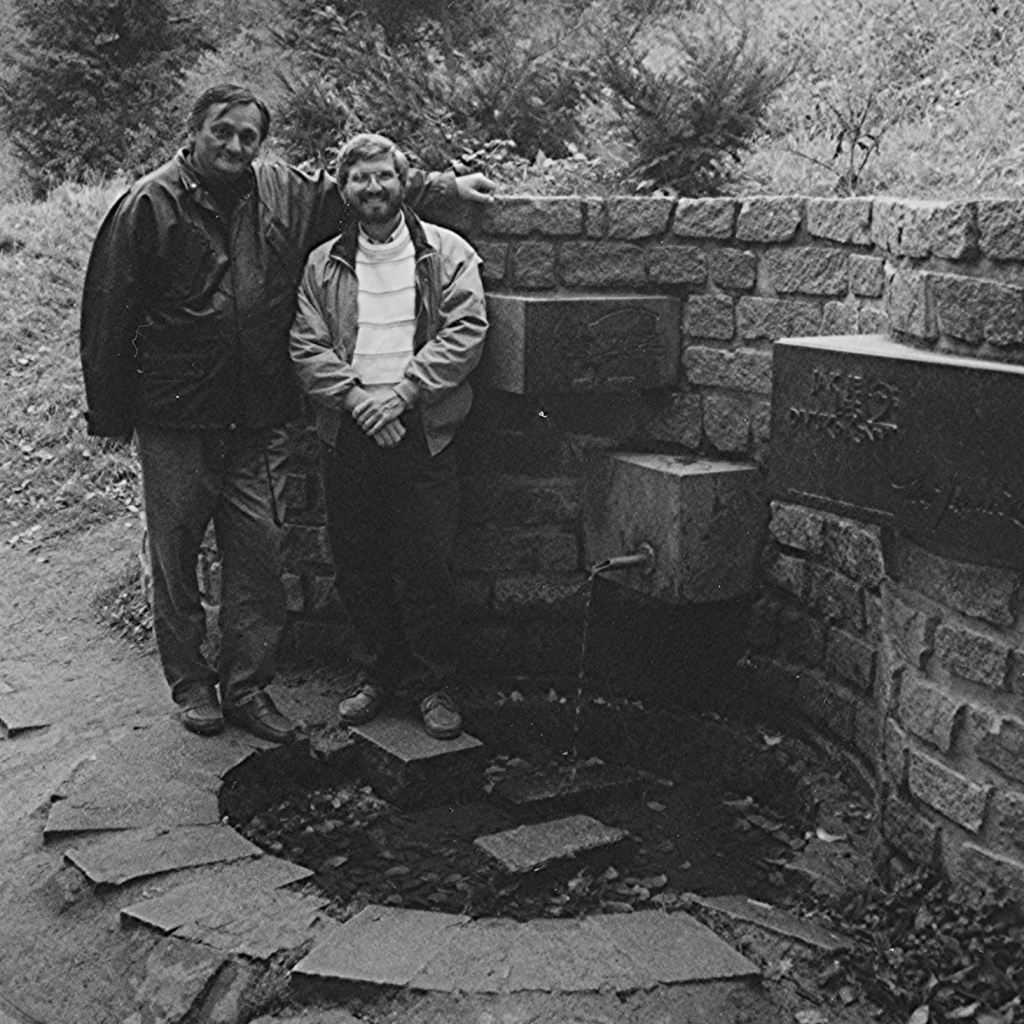
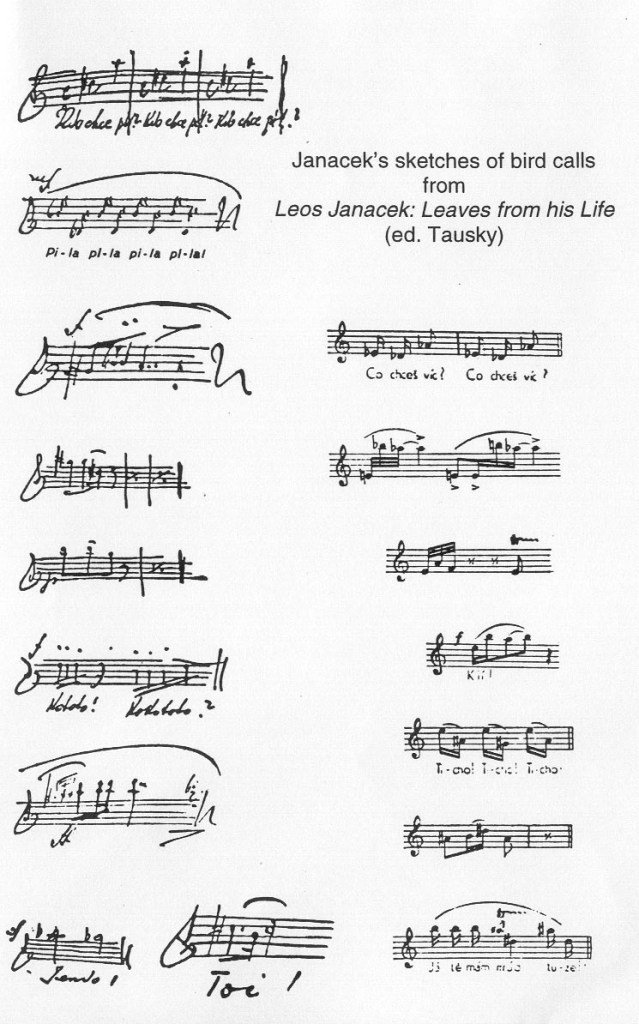
During these years, Parsch and I became composer friends. Our visits to each other always included long walks in nature and deep discussions of music, art, and culture. In 1991 I had visited the northern Moravian mountain village of Hukvaldy, the summer home of Janáček. He loved nature walks and studied bird songs.
Hukvaldy Sketches was first a concert suite of PTACI, my set of modern musical impressions of old Moravia, in the ancient heart of Eastern Europe. Scored for a chamber quartet, it was premiered February 6, 2018, at Texas State University Performing Arts Center, by Ian Davidson (oboe), Vanguel Tangarov (clarinet), Ames Asbell (viola), and Kari Klier (marimba).
The final transformation of this work was a re-scoring of Hukvaldy Sketches for the original PTACI orchestration. Its five scenes:
Hrad – morning climb to the castle ruins
Ptáci – watching Leoš’s birds
Vody – forest streams and shadows
Bystroušky – mouflons and other mountain wildlife
Podzim – autumn sunset
PTACí / Hukvaldy Sketches
Clark 1993/2016 (TC-69/80)
Morava
In my intense study of Janácek, I reveled in the expressive depth of his uniquely modern Moravian music. His powerful String Quartet No. 2 and his collection of gentle piano music, Po zarostlém chodníčku, affected me deeply.
In one of my Brno performances, Parsch’s Czech colleagues commented on my music’s affinity to modern Moravian musical style. I was informally dubbed an honorary Moravian Composer, a distinction I proudly took as a high honor of their acceptance. Since then, I have written many pieces with Czech imagery:
- PTACí – Hukvaldy Sketches
- MUCHA’S LIGHT – Ancient Images
- MORAVIAN MOUNTAIN SONGS
- LIDICE REMEMBERED
- KARLůV MOST (Charles Bridge)
- CLIMBING BLANíK
- A NEW LIDICE
- KLADNO SKETCHES
- ŠPILBERK CASTLE
- BRNO VARIATIONS
Two of these are vocal music that include some Czech lyrics. The treble choir piece A NEW LIDICE begins with “We build a new village, while a just world watches. Stavíme novou vesnici. Spravedlivý svêt bude sledovat.” Children (including my daughter Alison) sang a short phrase in Czech in MORAVIAN MOUNTAIN SONGS, written for the Woodrow Wilson Elementary School Choir in Denton, Texas.
Sinfonietta
Leos Janácek composed his great concert work, Sinfonietta, in 1926 for the Sokol Gymnastic Festival in Prague. Janáček said it was intended to express “contemporary free man, his spiritual beauty and joy, his strength, courage and determination to fight for victory.” It is what I call musical sketches of his home city, Brno, the largest city in the Moravian east of what was then Czechoslovakia.
I visited Brno several times starting in 1991 to perform my music at its International Music Festival.
LISTEN ›
Janácek Sinfonietta
UNT Symphony Orch. on YouTube
The festival traditionally ends with a performance of Sinfonietta by the Brno Philharmonic in Janácek Divadlo (theatre). In 1993 my ballet, PTACI, was premiered at historic Mahunovo Divadlo, across a plaza from Janácek Divadlo.
Though I could have continued my “Sketches” series with a “Brno Sketches,” instead a 2024 work is a set of more abstract variations partly based on and quoting themes from Sinfonietta (in the tradition of Brahms’ Variations on a Theme of Haydn).
- Variation 1 “Canon” engages that ancient musical technique, evoking Brno’s medieval history.
- Variation 2 “Overtones” explores two harmonic series, C and Bb, painted over each other in layers of color, with hints of fanfare emerging through the clouds.
- Variation 3 “Constellations” is a kaleidoscopic succession of large sonorities built on stone-sturdy Perfect Fifth intervals brightened by jazz-like added tones.
- Variation 4 “Fanfare” is an ostinato pattern-music fantasia on Sinfonietta‘s grand fanfare themes.
Brno Variations
Clark 2024 (TC-138)




 MAPPING MUSIC