Tag: University of Michigan

  • 5. Dusty Dusk

    Tacoma, 1974 —

    As a teenager, I was into all kinds of art — sketching, painting, reading plays, and writing poetry. Lots of poems, my way of a kind of diary writing, expressing to myself the places, relationships, and feelings. (I won’t reveal any of this naive creative work here.)

    Later, two poems in particular were written at major turning points in my professional and personal life. That’s when I started setting poems as art song lyrics. Some of the musical material for what became Landscapes in Motion was first set in the 1970s, and some in the 1990s, now reworked with a more mature 21st-century craft, while preserving the original dark suppleness of tonality and time.

    Upon completing my master’s degree at Michigan in 1972, I taught music theory as a one-year lecturer at Indiana University in Bloomington. Another one-year fill-in position took me to Pacific Lutheran University in Tacoma, Washington, where I got great experience teaching music theory, composition, new music performance ensemble, and even trombone!

    Without a doctorate, however, there was no real prospect of winning a permanent professor position anywhere. And continuing a succession of one-year gigs moving all over the country was not sustainable. What to do?

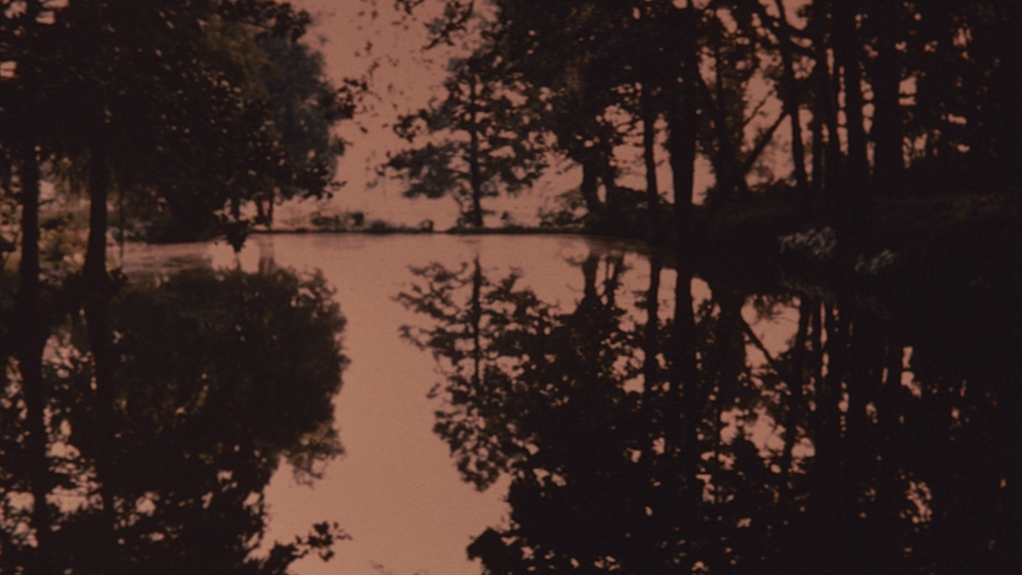
    I had taken my sailboat with me all the way out to Tacoma from Interlochen. After a beautiful sunset sail on Lake Spanaway in my little 15-foot “Butterfly” dinghy, I wrote a poem.

                            “Sailing at sunset”  (1974)

    Dusty dusk settling silk on dying silver of wave-modulated water,
    the sail still silently searching for a departing breeze,
    swinging gently its boom and softly rattling its blocks
    in confounded cross-rhythms to the lapping shore.
    Streams of crimson flowing dust streak the sky
    above looming shadowed firs.
    Deepening shadows settle dark dust on the deck
    while still the mast peak rages red and soars into a deepening sky.
    Scorched face soothed by the oncoming night breeze,
    eyes searching the sunset sky for sign of tomorrow’s wind.
    Where will we sail then? Wherever wind wills . . .
    and a new dusk consume our shadows.

    A New Dusk

    Clark 1974 (TC-28)
    Afterglow

    Turns out, I went back to Michigan for doctoral studies, and went back to working at Interlochen as assistant to the director of Michigan’s university-level program there. In that 1975 summer, I met Beth, a journalist working a temp gig on the camp’s publicity staff.

    We fell in love, and I spent many weekends of the following academic year riding the Amtrak Turboliner from Ann Arbor to Chicago to be with her. I wrote a poem on one of those train rides, again uncertain about my (our) future.

                            “Riding backwards on a train”   (1976)

    The cider mill beside the river,
    cows grazing by a dead tree,
    a red barn stuffed with hay.
    An old square house alone on a hilltop,
    a church’s silent steeple above the trees,
    a country cemetery, old stone crosses guarding against oblivion.
    Then the sun is gone,
    storm clouds ripple across meadow skies,
    the river turns away.
    Riding backwards on a train, frozen fields float by.
    Glossy sheets of white ice glow with winter sun.
    Dead brown stubble breaks the mirror, patchy footprints of autumn’s retreat.
    Pale late light of afternoon flickering
    through leafless trees that line the lifeless fields in rows,
    through fields of withered cornstalks.
    Leap into brown dry woods, plunge past barren trees,
    spray a wake of fallen leaves, lunge into holy autumn stillness,
    riding backwards on a train, headed east into a frozen future.

    Shortly before his death, Charles Ives published a collection of 114 Songs in 1922. Many have become exemplars of his iconic 20th-century American style. Here are two that fit our tender twilight theme.

    Paul Sperry, Irma Vallecillo

    LISTEN > YouTube

    Paul Sperry, Irma Vallecillo

    LISTEN > YouTube

    Before night

    So far, I haven’t mentioned an important influence on my ’60s and ’70s immersion into the mid-century Avant Garde. In the 1960s, Luciano Berio wrote an influential, frequently performed series of unaccompanied solos for varied instruments. All are tour-de-force virtuosic technical displays with a theatrical impact. I performed Sequenza V for trombone on a Contemporary Directions concert in Rackham Lecture Hall (Ann Arbor). It was commissioned by and written for virtuoso trombonist Stuart Dempster, with whom I later briefly studied.

    I said instruments, but Sequenza III (1965) is for unaccompanied voice, drastically different than a typical “song.” Berio explains:

    “In Sequenza III the emphasis is given to the sound symbolism of vocal and sometimes visual gestures, with their accompanying ‘shadows of meaning,’ and the associations and conflicts suggested by them. For this reason, Sequenza III can also be considered as a dramatic essay whose story is the relationship between the soloist and her own voice.”

    Sequenza III was written in 1965 for Cathy Berberian. The “modular” text is by Markus Kutter:

    Give me a few words for a woman
    to sing a truth allowing us
    to build a house without worrying before night comes

    Laura Catrani, soprano

    Ice

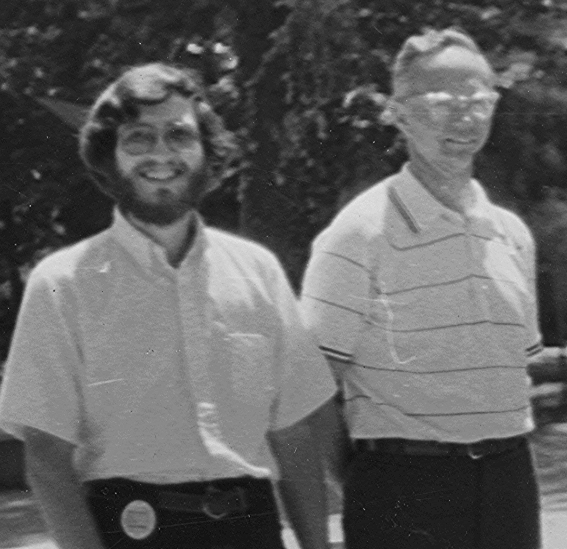
    In 1983, teaching grad courses and still directing the New Music Performance Lab. Musicology master’s student Robert Nasow played cello in the ensemble, but he was also an avid and talented poet.

    When his fellow grad music student David Lynn Kennedy was killed, Robert wrote a heartfelt elegy for him.

                            “Ice Floe

    by Robert Nasow

    Yes, I am cold . . .
    my hands are cold to the touch.
    Something must fill this hollow at the center of my body.
    Untouched, no one will long remember your face . . .
    She withdraws to contemplate the child,
    her voice breaks into emerald light, effulgent pure water,
    sings unknown distances of sleep.
    Brittle, come break off my hand,
    this glazed stem of Queen Anne’s lace.
    There are ways of living we have never dreamed of.

    His poem became a lovely vehicle for a memorial song, which was premiered by UNT grad students who were also involved in new music with me.

    Ice Floe

    R. Nasow / Clark 1983 (TC-46)

    Jing Ling Tam, soprano

    Paul LeBlanc, guitar
  • 4. Sound Painting

    Interlochen, 1973 —

    Gunther Schuller composed Seven Studies on Themes of Paul Klee in 1959 after leaving the Metropolitan Opera Orchestra horn section. Commissioned for the Minneapolis Symphony, it portrays musical analogs for seven works by Swiss painter Paul Klee (1879-1940). Schuller wrote, “Each of the seven pieces bears a slightly different relationship to the original Klee picture from which it stems. Some relate to the actual design, shape, or color scheme of the painting, while others take the general mode of the picture or its title as a point of departure.”

    • “Antique Harmonies”
    • “Abstract Trio”
    • “Little Blue Devil”
    • “The Twittering Machine”
    • “Arab Village”
    • “An Eerie Moment”
    • “Pastorale”

    Seven Studies on Themes of Paul Klee

    Radio Philharmonic of Hannover

    LISTEN › YouTube

    Landscapes

    1976 Interlochen with Leslie Bassett

    As a graduate student at the University of Michigan in 1973, I composed my second orchestra piece. The title, Animated Landscapes, was inspired by John Cage’s famous Imaginary Landscapes No. 4, which we performed as I was an ensemble member of Contemporary Directions.

    The idea of animating an otherwise static sound mass, devoid of progressive harmony, was a quintessential feature of what I came to think of as the Midwestern Style of 1960s and 1970s large ensemble music. Successful models included prize winning pieces such as (my teacher) Leslie Bassett’s Variations for Orchestra (1966), Donald Erb’s The Seventh Trumpet (1969), and Joseph Schwantner’s …and the mountains rising nowhere (1977) and Aftertones of Infinity (1979).

    Animated Landscapes

    Clark 1971 (TC-25)

    U.Mich. Symphony Orchestra

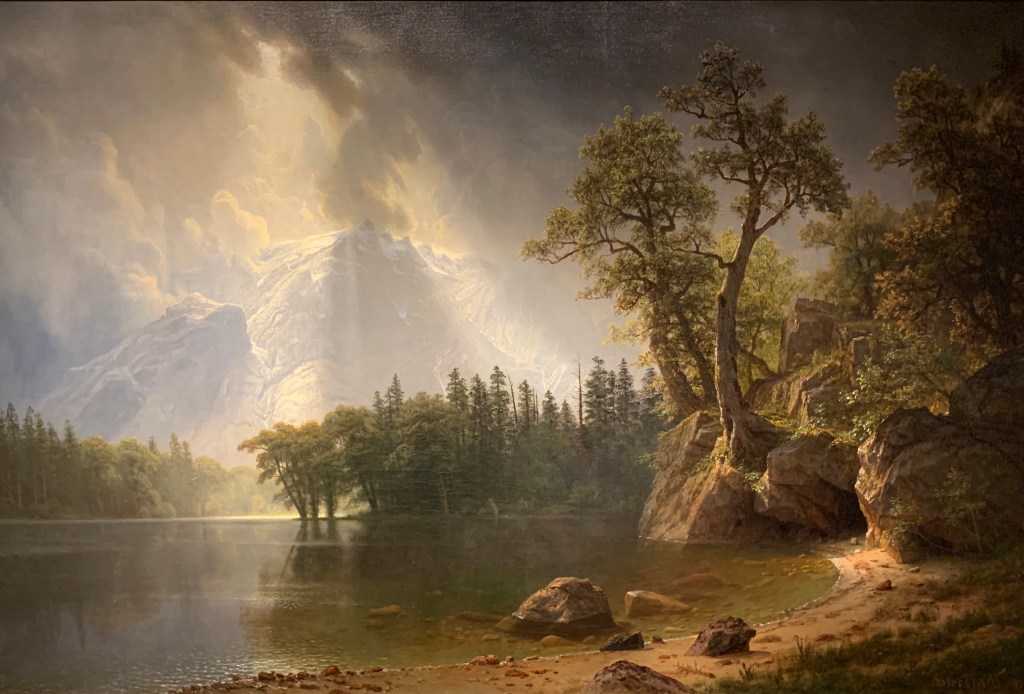
    So many great American landscape artists of the 19th century painted fascinating panoramic scenes. One of my favorites, who captured the grandeur of Western, mountainous landscapes, was Albert Bierstadt:

    Albert Bierstadt: Passing Storm over the Sierra Nevadas (1870) – San Antonio Museum of Art

    You can see stark contrasts in brightness and in sense of motion between the mirror-smooth water and roiling clouds. Even the word “passing” in the title suggests change, a necessary ingredient of an analog musical landscape.

    While not trying to actually map the physical composition of any painting, my musical inspiration came from considering this painting’s features of background, foreground, and highlights of strong visual focus. Musical gestures started with distant swelling sonorities, which as they crescendo feel like they are emerging forward toward us. After deciding to name the piece Passing Storm after the Bierstadt, however, I realized I had no storm in the music, just gentle sprinkles. Thus was created a stronger sonic rendering of the sprinkles to provide a more aggressive introduction. The following four minutes overlaps sound masses animated in time, contrasting dark vs. bright sounds, loud vs. soft, and timeless sustained sound vs. busy points of “light.”

    Animated Landscape No. 4

    Passing Storm

    Clark 2022 (TC-129)

    Mucha’s Light

    I first traveled to the Moravian region of Czechoslovakia in 1991 to conduct my own music at the 26th International Music Festival in Brno. While there, I visited the South Moravian town of Moravský Krumlov. Its castle served as a museum gallery for the epic paintings, Slovanská Epopej, of Alfons Mucha. Better known as the father of art nouveau through his many famous Paris posters, Mucha was deeply interested in Slavic culture and history. The 20 paintings, each a monumental canvas hung as a tapestry, vividly depict both historical and mythical scenes.

    Mucha’s Light: Ancient Images is dedicated to Miroslav Marada, the Moravian gentleman who first showed the paintings to the composer in 1991. A teacher, history buff, and lover of the local wines of south Moravia, Marada fascinated me with elaborate tales, explaining the symbolism of each painting. The five works I selected to sketch musically have a common element, masterfully painted images of exotic light. Composing musical analogs for these ancient images, I incorporated medieval music from the Bohemian/Moravian region of central Europe. The music weaves authentic medieval chant tunes into an intensely contrapuntal fabric, interspersed with modern sparks, streaks, and splashes of sound color. Originally composed for brass quintet, the musical images called for a richer, more varied sound-color palette:

    Instrumentation: piccolo, 2 flutes, 2 oboes, 3 Bb clarinets, bass clarinet, 2 alto saxes, tenor sax, baritone sax, bassoon; 2 F horns, 2 Bb trumpets, 2 trombones, euphonium, tuba; timpani, 3 percussion (misc. unpitched – triangle, sus.cym., etc.; bells, chimes, vibraphone, xylophone)

    Ancient Images

    Clark 2005 (TC-76)

    Five sound sketches on the historical paintings of Alfons Mucha

    I. Star Light

    detail of 1. Slavs in their Original Homeland

    II. Green Light of Mysticism

    detail of 17. Holy Mount Athos

    III. White Light of Learning

    detail of 4. The Bulgarian tsar Simeon

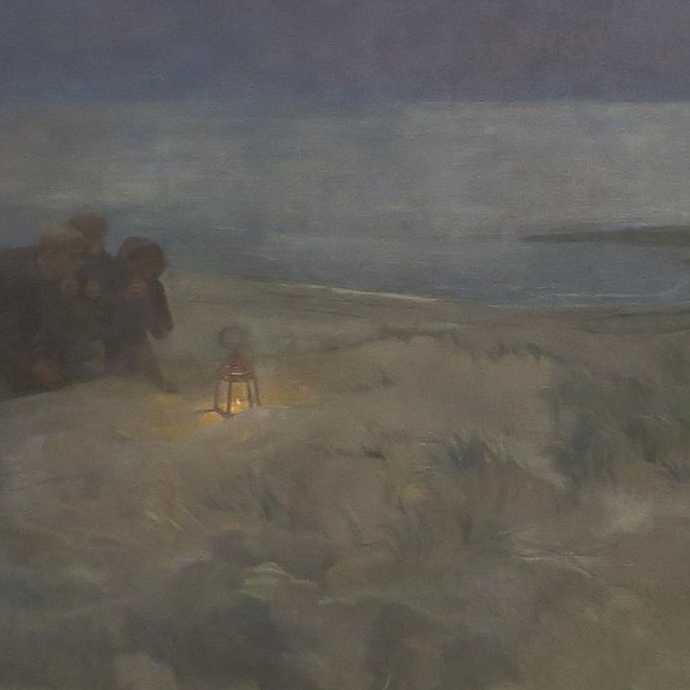
    IV. Lantern Light of Hope

    detail of 16. The Last Days of Jan Amos Komenský in Naarden

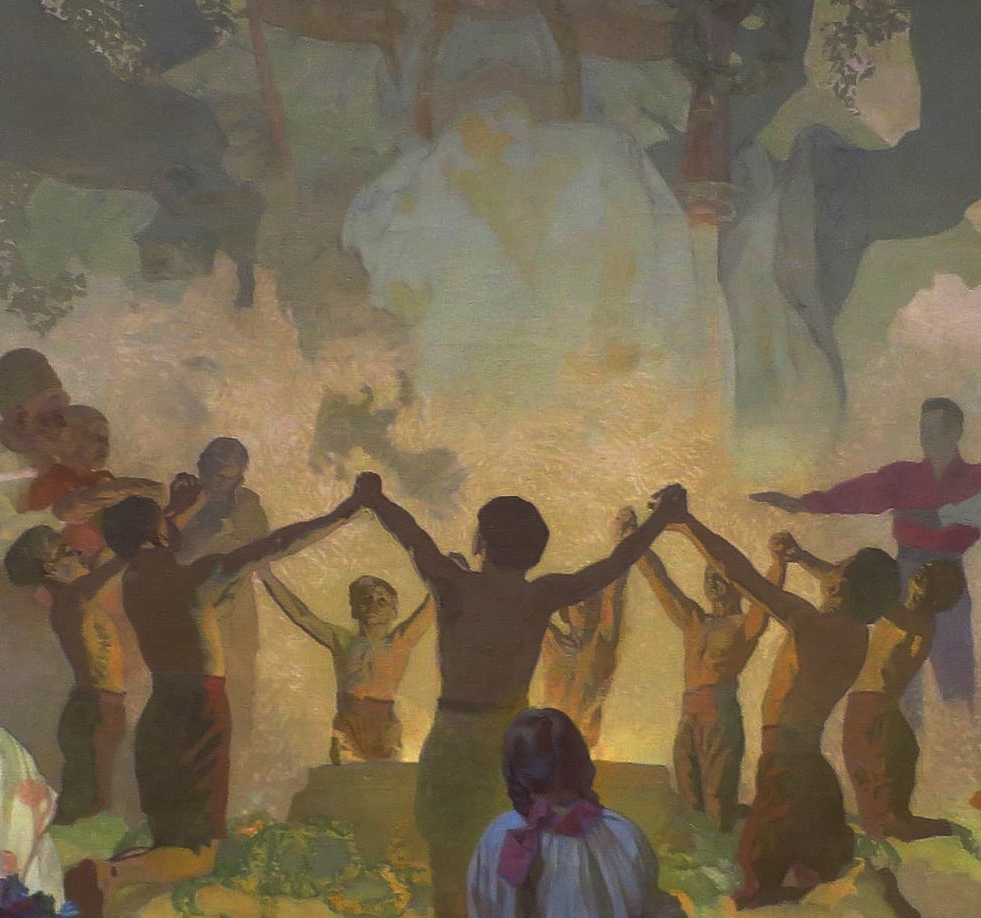
    V. Fire Light

    detail of 18. The Oath of Omladina Under the Slavic Linden Tree

    Quilting

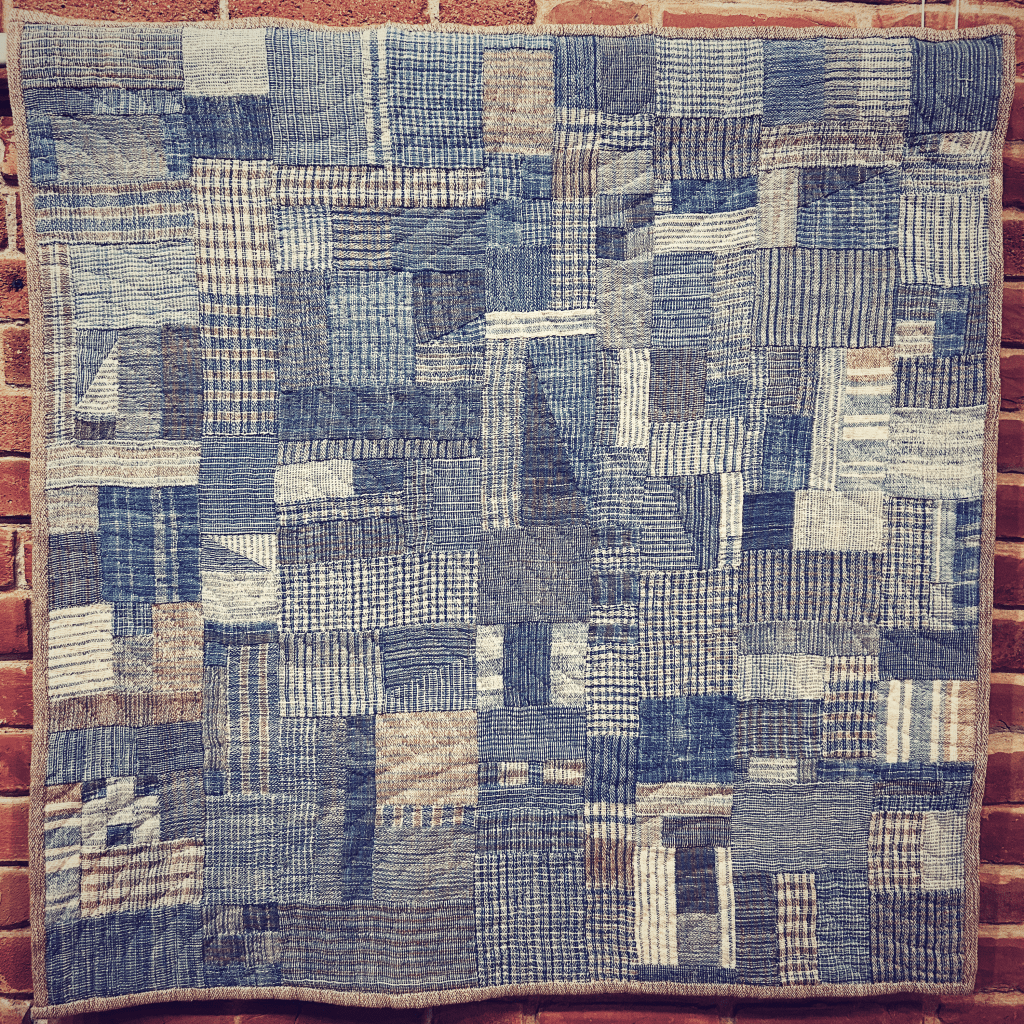
    Now to photo images instead of paintings — both music and visual images can be assembled in a manner inspired by quilts, layers of fabric in small swatches pieced together. The Amish of Lancaster County Pennsylvania were known especially for quilts of contrasting colors of repeating geometric shapes.

    Here is a more-than 100-years-old quilt I found exhibited in the Quilting Museum in LaGrange, Texas.

    Louisiana Acadian quilt, 1890

    For a fresh approach to my 2025 multimedia work, this kind of layered patching was applied to both synthesized sound blocks and to digitally enhanced images from my Nikon Z50 (NIKKOR 16-50 lens). Three musical textures — flutters, swelling chords, and an ancient-style canon — are quilted onto an unchanging broad harmonic background. They overlay each other in four different combinations.

    Clark 2025 (TC-154)

    Video here – YouT

  • 3. Sketching Places

    Ann Arbor, 1969 —

    From the beginning of my study of trombone, I was an avid player. In high school, I took lessons with top U.Mich. trombone students in Ann Arbor. Playing in high school band and the Michigan Youth Symphony, I also started my own little brass group, the Streetcorner Brass, to play on the snowy sidewalks of downtown Howell at Christmas. Adding drums, we began to play my arrangements of Tijuana Brass tunes and rock ‘n roll at youth dances.

    Brass

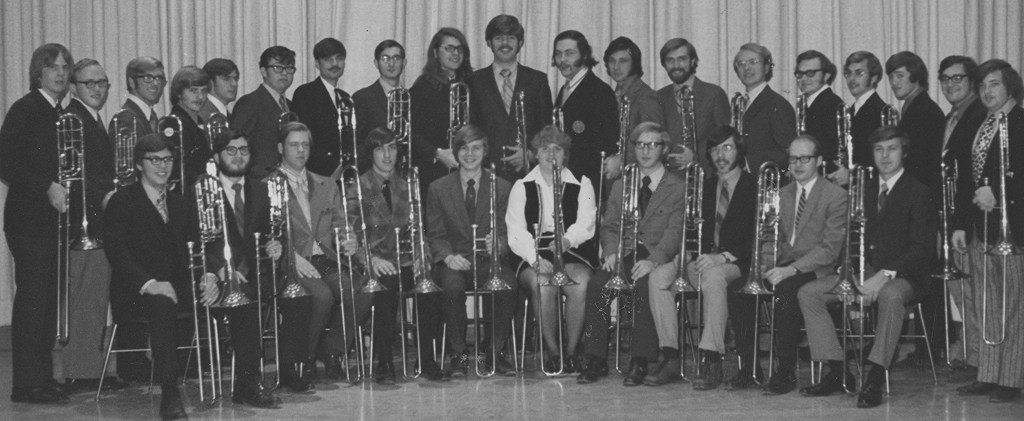
    At college in Ann Arbor, I played bass trombone in the University Philharmonia and Symphony orchestras, and the trombone choir.

    Goliard Brass

    I also joined the Plymouth Symphony and a part-time professional sextet, the Goliard Brass. We played for weddings, in churches, and Ann Arbor coffee shops. A sample of our repertoire:

    Giovanni Gabrieli – Canzona XIII

    Morley Calvert – Suite from the Monteregian Hills

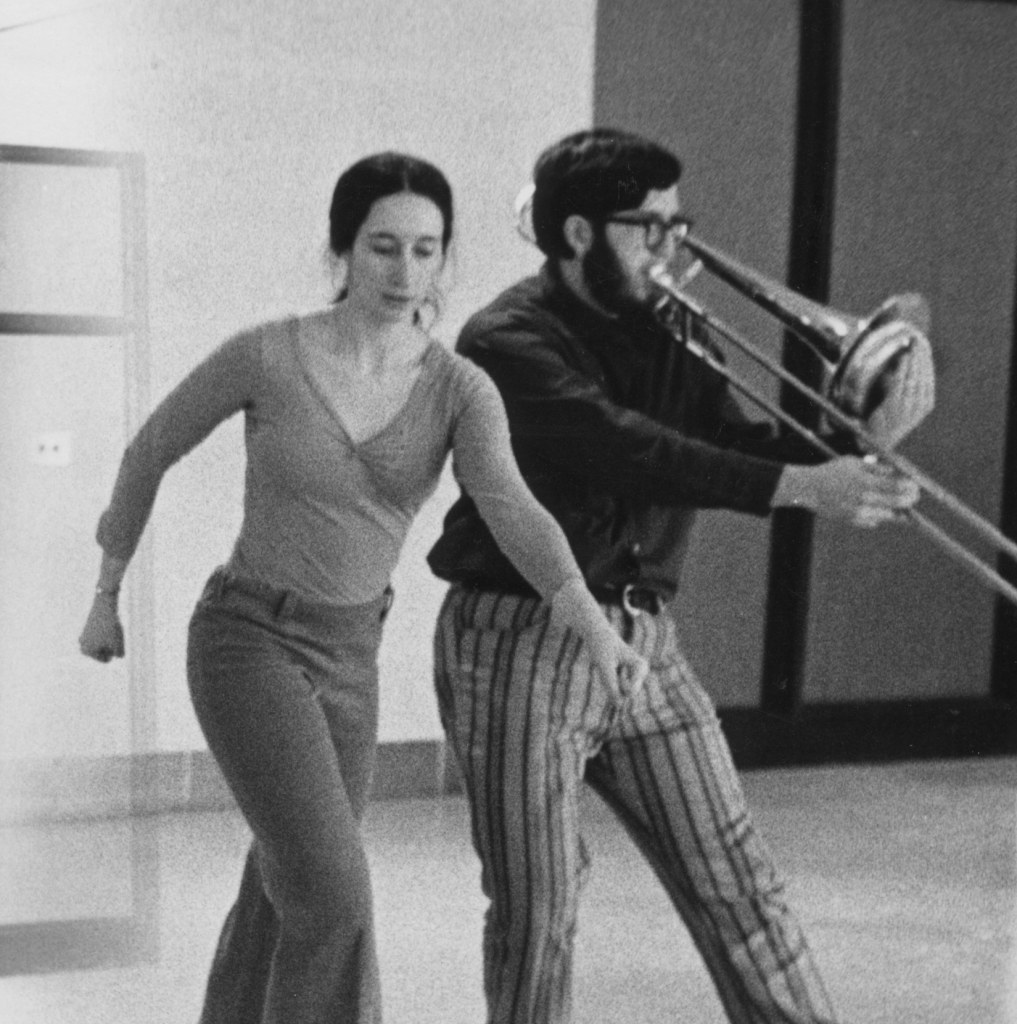
    Where’s Waldo? (one of three beards)
    with dancer Risa Friedman

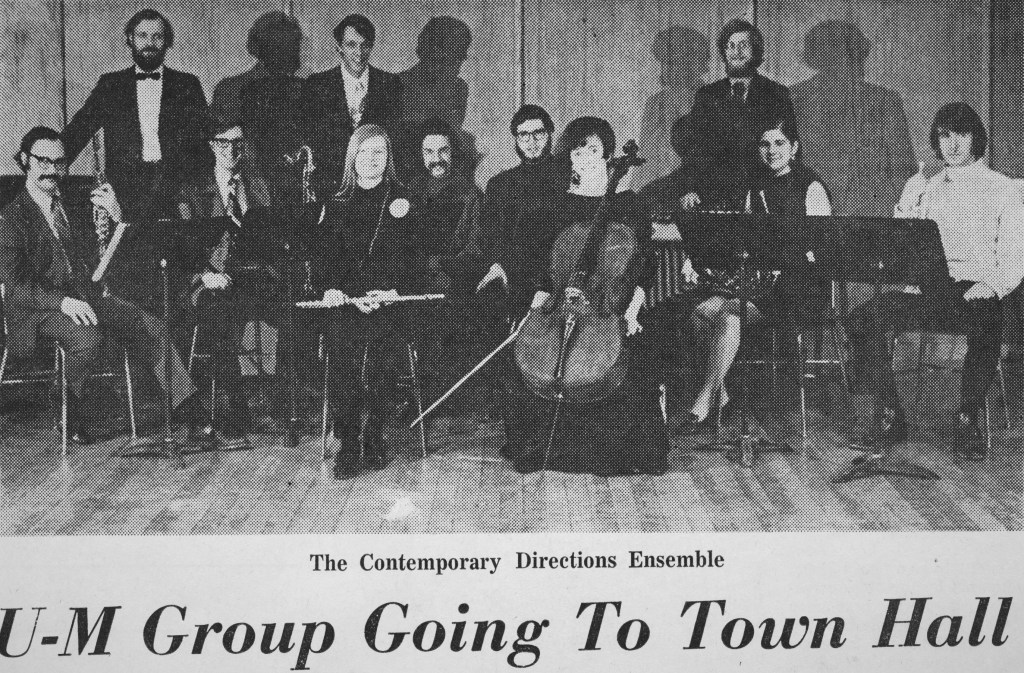
    As trombonist for the U. Mich. Contemporary Directions ensemble, I performed more avant garde works, such as this challenging brass piece:

    Gunther Schuller – Music for Brass Quintet

    My youthful composing had been mostly for piano and trombone. Brass chamber music compositions naturally followed in my student and early professor times.

    • NIGHT SONGS — trombone. TC-21 (1969) Borik Press
    • TRILOGY — brass quintet. TC-23 (1970)
    • ISOSTRATA — 2 trp., 2 tbn., tuba, perc. TC-35 (1977) Seesaw Music
    • ICESCAPE — brass quintet. TC-39 (1980)
    • MUCHA’S LIGHT — Brass quintet. TC-73 (1996)
    • KLADNO SKETCHES — Brass septet. TC-100 (2019)

    Kladno

    Kladno is a Czech city in the Central Bohemian Region 25 kilometers northwest of Prague. In the middle of the 19th century, the discovery of coal there led to the establishment of one of the great ironworks and then steel mills in all of Europe.

    Kladno is near Lidice, the village destroyed by the Gestapo in 1942. Of the Lidice men who were all shot in the atrocity, many had walked to Kladno each day to work in the coal mine or the Poldi steel works.

    Kladno Sketches

    Clark 2019 (TC-100)

    Zámek – peaceful gardens

    This image has an empty alt attribute; its file name is zamek-garden.jpg

    The city remains a thriving place with a population of 70,000, a large church, municipal building, state library and archives, monuments, theaters, museums, and beautiful parks. The Czech people have always been hard working, they love gardens, especially roses, and they love beer in the fine pilsner style they created.

    Poldi – ironworks

    This image has an empty alt attribute; its file name is img_0659.jpg

    Poldi has thrived and survived for more than 100 years, through two world wars and occupations of the country, but the factory finally closed and most of the buildings are now abandoned.

    Svobody – Freedom plaza

    This image has an empty alt attribute; its file name is svobody.jpg

    Suffering under so much occupation and oppression throughout their history in the center of Europe, Czechs especially value “svobody” – freedom.

    ___________

    Chicago

    Beyond brass, more chamber music scores inspired by places . . .

    Chicago Sketches

    Clark 2019 (TC-96)

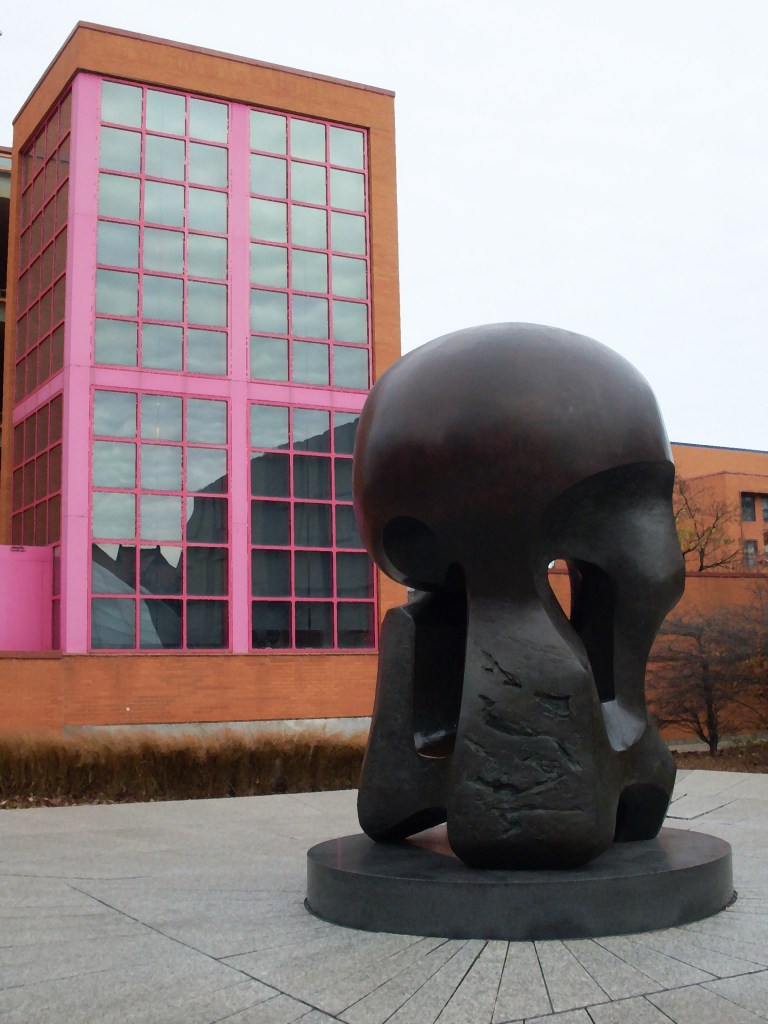
    Fermi Lab

    December 1942

    Henry Moore sculpture on the University of Chicago campus, commemorating the site of the experimental pile that launched the atomic age

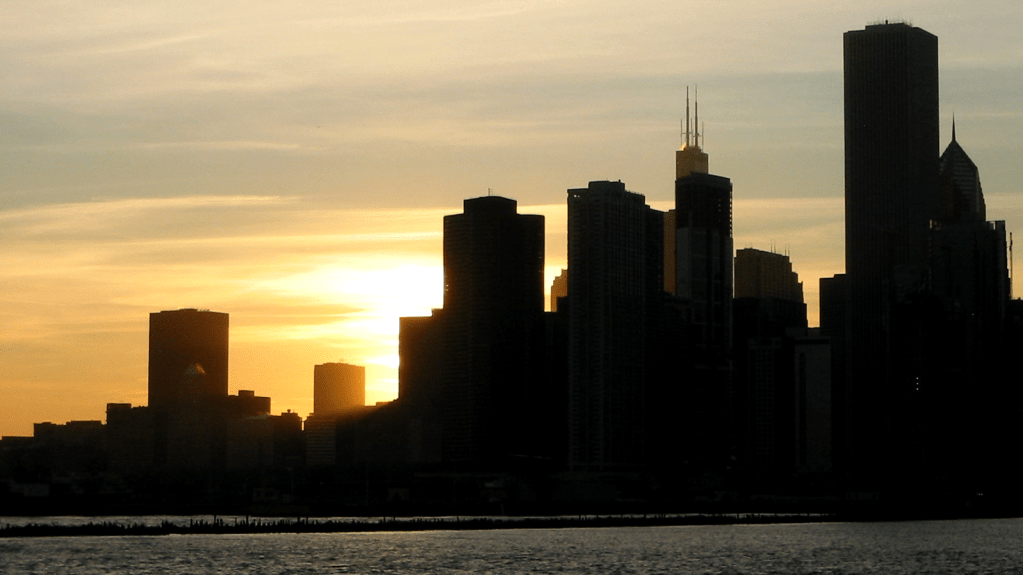
    Navy Pier

    March 2014

    A winter visit to the Lake Michigan shore

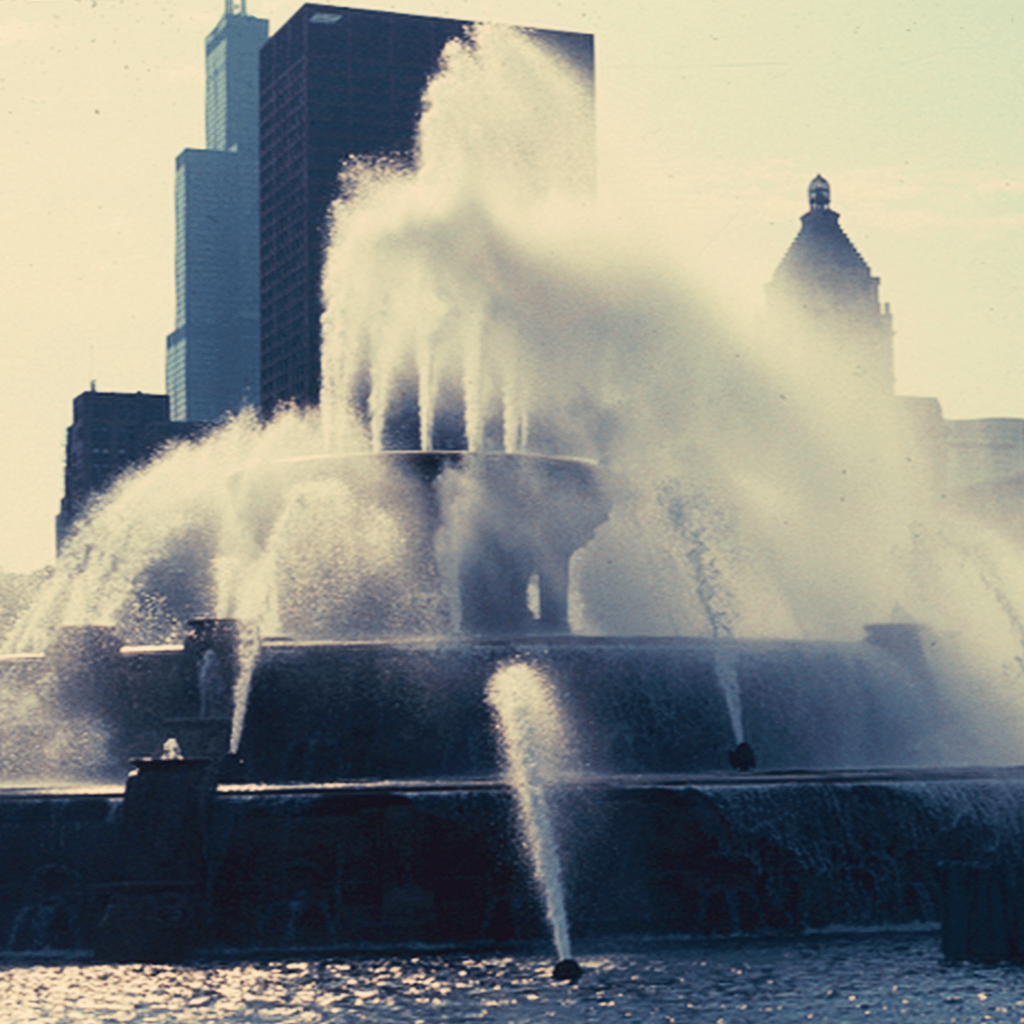
    Buckingham Fountain

    August 1976

    A pilgrimage to Grant Park with new family four months before the wedding

    Leelanau

    The “Great Lake State,” Michigan is two enormous peninsulas surrounded by Lakes Michigan, Superior, and Huron. Actually, there are many smaller peninsulas extending out into the lakes. The Leelanau Peninsula (north of the venerable Interlochen music camp where I spent many summers) extends about 30 miles from the northwestern corner of the mitten-shaped Lower Peninsula into Lake Michigan.

    Algonquian-speaking tribes occupied this area prior to European colonization. The land is now home to lighthouses, wineries, ski slopes, inland lakes, and coastal dunes and beaches.

    Leelanau Sketches

    Clark 2022 (TC-117)

    Shining Water

    The changing patterns of sunlight sparkling on water always fascinates me, particularly on Lake Michigan looking west from the Leelanau Peninsula.

    Ice Caves

    On the Leelanau Peninsula’s western shore, the Lake Michigan surf sometimes whips up and freezes in mid-air, forming weird ice caverns and ice dunes.

    Ojibwe legend tells of a fierce forest fire on the western shore of Lake Michigan, forcing a mother bear and her two cubs into the water to swim to the opposite shore. After many miles of swimming, the exhausted cubs drowned. When the mother bear reached the eastern shore, she waited on top of a high bluff in hopes that her cubs would finally appear. Moved by the mother bear’s determination and faith, the Great Spirit created two islands to commemorate the cubs, and the winds buried the sleeping bear under the sands of the dunes, where she still waits.

    Sleeping Bear Dunes

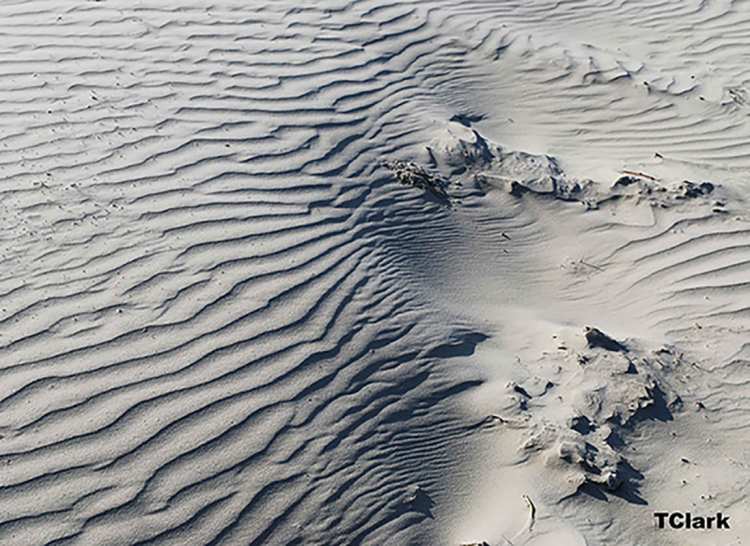
    The main dune is enormous, a mountain of sand rising dramatically above the shore of Lake Michigan. The bear’s bluff atop this majestic mass of earth is a serene vista of radiant sun, windblown sand and waves.

    Autumn on M22

    A scenic autumn drive around the peninsula on Highway M22 is a glory of light sifting down through a canopy of colored leaves. The 75-mile drive from Empire on M22 winds northeast to Northport then south around the east side of the peninsula along Grand Traverse Bay to Traverse City.

    Compared to brass, my list of chamber music pieces for strings is more recent but longer.

    Highlands

    There are many Highlands in my life. I am part Scottish, though my great grandparents are from Glasgow, not the Highlands. I do enjoy its single-malt whiskeys, though, and I went to Howell High School, the “Highlanders.” And I now live in the Texas Hill Country.

    Then there is Českomoravská vrchovina . . .

    This image has an empty alt attribute; its file name is lounovice.png
    Býkovice below Velký Blaník massif

    I first visited what was then still Czechoslovakia in 1991. The Bohemian-Moravian Highlands are between the two main regions of what is now the Czech Republic. The ancient town of Tabor and the legendary Blaník mountains are two points of scenic and historical interest. Highlands Sketches sound paints climbing the mountain’s rugged slope, a thunderstorm of dissonant accents, and the quiet harmonic progression of an autumn dusk.

    Highlands Sketches

    Clark 2023 (TC-137)

    Massif

    “Velký Blaník”

    This image has an empty alt attribute; its file name is up-blanik.png

    Storm

    “bouřka”

    This image has an empty alt attribute; its file name is thunderhead-1.png

    Dusk

    “soumrak”

    This image has an empty alt attribute; its file name is boh-dusk.png

  • 2. Musique Française

    Ann Arbor, 1968 —

    Having begun composing in 1963, I started formal composition study in 1968 at the University of Michigan in Ann Arbor. American composer Eugene Kurtz, based in Paris but filling in that semester at Michigan, was assigned to teach the new freshman. A proponent of modern French music, his compositional models included Debussy and Ravel.

    Sonatine

    Kurtz assigned me to immerse myself in deep study of their music, in particular Ravel’s Sonatine (1905).

    Ravel: Sonatine

    Judith Valerie Engel on YouTube

    Fifty years later in my career as a more experimental composer, my compositional style began to mellow toward a gentler Impressionistic approach and a lush, bright harmonic language reminiscent of Debussy and Ravel.

    Homage to Ravel, my new Sonatine is spun from a single harmonic progression, seven chords each stacking a Perfect Fifth interval high above another.

    This material (what Schoenberg would call a Grundgestalt) generates melodic lines and many arpeggiation patterns, in successive variations of changing register, intensity, and rhythmic pace.

    Sonatine

    Clark 2025 (TC-155)

    Nocturnes

    In 1907, French composer Claude Debussy wrote, “I am more and more convinced that music, by its very nature, is something that cannot be cast into a traditional and fixed form. It is made up of colors and rhythms”. Color, light, and texture were also the hallmarks of a new style of painting developed by French artists — Impressionism.

    At the threshold of the 20th century on 15 December 1899, Debussy completed the first of his Impressionist masterpieces for orchestra, Trois Nocturnes. He avoided labeling it “symphony” or “tone poem” by calling the movements “three symphonic sketches”. The first sketch of Nocturnes is subtitled “Nuages,” premiered on 9 December 1900 in Paris.

    Debussy’s biography describes the genesis of the piece while crossing the Pont de la Concorde in Paris in stormy weather. The composer’s notes say, “‘Nuages’ renders the immutable aspect of the sky and the slow, solemn motion of the clouds, fading away in grey tones lightly tinged with white.”

    Debussy: Trois Nocturnes

    Vienna Philharmonic on Youtube

    Adopting the French language and musical style recognizes the early French explorers of the Great Lakes region of North America. The first decades of my life began there in Michigan’s Lower Peninsula (the “mitten”). It has its own smaller Leelanau Peninsula in the northwest corner (the mitten’s “little finger”) near Interlochen’s National Music Camp, where I spent many summers. Nearby Grand Traverse Bay has its own even smaller Old Mission peninsula, where I loved to visit its lighthouse. The Leelanau has a grand lighthouse at its northern tip and a scenic drive, state highway M21, winding for 64 miles all the way around the peninsula’s shoreline, through forests and past the Great Sleeping Bear Sand Dunes.

    In 1984 my piece titled PENINSULA for piano and sound synthesis was a more experimental work that traced a map of the Leelanau and its landmarks to determine by their spatial coordinates the timing and pitches of sound constellations.

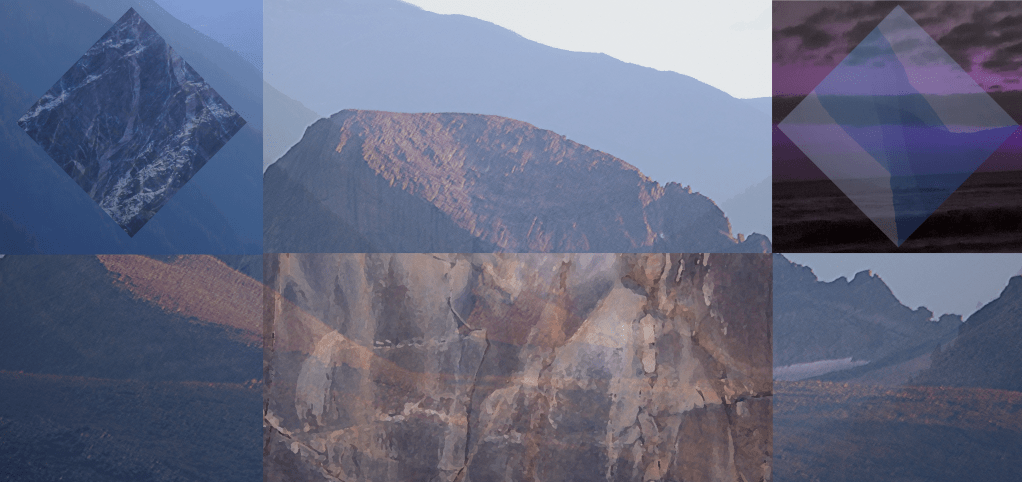
    Moving forward from that mapping phase of my compositions, my Impressionistic phase produced the sound sculpture Leelanau Sketches in 2022. Some of its musical material reappears now in five symphonic sketches, Belle Péninsule. Here is the fourth movement, which quotes Debussy’s “Nuages.”

    Belle Péninsule

    IV. “Nuages blanc

    Clark 2024 (TC-147)

    La Mer

    Debussy’s completed his second composition of three symphonic sketches for orchestra, La Mer, in 1905. It is a monumental work of Impressionist sound-painted textures and a textbook model of lush, beautiful orchestration. The three sketches are titled:

    “De l’aube à midi sur la mer”

    “From dawn to midday on the sea”

    Jeux de vagues”

    “Play of the Waves”

    “Dialogue du vent et de la mer”

    “Dialogue of the wind and the sea”

    Debussy: La Mer

    Orchestre national de France

    My homage to La Mer, Sea Sketches, sound-paints waves, deep currents, wind, and sun-sparkling surfaces, employing swelling sound colors and post-modern cyclic techniques in a pan-diatonic tonal setting. The end briefly quotes the opening arpeggio of Debussy’s “La fille aux cheveux de lin” (“The Girl with the Flaxen Hair”) from Book I of his Préludes for piano (1909-1910).

    Sea Sketches

    Clark 2023 (TC-132)

    ________