Taiwan, 2001 —
In my administrative career, 2001 was a high point, as interim dean of UNT College of Music, then the largest music school in the nation. Though I hired several professors, launched a magazine and Dean’s donor group, and headed up our part of a university capital campaign, I didn’t do any composing.
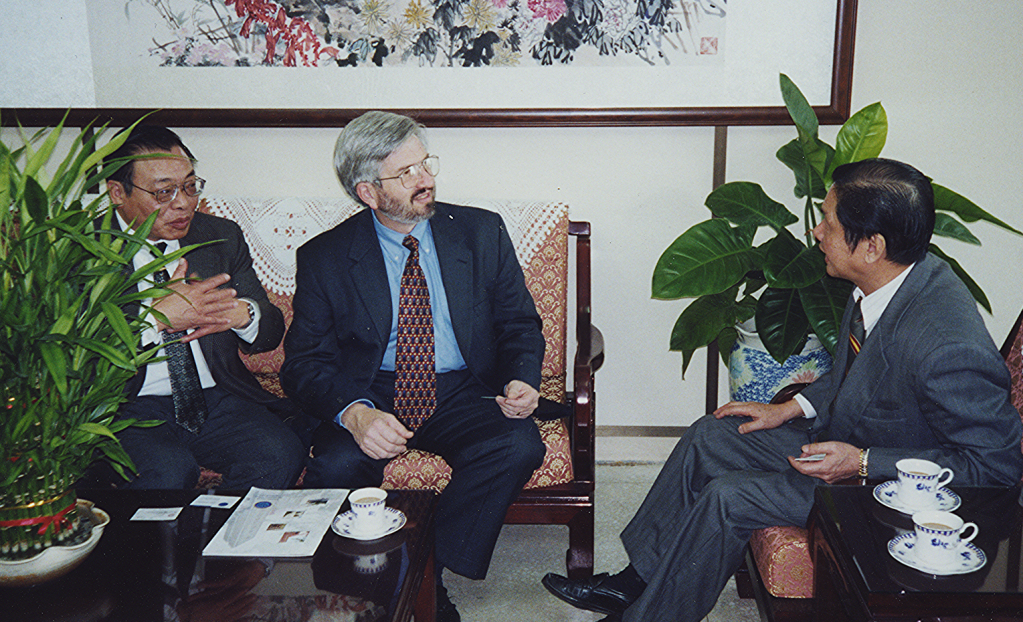
There was international travel, though. My Chinese-American colleague Gene Cho had established an exchange relationship with the National Taiwan University of the Arts, and he guided me to Taipei for the grand ceremony to sign the formal agreement.
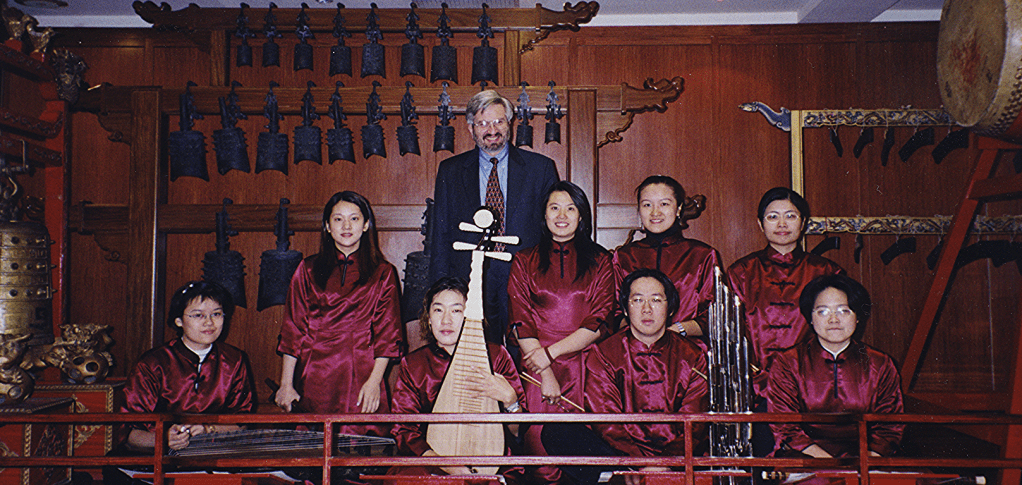
While there, we saw a traveling exhibit of the Qin Shi Huang Terracotta Army, took a train to visit Hsiuping University of Science and Technology in Changhua City, and went by car to the northern tip of the island of Formosa. In a cold mist on the rocky shore, we gazed out at the infinite expanse of the Pacific Ocean.
California composer Robert Erickson wrote that the stimulus for his music “is usually some noise or some non-music sound composing the environment in which I live, its sounds, its ambience.” In 1968 he composed Pacific Sirens (ocean sounds) involving taped sounds gathered from the environment with acoustic instruments.
LISTEN ›
GreyWing Ensemble
Global warming
I was commissioned by North Carolina State University’s Arts Now Series, directed by Dr. Rodney Waschka II, for an artistic contribution to The Ericka Fairchild Symposium on Climate Change. “The Fourth Angel” refers to one of the “seven last plagues” as they were called in the King James Version of the Bible. In the NRSV translation, Revelation 16:8 reads:
“The fourth angel poured his bowl on the sun, and it was allowed to scorch people with fire; they were scorched by the fierce heat.”
The other six angels and their bowls wrought plagues of painful sores, bloody seas, bloody rivers, darkness, a dried up Euphrates, and finally the seventh angel’s loud voice pronounced, “It is done!”
Standing in the middle of the sequence, the prophecy of the fourth angel is a dramatic metaphor for global warming.
The Fourth Angel
Clark 2006 (TC-77)
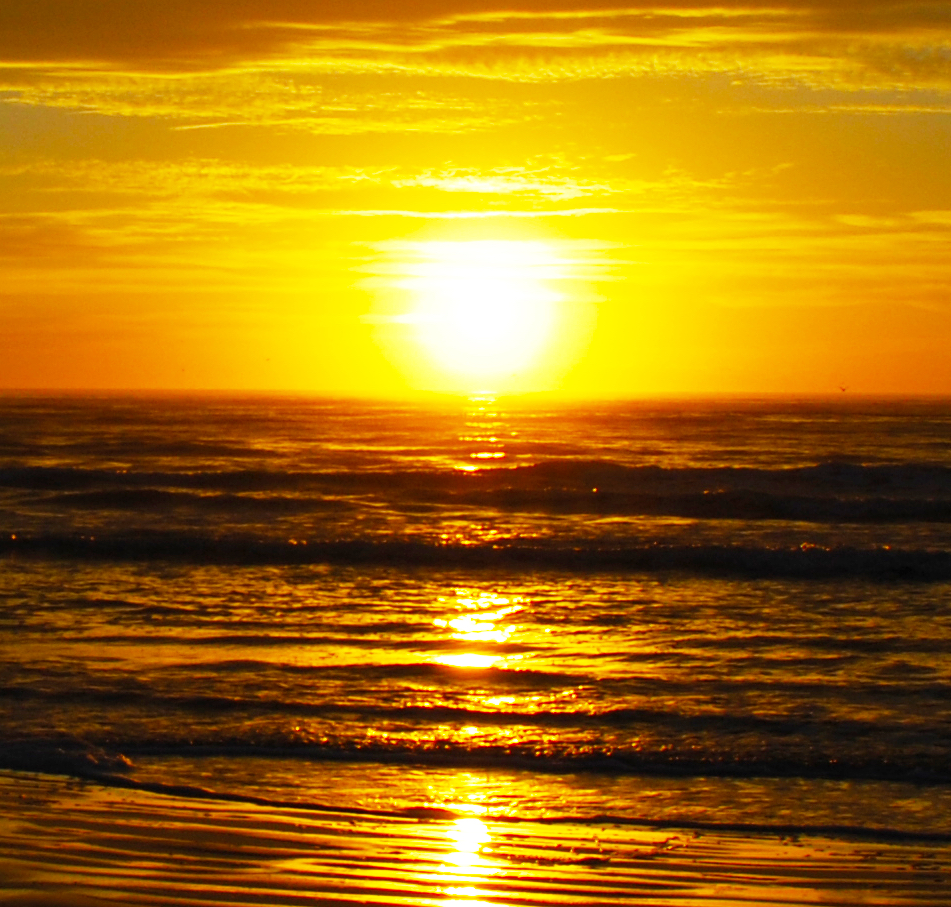
Though there are some literal sound references, the angel is portrayed more broadly as a metaphor for the forces of nature. Rather than capturing actual samples of nature sounds, the computer-generated sounds are all synthesized, musical objects constructed employing a now-common computing technique called grain-table synthesis. (The choice of machine synthesis over nature sampling suggests a particular belief about the causes of global warming.) These synthetic sound images form a broad range of simple and complex musical rhythms and textures evocative of the natural world:
- sunlight reflected off water and ice
- glaciers calving and cascading into the ocean
- solar radiation
- night sounds.
Extending the metaphor, sounds echo and swirl in sound space, just as do the dynamic, powerful weather systems that shape our global climate.
Other angels
Thus pieces about angels began with The Fourth Angel. Portraying imagery from Revelation, the seven angels in chapter 16 inflict suffering upon humanity. Angels of Bright Splendor evokes an equally awesome but more hopeful experience of our life-giving sun.
In Zuni origin mythology, thunder sounded, and The People climbed from darkness, emerging into the daylight world. Seeing the Sun (Awonawilona, they cried, not used to such intense light. Where their tears fell, sunflowers sprang from the earth.
Angels of Bright Splendor

Spirits
Heavenly light, voiced musically with metamorphic chord clusters, became an iconic sound in a famous 1968 movie. György Ligeti describes the technique for his 1966 piece for 16-part mixed choir, Lux Aeterna (“eternal light”):
“The complex polyphony of the individual parts, embodied in a harmonic-musical flow in which the harmonies do not change suddenly, but merge into one another; one clearly discernible interval combination is gradually blurred, and from this cloudiness it is possible to discern a new interval combination taking shape.”
LISTEN ›
A Cappella Amsterdam
Angels in most world religions and mythologies seem to serve one of two functions: wielding controlling power over the physical world or over human affairs; or making spiritual announcements to humans. The next piece in the angels series, scored for antiphonal double SATB choirs, brass, and strings, gives voice to the unseen voices of angels and other spirits. The choir pronounces the names of Native American and Hebrew spirits representing the power and beauty of nature – wind, moonlight, rainbows.
- Gǎoh – chief wind spirit (Iroquois)
- Yaogah – bear spirit of the north wind (Iroquois)
- Neoga – fawn spirit of the south wind (Iroquois)
- Oyandone – moose spirit of the East Wind (Iroquois)
- Amitolane – rainbow spirit (Zuni)
- Nokomis – daughter of the moon (Algonquin)
- Gabriel – archangel of justice, annunciation (Hebrew)
- Maris stella – star of the sea (Latin)
Unseen Voices
Clark 2018 (TC-94)
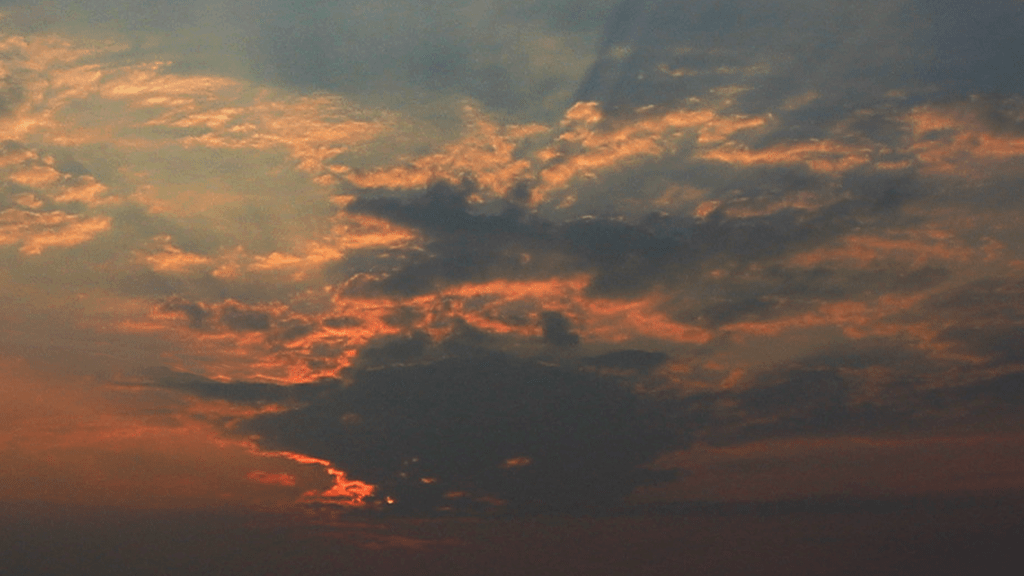
Messengers of peace and assurance . . . and hope for the future of this millenium?

