Raleigh, NC 2007 —
In Zuni origin mythology, according to Wikipedia, thunder sounded, and all The People climbed from darkness, emerging into the daylight world. Seeing the Sun (Awonawilona) and not used to such intense light, they cried. Where their tears fell, sunflowers sprang from the earth.
Angels of Bright Splendor was the second in a series of pieces about angels that began seven years earlier with The Fourth Angel, computer music with optional instruments.
Angels of Bright Splendor
Clark 2013 (TC-78)

The Fourth Angel portrays an image from the Biblical book, Revelation. The seven angels in chapter 16 inflict suffering upon humanity. It was commissioned and premiered in 2007 by the Arts Now Series at North Carolina State University in Raleigh, directed by Dr. Rodney Waschka II. The commission was for an artistic contribution to The Ericka Fairchild Symposium on Climate Change.
The title refers to one of the “seven last plagues” as they were called in the King James Version of the Bible. In the NRSV translation, Revelation16:8 reads:
“The fourth angel poured his bowl on the sun,
and it was allowed to scorch people with fire;
they were scorched by the fierce heat.”
The Fourth Angel
Clark 2006 (TC-77)
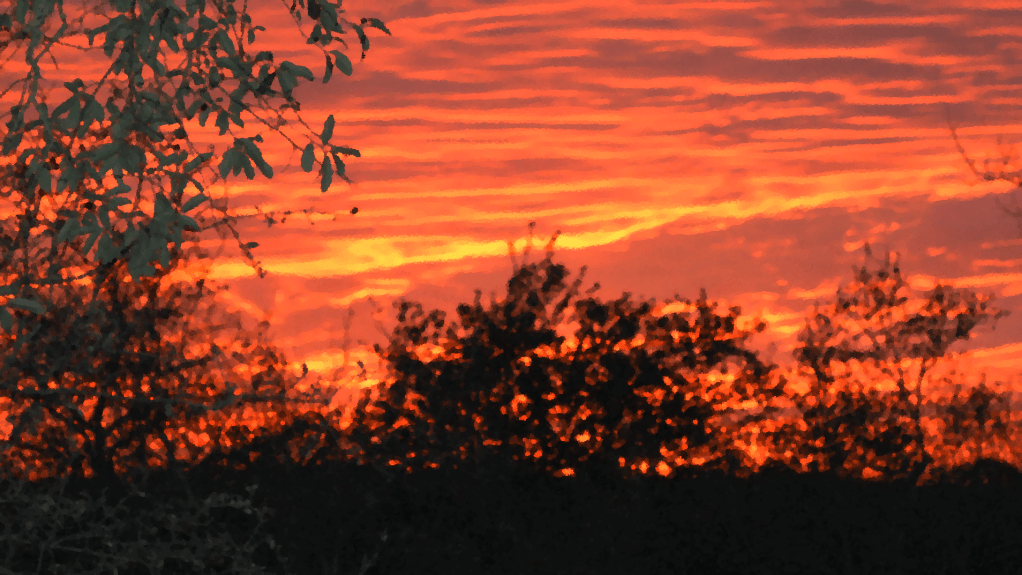
The other six angels and their bowls wrought plagues of painful sores, bloody seas, bloody rivers, darkness, a dried up Euphrates, and finally the seventh angel’s loud voice pronouncing, “It is done!” Standing in the middle of the sequence, the prophecy of the fourth angel is a dramatic metaphor for global warming.
Animus
Though there are some literal sound references, the fourth angel is portrayed more broadly as a metaphor for the forces of nature. Rather than capturing actual samples of nature sounds, however, the computer-generated sounds are all synthesized, musical objects constructed employing a now-common computing technique called grain-table synthesis.
The choice of machine synthesis over nature sampling suggests a particular belief about the causes of global warming. These synthetic sound images form a broad range of simple and complex musical rhythms and textures evocative of the natural world: sunlight reflected off water and ice, glaciers calving and cascading into the ocean, solar radiation, and night sounds. Extending the metaphor, sounds echo and swirl in sound space, just as do the dynamic, powerful weather systems that shape our global climate.
In the 1970s as part of Contemporary Directions at U. Mich., I specialized in performing new and experimental works for solo trombone, with and without electronic tape sounds. Animus I (1967) by Jacob Druckman was a fascinating challenge, combining advanced trombone-playing techniques with a complex, pre-recorded and graphically-notated electronic tape part. The music portrayed an increasingly antagonistic interaction between humans and machine technology.
Druckman – Animus I
Thomas Clark, trombone
The last angel
Global warming is already devastating the earth and all life on it. Going back to Revelation and its seven frightening angels, we read that the last one pours out the voice of doom.
Revelation 16: 17-20 — Then the seventh angel poured out his bowl into the air, and a loud voice came out of the temple of heaven, saying, “It is done!” And there were noises and thunderings and lightnings; and there was a great earthquake, such a mighty and great earthquake as had not occurred since men were on the earth. Then every island fled away, and the mountains were not found.
A musical statement about all this required “pulling out all the stops.” The electronic sounds of The Fourth Angel and Angels of Bright Splendor make layered counterpoint for a dark, unearthly montage. String Theory, originally imagining spinning subatomic energy, provides an ironically human voice, both frantic, engulfed in the threatening sound environment, and soaring hopefully above it.
The final Angel
Clark 2025 (TC-156)



Leave a Reply